

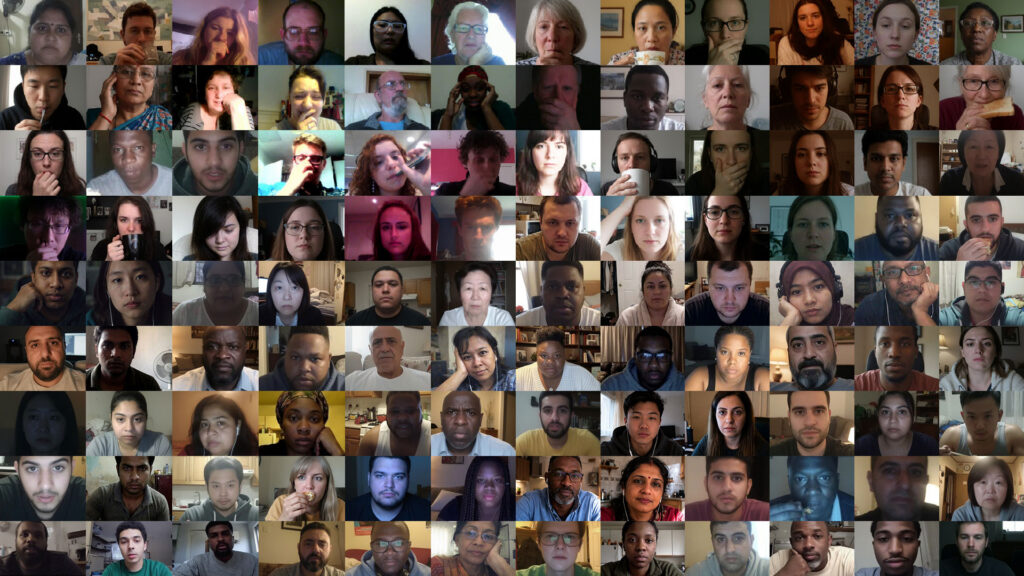
We’ve spent nearly two decades building systems that watch how real people respond, in real lighting, in real environments, across every demographic you can imagine. That experience has given us one conviction above all others: a verification system that only works for some people isn’t a verification system. It’s an exclusion system.
As VerifEye has scaled to over 300 billion annual verification calls, serving the world’s largest social media platforms, gig economy apps, and age-gated services, the stakes of getting fairness wrong have become impossible to ignore. At that volume, a percentage-point disparity in accuracy across skin tones, age groups, or genders doesn’t stay theoretical. It compounds into millions of real people being wrongly locked out, flagged, or forced through friction that their peers never encounter.
This is why we’ve never treated demographic fairness as a feature to be added later. It had to be baked into how we trained our models from the very beginning.
“A verification system that only works for some people isn’t a verification system. It’s an exclusion system.”
Our heritage in ad testing, measuring emotional responses to advertising using computer vision, meant our training data was built on real-world conditions from day one. Bad lighting. Unusual angles. Motion. People of all ages from 93 countries. Over 18 million ethically sourced, fully consented videos, with zero scraped data. GDPR-native architecture. That foundation matters because models trained on pristine, homogenous lab conditions often perform beautifully in benchmarks and fail badly in practice, especially for the people least likely to push back when a system fails them.
The result: VerifEye maintains 97–99% accuracy consistently across skin tones, gender, and age groups. Not because we optimised for a fairness metric at the end, but because we built on data that reflected the full diversity of the people who would eventually depend on the system.
“Models trained on pristine lab conditions often perform beautifully in benchmarks and fail badly in practice, especially for the people least likely to push back when a system fails them.”
For the broader ecosystem of decentralised identity, this matters at a structural level. The vision of universal, user-controlled digital credentials only holds if the biometric binding layer that underpins it works equitably for every participant. A liveness check that fails disproportionately for darker skin tones, or an age verification model that underperforms for older users, creates a two-tiered trust infrastructure, one where the people who most need protection are the least reliably served.
The lesson we’d offer to anyone building in this space: fairness testing can’t be a final audit. It has to be a continuous practice, embedded in how training data is sourced, how models are evaluated, and how deployments are monitored over time. And it requires being honest when a model isn’t ready, because shipping a biased verification system doesn’t just fail individuals. It erodes trust in the entire ecosystem.
“Fairness testing can’t be a final audit. It has to be a continuous practice, embedded in how training data is sourced, how models are evaluated, and how deployments are monitored over time.”
Inclusive trust infrastructure starts with inclusive models. There’s no shortcut around that.