

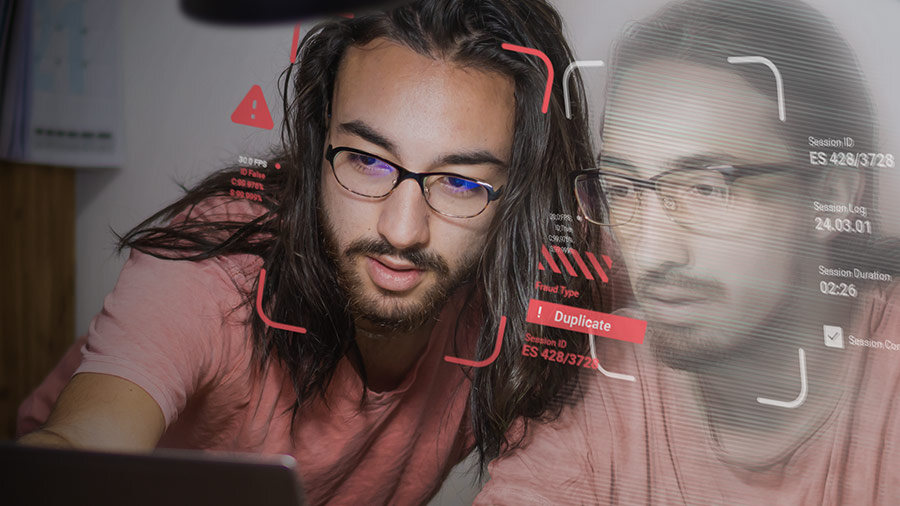
When you hear “facial recognition,” you might think of high-tech security systems in spy movies, but its most practical application today is building trust online. The core idea is simple: your face is a unique identifier, much like a fingerprint. Instead of relying on passwords that can be stolen or phone numbers that can be spoofed, this technology verifies the one thing that can’t be easily faked—the user themselves. This creates a powerful defense against bad actors who rely on anonymity and scale. We’ll explore the mechanics of how does facial recognition prevent duplicate accounts, breaking down the process from the initial biometric scan to the automated detection that keeps your platform secure and fair for everyone.
Key Takeaways
- Focus on Who a User Is, Not What They Have: Traditional methods like passwords and 2FA verify things that can be stolen. Facial recognition confirms a user’s unique identity, creating a direct link between a real person and their account to stop fraud at its source.
- Enforce a One-Person, One-Account Rule: The technology creates a unique biometric signature for each user. This allows your platform to automatically identify and block anyone trying to create multiple profiles, protecting your community’s integrity.
- Balance Security with a Trustworthy Experience: A successful implementation isn’t just about the tech. It requires being transparent with users, protecting their data, and ensuring the process is both fair and frictionless to build lasting trust.
What Is Facial Recognition Technology?
At its core, facial recognition is a way to identify or check who a person is by analyzing their unique facial features. Think of it as a high-tech, automated way of doing what humans do naturally—recognizing someone by their face. This technology falls under the umbrella of “biometric authentication,” which simply means it uses a unique part of your body, like your fingerprint or your face, to confirm your identity.
For online platforms, this is a game-changer. Instead of relying on passwords that can be stolen or phone numbers that can be spoofed, facial recognition offers a more direct link to the real, living person behind the screen. It provides a powerful signal of human presence, helping you distinguish between a genuine user and a bot, a fraudster, or someone trying to create multiple fake accounts. By verifying that each user is a unique individual, you can build a more secure and trustworthy environment for your entire community. It’s about moving beyond easily compromised credentials and toward confirming the one thing that can’t be easily faked: a person’s own face.
How Does Facial Recognition Work?
The process might sound complex, but it breaks down into a few straightforward steps. First, a camera captures an image or video of a person’s face. The system then locates the face within that image and begins to analyze it, measuring key facial landmarks—like the distance between the eyes, the shape of the jaw, and the width of the nose. These measurements are converted into a unique numerical code called a “faceprint,” which is essentially a digital signature for that person’s face. Finally, this faceprint is compared against a database of existing ones to find a match and confirm the user’s identity.
The Core Components of a Recognition System
Facial recognition systems don’t just look at one aspect of a face; they use several methods to ensure accuracy. Some systems focus on measuring the geometric relationship between different facial features. Others use 3D scanning to capture the exact shape of a person’s face, which helps the system work reliably even if the lighting isn’t perfect or the person is at an angle. Advanced systems can even analyze skin texture, looking at unique patterns like pores and fine lines. Tying all of this together is deep learning, a type of AI where algorithms are trained on massive datasets to become incredibly skilled at recognizing faces, much like the human brain.
Why Should Platforms Care About Duplicate Accounts?
At first glance, duplicate accounts might seem like a minor data hygiene issue. But they’re often a red flag for much bigger problems lurking beneath the surface. When one person can easily create and operate multiple profiles, it opens the door to system manipulation, a degraded user experience, and serious security vulnerabilities. These aren’t just ghost accounts cluttering your database; they are active threats to your platform’s integrity, community trust, and even your bottom line.
Bad actors rely on duplicate accounts to bypass rules, amplify harmful content, and commit fraud at scale. For every legitimate user, there could be dozens of fake profiles working to undermine the fairness and safety of your ecosystem. Ignoring the problem doesn’t just lead to skewed analytics—it creates an environment where genuine users feel unsafe and unheard. Tackling duplicate accounts is a critical step in building a resilient and trustworthy platform where human interaction can thrive.
The Security Risks of Fake Profiles
Duplicate accounts are a fraudster’s best friend. They provide a simple way to circumvent security measures, test stolen credit cards, or launder money. For platforms in banking, e-commerce, or gaming, this poses a direct financial threat. A single malicious user with a hundred accounts can inflict a hundred times the damage. Facial recognition provides a fast and reliable way to confirm identities, which is a massive help in stopping this kind of abuse. By ensuring that one real person equals one account, you shut down the primary avenue for large-scale fraud and protect both your business and your legitimate users from financial harm.
How Duplicates Damage the User Experience
Beyond the security risks, duplicate accounts can quietly ruin the experience for your real users. When a few people can create multiple profiles, they can easily game the system. For example, the engineering team at Careem found that some drivers were creating duplicate accounts to unfairly get more orders, leaving other drivers with less work and degrading the service for customers. This same dynamic plays out on social platforms, marketplaces, and dating apps, where duplicates are used to manipulate ratings, harass others, or spam communities. This creates an unfair environment that erodes trust and can drive your most valuable users away.
Meeting Regulatory and Compliance Demands
In many industries, verifying that each user is a unique individual isn’t just good practice—it’s the law. Regulations like Know Your Customer (KYC) and Anti-Money Laundering (AML) require many platforms to take firm steps to prevent fraudulent and anonymous accounts. As Tencent Cloud explains, digital identity authentication is essential for proving each user is a real, unique person and stopping bad actors from creating fake profiles to commit fraud or send spam. Failing to effectively police duplicate accounts can expose your business to significant legal risks, including steep fines and sanctions from regulators. Ensuring one-person-one-account is a foundational part of any robust compliance strategy.
How Does Facial Recognition Pinpoint a Unique User?
Facial recognition technology sounds like something out of a spy movie, but the core idea is quite simple. It’s a way to confirm that a user is a unique, real person by analyzing their facial characteristics. It’s not about storing a photo of you; it’s about creating a distinct digital signature that only you possess. This process allows platforms to distinguish one individual from another with incredible precision, making it a powerful tool for preventing users from creating multiple fake accounts. For any platform where user identity matters—from social networks to financial services—this ability to confirm uniqueness is fundamental to building trust and security.
Think of it like a digital fingerprint for the face. Just as no two fingerprints are identical, every face has a unique geometry. The technology works by identifying and measuring these specific features to create a one-of-a-kind identifier. This process happens in three main steps: mapping the face, creating a biometric signature, and using intelligent systems to refine the match. By breaking it down, you can see how this technology provides a secure and reliable way to verify that every user on your platform is exactly who they claim to be—and that there’s only one of them. It moves beyond passwords and email addresses, which are easily faked, to something intrinsically tied to the individual.
Mapping Key Facial Features
The first step in identifying a unique user is to create a detailed map of their face. The system isn’t just taking a picture; it’s analyzing the underlying structure. It measures key parts of the face, such as the distance between the eyes, the width of the nose, the depth of the eye sockets, and the shape of the cheekbones and jawline. These measurements, often called nodal points, are unique to each individual. The system captures dozens of these points to build a comprehensive and three-dimensional understanding of the user’s facial geometry. This initial map serves as the raw data for creating a secure and distinct profile for that person.
Creating a Unique Biometric Signature
Once the system maps the facial features, it converts that data into a unique mathematical formula, or a biometric signature. This signature is often called a “faceprint.” It’s a string of numbers that represents the specific measurements and ratios of an individual’s face. This faceprint is then compared against a database of existing signatures to see if there’s a match. If the system finds an identical or near-identical signature, it can flag the account as a potential duplicate. If no match is found, the new user’s faceprint is added to the database, establishing their unique presence on the platform. This process ensures that each person can only register once.
Using Machine Learning to Tell Users Apart
This is where the technology gets really smart. Modern facial recognition systems use machine learning and artificial intelligence to constantly improve their accuracy. These algorithms learn from vast amounts of data, getting better at recognizing faces over time, even with changes in appearance like new glasses, facial hair, or different lighting conditions. For example, the ride-sharing company Careem uses facial recognition to find and stop drivers from creating duplicate accounts. The machine learning component allows the system to adapt and maintain high accuracy, ensuring that it can reliably distinguish between millions of users and effectively prevent fraud at scale.
How Does Facial Recognition Stop Duplicate Accounts?
Facial recognition technology offers a direct and effective way to tie a digital account to a single, unique human being. Instead of relying on credentials that can be stolen or fabricated, like email addresses or phone numbers, it uses a person’s distinct facial geometry as the ultimate authenticator. This creates a one-to-one link between a person and their profile. When a user attempts to create a second account, the system recognizes the face from the existing profile and can immediately block the attempt.
This approach fundamentally changes how platforms manage user identity. It shifts the defense from a reactive cleanup of fake profiles to a proactive strategy that prevents them from being created in the first place. By establishing a biometric baseline for every user, you build a community where you can be confident that each account represents a real, distinct individual. This not only secures your platform against fraud and abuse but also fosters a more trustworthy environment for everyone.
Verifying Identity in Real Time
The first line of defense against duplicate accounts is at the point of entry: signup and login. Modern facial recognition provides a secure, fast, and reliable way to confirm identities in seconds. When a new user joins, the system prompts them for a quick facial scan. This process captures their unique biometric data and often includes a “liveness” check to ensure it’s a real person, not a photo or a deepfake. This initial verification creates a secure anchor for the account, ensuring that from day one, the profile is tied to a verified, unique individual.
Detecting Duplicates Across Your Platform
Beyond preventing new fakes, facial recognition is incredibly effective at finding existing duplicates within your system. Companies like Careem use facial recognition powered by machine learning to scan their user base and root out fraudulent accounts. When a new user signs up, their biometric signature is compared against a database of all existing users. If the system finds a match, it flags the new profile as a potential duplicate. This ongoing, automated cross-referencing makes it nearly impossible for one person to maintain multiple accounts without being detected.
Automating Blocks and Alerts
Once a duplicate account is identified, the system can take immediate, automated action. Instead of waiting for a manual review, platforms can configure rules to automatically block the fraudulent signup, suspend the duplicate account, or alert a moderation team to investigate. This automation is crucial for protecting systems at scale. It provides a cryptographic proof of uniqueness that safeguards everything from signup bonuses and limited-edition product drops to community voting systems. By handling detection and enforcement automatically, you free up your team and ensure the rules are applied consistently.
Why Is Facial Recognition Better Than Traditional Methods?
For years, we’ve relied on passwords, security questions, and two-factor authentication (2FA) to guard our digital lives. These methods are built on verifying something you know (a password) or something you have (your phone). But in an environment where data breaches are common and phishing attacks are sophisticated, these traditional gatekeepers are showing their age. They can be stolen, forgotten, or socially engineered, leaving platforms vulnerable to fraud and duplicate accounts. This is where facial recognition changes the game entirely.
Instead of verifying what a user knows or has, facial recognition verifies who a user is. By using unique biological traits—the specific geometry of a person’s face—it creates a direct, unbreakable link between a digital account and a real, living individual. This fundamental shift doesn’t just add another layer of security; it redefines the very concept of digital identity. It offers a more robust, user-friendly, and efficient way to ensure that one person equals one account, solving many of the persistent problems that plague traditional authentication methods. For platforms trying to maintain trust and integrity, this isn’t just an upgrade—it’s a necessary evolution.
Gaining Accuracy Over Passwords and 2FA
Let’s be honest: passwords are a weak link. They can be guessed, phished, or exposed in data breaches. While 2FA is a step up, it’s not foolproof either; determined fraudsters can use tactics like SIM swapping to intercept codes. Facial recognition, on the other hand, relies on your unique biometric data. This makes it an incredibly secure and reliable way to confirm identity and stop fraud in its tracks.
Because it ties an account to a physical person, this form of digital identity authentication makes it exponentially harder for a single bad actor to create and manage an army of fake profiles. It moves security from something abstract and easily stolen to something concrete and personal, providing a level of assurance that passwords and codes simply can’t match.
Offering a Faster, More Convenient Experience
Security shouldn’t come at the cost of a good user experience. We’ve all felt the frustration of a forgotten password or a delayed 2FA code. These moments of friction can cause users to abandon a sign-up process or simply give up on logging in. Facial recognition removes that friction entirely. The identity check becomes as simple as looking at your device’s camera.
This process is not only smoother but also incredibly quick. A verification process completes in seconds, turning what was once a tedious chore into a seamless interaction. By making authentication effortless, you not only keep your legitimate users happy but also reduce the operational costs associated with password resets and account lockouts. It’s a win for security and a win for user experience.
Reducing Human Error and Manual Reviews
Catching duplicate accounts with traditional methods is often a manual, resource-intensive task. It involves teams of people sifting through data, looking for suspicious patterns in IP addresses or email formats, and making judgment calls that are prone to error. This approach is not only slow and expensive but can also lead to mistakes, like blocking a real user or missing a sophisticated fake.
Automated systems powered by facial recognition technology can handle this workload with greater speed and accuracy. For example, the ride-sharing company Careem uses it to automatically detect drivers attempting to create multiple accounts. This frees up their human review teams to focus on complex edge cases rather than the bulk of the work, leading to more efficient operations and fewer mistakes.
What Are the Technical Hurdles to Overcome?
Facial recognition is an incredibly powerful tool for securing your platform, but implementing it isn’t as simple as flipping a switch. Like any advanced technology, it comes with its own set of technical challenges that need to be addressed thoughtfully. For any platform looking to use biometrics to prevent duplicate accounts, understanding these hurdles is the first step toward building a system that is both effective and fair for all users.
The good news is that these are known problems with proven solutions. The key is to be aware of them so you can choose a technology partner that has already done the hard work to solve them. A robust facial recognition system anticipates these issues, with built-in safeguards against bias, sophisticated defenses against fraud, and the flexibility to perform reliably in less-than-perfect conditions. Getting this right means creating a verification process that feels seamless to legitimate users while presenting a formidable barrier to bad actors.
Addressing Potential Accuracy and Bias
A facial recognition system is only as good as the data it’s trained on. Historically, some systems have shown lower accuracy for women and people with darker skin tones. This isn’t a flaw in the concept of facial recognition itself, but a result of biased training datasets that lack diversity. When a system is primarily trained on images of one demographic, it naturally gets better at identifying that group, leading to potential errors for others. For any platform committed to inclusivity, this is a critical issue to solve. Modern, ethically-developed systems address this by using globally diverse and representative data to ensure the technology works equally well for everyone, regardless of their background.
Defending Against Spoofing Attacks
What’s to stop someone from creating a duplicate account by holding up a photo of another user to the camera? This tactic, known as a spoofing attack, is a major vulnerability for basic facial recognition systems. Bad actors can use anything from printed photos and videos on a screen to sophisticated 3D masks to try and fool the camera. That’s why true security requires more than just matching a face—it requires liveness detection. Advanced systems use this technology to verify that a real, live person is present during verification. By analyzing subtle cues like texture, depth, and micro-movements, the system can distinguish between a living person and a static image or replica, shutting down fraudsters before they can even start.
Accounting for Lighting and Environmental Factors
Your users will be verifying their identity from all over the world—in brightly lit offices, dimly lit rooms, and everywhere in between. A successful facial recognition system has to work reliably in these real-world conditions. Poor lighting, awkward camera angles, shadows, and even things like wearing glasses or growing a beard can trip up less sophisticated technology. The most resilient systems are built to account for these variables. They use intelligent algorithms that can normalize images to correct for poor lighting and focus on the underlying facial structure, not just superficial details. This ensures the verification process is smooth and successful for your users, no matter where they are.
How to Handle the Privacy and Ethical Questions
Facial recognition technology is powerful, and with that power comes a responsibility to handle it ethically. Users are rightfully concerned about how their biometric data is collected, used, and protected. For any platform, building and maintaining trust isn’t just a goal; it’s a requirement. Ignoring the privacy and ethical questions isn’t an option. Instead, addressing them directly is the only way to implement this technology successfully and responsibly.
A thoughtful approach involves more than just meeting the minimum legal requirements. It’s about creating a framework of trust with your users from the very beginning. This means being transparent about how the technology works, giving users control over their data, and committing to fairness in how the system operates. By tackling these issues head-on, you can build a secure environment that respects user privacy while effectively preventing fraud and abuse on your platform.
Protecting User Data with Strong Encryption
The first step in protecting user privacy is ensuring the data itself is secure. This goes far beyond simply storing a user’s photo. Modern facial recognition systems convert facial scans into unique biometric signatures—complex strings of numbers that are irreversible and anonymous. This signature is what gets stored, not the user’s actual face. By implementing robust data encryption and strict access controls, you can create a system where the raw data is shielded from unauthorized access. Think of it as locking the data in a digital vault where only specific, authorized processes have the key. This approach drastically reduces privacy risks and ensures that even in the event of a breach, the user’s biometric identity remains secure and unusable to malicious actors.
Prioritizing User Consent and Transparency
Trust begins with transparency. Users should never be surprised to find out they are interacting with facial recognition technology. The Federal Trade Commission recommends that companies provide clear notice about how the technology works, what data is collected, and how it will be used. This means you need to be upfront and get explicit, informed consent before you scan a user’s face. Forget hiding details in lengthy terms of service. Instead, use clear, simple language to explain the process and its purpose. Giving users a straightforward choice to opt-in builds a foundation of trust and demonstrates that you respect their autonomy and their data. When users understand and agree to the process, they become partners in securing the platform.
Building a Fair System and Preventing Bias
One of the most significant ethical challenges in facial recognition has been algorithmic bias. If a system is trained on a dataset that isn’t diverse, it won’t perform accurately for everyone. This can lead to frustrating user experiences and, in some cases, unfair outcomes. To build a fair system, you must start with inclusive algorithm training. This means using datasets that reflect a wide range of demographics, including different ethnicities, ages, and genders. It’s crucial to partner with technology providers who are transparent about their training methods and who continuously test for bias. A commitment to fairness isn’t a one-time check; it’s an ongoing process of auditing and refining your system to ensure it works equitably for every single user.
How to Implement Facial Recognition the Right Way
Putting facial recognition to work on your platform isn’t just a matter of flipping a switch. A thoughtful approach is key to getting it right—for your security, your systems, and your users. The goal is to add a powerful layer of protection without creating a clunky, frustrating experience. When done correctly, facial recognition feels less like a security checkpoint and more like a seamless, invisible handshake that confirms a user is exactly who they say they are. It’s about finding that sweet spot where robust security meets effortless usability.
This means choosing the right tools, making sure they fit neatly into your existing workflows, and never losing sight of the user’s experience. A successful implementation strengthens trust by proving you’re serious about protecting your community from fake accounts and fraud, all while respecting your users’ time and privacy. Let’s walk through the practical steps to make that happen.
Setting Up Your Hardware and Software
First things first, let’s talk tech. You might be picturing a lab full of high-end cameras and servers, but the reality is much simpler. Most modern facial recognition software is designed to work with the hardware your users already have—like the webcams on their laptops or the cameras on their phones. The real magic is in the software. You need a solution that is sophisticated enough to detect bots and prevent duplicates with high accuracy, even in less-than-perfect conditions. The right software acts as the brains of the operation, ensuring the system is reliable and effective without requiring users to buy special equipment.
Integrating with Your Existing Systems
Adding a new security measure shouldn’t mean tearing down your current setup. The best facial recognition solutions are built for easy integration. Look for technology with a lightweight design that can be plugged into your existing systems—like your sign-up or checkout process—with minimal fuss. The idea is to introduce as little friction as possible for the user. A seamless integration means you can dramatically enhance data integrity and security behind the scenes, while your users enjoy a smooth, uninterrupted experience. This approach allows you to strengthen your platform’s defenses without disrupting the user journey you’ve worked so hard to build.
Balancing Strong Security with a Great User Experience
For a long time, we’ve been taught that more security has to mean less convenience. Facial recognition technology is changing that. A well-designed system can verify a user in seconds, making it faster and easier than typing a complex password or waiting for a two-factor authentication code. But a great user experience goes beyond speed; it’s also about trust. You can build that trust by being transparent about how you’re using this technology and by implementing robust data encryption and secure storage from day one. When users know their data is protected, they feel more comfortable. This balance is the key to creating a secure environment that people actually want to be a part of.
How to Ensure Your System Stays Effective
Launching a facial recognition system is a huge step, but the work doesn’t stop there. Think of it as a living part of your platform’s security infrastructure. Technology evolves, new threats emerge, and user expectations change. To keep your system sharp and trustworthy, you need a plan for ongoing maintenance and improvement. This isn’t just about fixing bugs; it’s about proactively managing performance, security, and the user experience. A system that feels secure and reliable is one that users will trust. By continuously monitoring, planning for contingencies, and auditing your processes, you can ensure your facial recognition technology remains a powerful and effective tool for preventing duplicate accounts long-term.
Continuously Monitoring and Updating Your System
Facial recognition technology is constantly getting smarter, and your system should, too. Regular updates are essential for improving accuracy, reducing potential biases, and staying ahead of new spoofing techniques. Monitoring key performance metrics—like how often the system correctly identifies a user versus how often it makes a mistake—helps you spot and address issues before they impact your community. As the technology advances, you’ll find that updates can significantly refine performance, helping you maintain the delicate balance between robust security and privacy concerns. Staying current ensures your platform is protected by the most effective and fair technology available.
Planning for Backup Authentication Methods
Even the best facial recognition system can run into hiccups. A user might be in a poorly lit room, wearing a face covering, or simply experiencing a camera malfunction. To avoid locking users out, it’s smart to have a reliable backup plan. This is where other verification methods come into play. For example, Multi-Factor Authentication (MFA) can serve as a great alternative, asking a user to enter a one-time code sent to their phone or email. This not only provides a fallback option but also adds another layer of security, making it much harder for bad actors to create fraudulent accounts.
Conducting Regular Security and Performance Audits
Regular audits are like a routine health check for your system, helping you catch vulnerabilities before they become problems. These audits should examine everything from data handling practices to system performance under stress. A key focus should be on data security. Are you using strong encryption to protect biometric data both in transit and at rest? Are strict access controls in place to ensure only authorized personnel can view sensitive information? By regularly reviewing your security protocols, you can mitigate privacy risks and demonstrate a clear commitment to protecting your users’ data, which is fundamental to building and maintaining trust.
Related Articles
- Face Verification Will Revolutionize Ad Spend
- Your Guide to Preventing Synthetic Identity Fraud
- The 5 Best Deepfake Detection APIs of 2026
Frequently Asked Questions
Is this just storing a photo of my users? That sounds risky. That’s a great question, and it gets to the heart of how modern, secure systems work. The technology doesn’t store a photograph of your user. Instead, it analyzes the unique geometry of a person’s face and converts those measurements into a secure, irreversible numerical code called a biometric signature or “faceprint.” This string of numbers is what gets stored, not an image. This process ensures that even in the unlikely event of a data breach, the information is useless to bad actors and cannot be used to reconstruct a person’s face.
What if someone tries to trick the system with a photo or a mask? This is a common concern, and it’s why sophisticated systems go beyond simple facial matching. They use something called “liveness detection” to confirm that a real, three-dimensional person is in front of the camera. The technology analyzes subtle cues like skin texture, depth, and tiny movements that are unique to a living person. This allows the system to easily distinguish between a genuine user and a fraudster holding up a printed photo, a video on a screen, or even a sophisticated 3D mask, stopping these spoofing attempts in their tracks.
Will this technology work accurately for all of my users, regardless of their ethnicity or skin tone? This is a critical point, and you’re right to ask. Early versions of facial recognition technology struggled with accuracy across different demographics because they were trained on limited, non-diverse datasets. However, modern, ethically developed systems have solved this problem. They are trained on massive, globally representative datasets that include people of all ethnicities, ages, and genders. This ensures the algorithms are fair and perform with incredibly high accuracy for everyone.
What happens if a user’s appearance changes, like if they grow a beard or start wearing glasses? This is where the intelligence of the system really shines. Facial recognition focuses on the underlying, stable geometric points of the face—like the distance between your eyes, the shape of your cheekbones, and the structure of your jawline—which don’t change. While superficial things like facial hair, makeup, or glasses might alter a person’s appearance, the core facial structure remains the same. Advanced systems are trained to recognize these foundational features, so they can easily identify a user even with these kinds of changes.
Will this create a slow and frustrating sign-up process for my users? Quite the opposite, actually. A well-designed facial recognition process is incredibly fast and removes a lot of the friction we associate with security. The verification itself often takes just a few seconds—far quicker than typing a complex password or waiting for a two-factor authentication code to arrive via text. By making the identity check as simple as looking at a camera, you can provide a higher level of security while creating a smoother, more convenient experience for your legitimate users.