

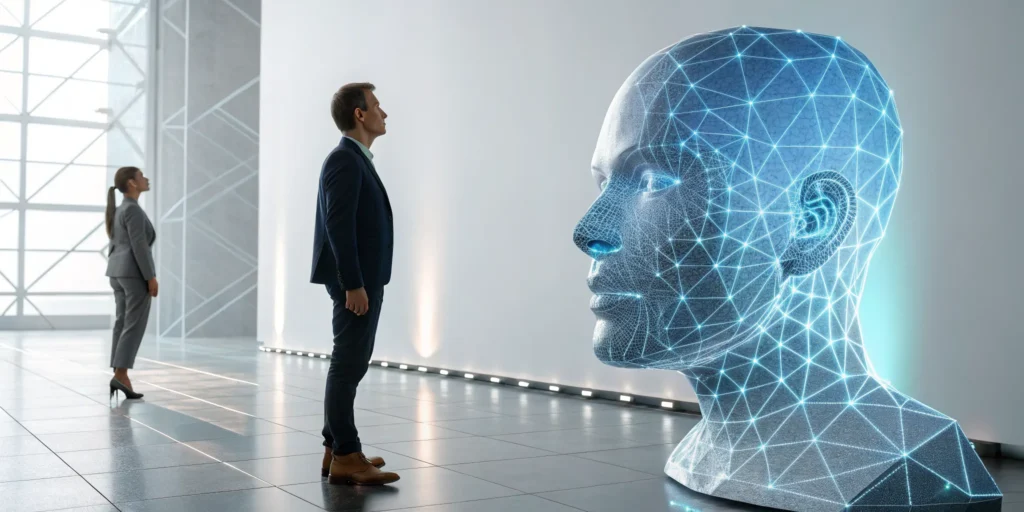
A fraudster signs up for your service, claims a new-user bonus, and then does it again with a different email. Sound familiar? This kind of abuse is easy to pull off when identity is tied to disposable credentials. The only way to stop it is to tie each account to the person themselves. This is where a biometric matching service comes in. Using 1:N biometric matching, you can instantly check if a new user’s face is already in your system. This one-to-many search makes it impossible for one person to create an army of fake accounts, protecting your revenue and ensuring a fair experience for your legitimate customers.
Key Takeaways
- Understand the Core Question You Need to Answer: Use 1:N identification when you need to know, “Have I seen this person before?” to establish a unique identity. Use 1:1 verification when you need to confirm, “Is this the person they claim to be?” for routine access.
- Establish a Single Source of Truth for Each User: The primary function of 1:N matching is to guarantee every account belongs to one unique individual. This proactively stops duplicate accounts, prevents fraud, and ensures the integrity of your platform’s data from the start.
- Layer Both Methods for a Complete Security Strategy: The strongest approach uses both. Implement 1:N identification during onboarding to ensure every user is unique. Then, use fast and efficient 1:1 verification for all future logins and secure actions, creating a robust and user-friendly system.
What Is 1:N Biometric Matching?
Think of 1:N biometric matching as the digital equivalent of spotting a familiar face in a massive crowd. The “1” is a single, live biometric sample, like a selfie or a fingerprint scan. The “N” represents a large database of existing biometric records. The system takes that one sample and compares it against the entire database to answer a simple but powerful question: “Who is this person?” This process, also known as one-to-many authentication, is the core technology behind identification. It doesn’t just confirm you are who you claim to be; it can discover your identity from a pool of possibilities. This makes it a critical tool for platforms needing to establish trust and ensure every user is unique and real, preventing duplicate accounts and fraud at scale.
Identification vs. Verification: What’s the Difference?
It’s easy to use the terms identification and verification interchangeably, but in biometrics, they mean very different things. Verification is a 1:1 comparison. It answers the question, “Are you who you say you are?” For example, when you unlock your phone with your face, you are verifying your identity against a single, stored record of your face. The system already knows who you claim to be. Identification, on the other hand, is a 1:N search. It asks, “Who are you?” without any prior claim of identity. The system searches the entire database for a match. This fundamental distinction highlights the different applications of biometric systems in security and identity management.
What Types of Biometrics Are Used in 1:N Matching?
The process of 1:N matching relies on unique biological traits that can be measured and digitized. The most common types of biometrics used for this are facial features, fingerprints, and iris patterns. When a person interacts with the system, it captures a live sample, like a quick video selfie. This sample is then converted into a secure, digital representation called a biometric template. The system then compares this new template against all the other templates stored in its database. A successful match happens when the system finds a stored template that is statistically similar enough to the live sample, allowing it to confidently identify the individual. This method forms the basis of modern biometric verification and identification.
Physical Biometrics
When you think of biometrics, you’re probably picturing physical biometrics. These are the unique, measurable characteristics of your body. According to the World Bank’s Identification for Development (ID4D) initiative, this category includes traits like your fingerprints, the intricate patterns of your iris, the structure of your face, and even the layout of veins in your hand. Because these traits are inherent to you, they serve as a powerful foundation for identity. Capturing them usually involves specialized hardware like a fingerprint scanner or a high-resolution camera. The goal is to create a digital map of a physical feature that is so distinct, it can be used to prove you are you, and not someone else.
Behavioral Biometrics
Unlike physical traits, behavioral biometrics focus on your unique patterns of action. This isn’t about what you look like, but about *how* you do things. Think about the rhythm of your typing, the way you move a mouse, the pressure and speed of your signature, or the specific cadence of your voice. These actions create a digital signature that is incredibly difficult for a fraudster to replicate. While physical biometrics are often used for a single point-in-time check, like logging in, behavioral biometrics are great for continuous, passive authentication. They can work quietly in the background to ensure the person who logged into an account is the same person still using it minutes later, without interrupting the user experience.
Comparing Biometric Modalities
Not all biometric methods are created equal; each comes with its own set of trade-offs. Fingerprint scanning, for example, is highly accurate but can be tricky. While capturing a print is relatively easy, its effectiveness can be reduced for manual laborers with worn-down ridges or for young children whose prints aren’t fully formed. Iris scanning offers exceptional accuracy, but the hardware is more expensive and the process can feel invasive to some users. Facial recognition is arguably the most user-friendly, as it works with standard cameras and is easy to capture. While its accuracy has historically been lower than iris or fingerprint methods, modern technology has made significant strides, making it a highly reliable and accessible option for most platforms.
Failure Rates and Specific Difficulties
Every biometric system has potential points of failure. A “failure to capture” occurs when the system can’t get a usable sample. For fingerprints, this might happen if a person’s hands are dirty or their skin is very dry. The World Bank notes that up to 5% of people may have trouble providing a clear fingerprint scan. Iris scanning can be challenging for individuals with visual impairments. Facial recognition technology has also faced difficulties, particularly with accurately identifying people in poor lighting conditions or, in some cases, individuals with very dark skin tones. Understanding these potential issues is crucial for choosing a system that is inclusive and works for your entire user base.
Key Factors for Evaluating Biometric Technologies
When choosing a biometric solution, you need to look beyond just accuracy. Consider the technology’s universality—will it work for everyone, regardless of age, skin tone, or physical condition? Stability is another key factor; you need a system that can account for subtle changes over time, like those caused by aging. Also, think about the user experience. A system’s usability is critical, as a process that is difficult or adds friction will frustrate legitimate customers. At Realeyes, we believe confirming human presence shouldn’t come at the expense of a smooth user journey. Finally, evaluate the total cost, which includes not just the initial hardware and software but also ongoing maintenance and support. A holistic evaluation ensures you select a solution that is secure, inclusive, and sustainable for your business.
How Does a 1:N Biometric Matching Service Work?
So, how does a system actually find one person among millions? It’s not magic, but a methodical, three-step process. Think of it like a digital detective trying to identify a person of interest in a massive crowd. The system doesn’t see faces or fingerprints the way we do; instead, it sees data. It all starts with capturing a unique characteristic, turning it into a digital signature, and then searching a database for a match. Each step is critical for ensuring the final result is fast, accurate, and reliable. This is essential for platforms that need to confirm a user is who they say they are or, more importantly, that they are a unique, real person. Let’s walk through how it all comes together.
Step 1: Capturing Biometric Data to Create a Template
Everything begins with the initial capture. A sensor, like a camera or a fingerprint scanner, records a person’s biometric data. But the system doesn’t store your actual face or fingerprint. Instead, it analyzes the raw data to find unique patterns and converts them into a secure, numerical format called a biometric template. This template is a mathematical representation of your features, not a picture. As the experts at Regula point out, a good biometric trait should be unique to you, stable over time, and easy for a system to capture. The quality of this first step is everything. A blurry image or a partial fingerprint can lead to an inaccurate template, making the next steps much harder.
Step 2: Searching the Database to Find a Match
Once the system has a new template, the search begins. This is the “one-to-many” part of 1:N matching. The system takes the new template and compares it against every single template stored in its database to see if that person already exists. This is where the system performs its heavy lifting, running an incredibly fast and powerful search to find a match among potentially millions of records. This is what makes 1:N identification so effective for preventing duplicate accounts or fraud. You can quickly determine if a new user is actually an old user trying to create a second profile, without them needing to provide a name or email to check against.
Step 3: Scoring the Match to Ensure Accuracy
The system doesn’t look for a 100% perfect match, because slight variations always exist. Instead, it calculates a similarity score between the new template and each template in the database. If a score crosses a predetermined threshold, the system flags it as a potential match. Setting this threshold is a balancing act. If it’s too low, you risk false positives (matching the wrong person). If it’s too high, you might miss a real match. This is where accuracy metrics become vital. For example, the National Institute of Standards and Technology (NIST) uses the False Negative Identification Rate (FNIR) to measure how often a system fails to find the correct person. This is especially important for automated systems where the platform needs to trust the result.
How 1:N Biometric Matching Is Used in the Real World
One-to-many biometric matching isn’t just a concept for spy thrillers; it’s a powerful tool already at work in some of the most critical sectors of our society. From securing national borders to protecting your personal health information, 1:N identification provides a scalable way to answer the question, “Who is this person?” without needing any other information. It’s a foundational technology for building trust in high-stakes environments where knowing a person’s true identity is non-negotiable. Let’s look at a few key examples where this technology is making a significant impact.
Improving Security at National Borders
Governments around the world use 1:N biometric matching to manage the flow of people across their borders. When you arrive at an airport with automated gates, your face is often scanned and compared against a large database. This database might include watchlists of known security threats or simply a national registry of citizens. The system’s goal is to identify you among millions of possibilities, confirming you are who you say you are or flagging you for further inspection if you appear on a list. This type of authentication is commonly used in large-scale security applications because it provides a fast and reliable way to identify individuals in high-traffic environments, making border control more efficient and secure for everyone.
The EU’s Shared Biometric Matching Service (sBMS)
A prime example of this technology in action is the European Union’s new shared biometric matching service (sBMS). This ambitious project creates a central hub to connect previously separate EU information systems, allowing them to work together smoothly. It will house biometric templates—the digital signatures of fingerprints and facial scans—for an estimated 400 million people. When a new biometric sample is taken, the sBMS can search across all these connected databases at once. This powerful 1:N identification capability makes it possible to quickly and accurately identify individuals, which helps strengthen border security and makes the process for handling visas and asylum more efficient and secure.
Aiding Law Enforcement Investigations
In criminal investigations, 1:N matching is a game-changer for generating leads. Imagine police have a grainy security camera image of an unknown suspect. They can run that image against a database of mugshots or other records to find potential matches. This process doesn’t replace detective work; instead, it gives investigators a starting point when they have nothing else to go on. It narrows a massive pool of possibilities down to a manageable list of potential suspects for further investigation. The same technology can also be a force for good in identifying missing persons or victims of accidents who are unable to communicate their identity, helping to reunite families or provide critical information to first responders when every second counts.
Safeguarding Patient Data in Healthcare
Medical identity theft is a dangerous and costly problem. A person might use someone else’s information to receive treatment, which can lead to huge bills for the victim and, even worse, corrupt their medical records with false information. One-to-many matching offers a powerful solution. When a patient arrives at a hospital, a quick biometric scan can search the entire patient database to find their correct file. This is crucial for unconscious patients or anyone arriving without identification. As healthcare providers note, this is the most effective way to stop fraud and improve patient safety right at the point of care, ensuring that the right person gets the right treatment every single time.
Stopping Fraud in Banking and Finance
Online platforms, especially in finance, constantly fight against fraud. Bad actors try to create multiple accounts to exploit promotions, launder money, or commit other forms of financial crime. One-to-many identification is a key defense. When a new user signs up, their biometric data can be instantly compared against the entire existing user base. If the system finds a match, it can flag the new account as a potential duplicate, preventing a single person from creating an army of fake profiles. This proactive approach helps platforms protect trust at scale by ensuring that each account belongs to a unique individual. It’s a fundamental step in building a secure environment where businesses and their customers can interact with confidence.
Streamlining Air Travel and Retail
From automated border gates to self-checkout lanes, 1:N matching is quietly making public life smoother and more secure. When you scan your face at an airport e-gate, the system is performing a one-to-many search. It compares your live image against a massive database of travelers to confirm your identity and check against watchlists in seconds. This is one of the most common large-scale security applications because it efficiently manages the flow of thousands of people while maintaining high security standards. In retail, the same principle can power a seamless shopping experience, allowing loyal customers to access their accounts or pay with just a glance, no cards or phones needed. It’s all about identifying a known person in a crowd to make the process faster and more convenient for everyone.
Powering Civil Government and Defense Operations
Beyond public spaces, 1:N matching serves as a critical tool for civil and defense operations. In criminal investigations, it helps law enforcement generate leads from evidence like a grainy security camera image. By comparing an unknown suspect’s face against a database of mugshots, investigators can narrow down a massive pool of possibilities to a manageable list, giving them a starting point when they have nothing else to go on. This technology is also invaluable for humanitarian efforts, such as identifying victims of natural disasters who are unable to communicate or helping to find missing persons. In these high-stakes situations, one-to-many matching provides a fast and reliable way to connect a person to an identity, offering answers and aid when they are needed most.
Why Should You Use 1:N Biometric Matching?
While 1:1 verification confirms a user is who they claim to be, 1:N identification answers a more fundamental question: “Have I seen this person before?” This distinction is what makes one-to-many matching a powerful tool for building trust and integrity on any platform. It moves beyond simply checking a claimed identity and instead establishes a unique, single source of truth for every individual interacting with your system.
For enterprises, this capability is transformative. It’s not just about adding another layer of security; it’s about fundamentally changing how you manage identity. By using 1:N matching, you can proactively prevent fraud before it starts, ensure the data driving your decisions is clean and reliable, and offer users a more seamless and secure experience. It’s a strategic approach that addresses the root causes of many online trust issues, from duplicate accounts to sophisticated fraud schemes. Let’s look at the specific advantages this brings.
Identify Individuals Without a Claimed Identity
The most powerful feature of 1:N matching is its ability to identify a person without them needing to provide a username, ID, or any other piece of information first. The system simply compares their biometric data against the entire database to find a match. This is crucial in situations where a person cannot or will not identify themselves. For example, hospitals use this technology to identify unconscious patients and access their medical records instantly.
In the digital world, this same principle is a game-changer for fraud prevention. Imagine a bad actor trying to create a second account to exploit a new-user bonus or circumvent a ban. With 1:N matching, your platform can instantly recognize that this person already exists in the system, even if they use a new email and different personal details. It’s the only way to truly stop identity fraud at the point of entry, because it links activity to a real, unique human, not just a disposable credential.
Eliminate Duplicates and Maintain a Clean Database
Duplicate accounts are a plague for online platforms. They skew analytics, enable abuse, and create messy, unreliable datasets. A user might create multiple profiles to manipulate ratings, spam a community, or repeatedly claim promotional offers. Traditional methods struggle to catch this, as a person can easily generate new email addresses or phone numbers.
One-to-many identification solves this by creating a single, durable identity for each user based on their unique biometrics. When a new user signs up, the system checks if their face is already in the database. If a match is found, the duplicate registration can be blocked or merged, ensuring every person has only one account. This process, known as deduplication, is essential for maintaining data integrity. Clean data leads to better business intelligence, more accurate user metrics, and a healthier, more trustworthy platform for everyone.
Move Beyond Passwords and PINs for Better Security
Passwords and PINs are becoming relics of a less secure internet. They are frequently forgotten, easily phished, and regularly exposed in data breaches. For users, they create friction and frustration. For businesses, they represent a significant security liability. One-to-many matching offers a path forward, creating a more secure and user-friendly alternative.
Instead of relying on something the user knows (a password), 1:N relies on who the user is. This form of biometric authentication can replace traditional login methods entirely. A user can simply look at their device’s camera to securely access their account. This is not only faster and easier for the user, but it’s also far more secure. After all, a fraudster might be able to steal a password, but they can’t steal your face. This shift strengthens security while simultaneously improving the customer experience.
What Are the Challenges of 1:N Biometric Matching?
While 1:N biometric matching offers powerful solutions for identification, it’s not a magic bullet. Like any advanced technology, it comes with its own set of challenges that every platform needs to consider. Thinking through these issues upfront is the key to building a system that is not only effective but also fair, secure, and trustworthy. Let’s walk through the main hurdles and how to approach them responsibly.
Knowing When Biometrics Aren’t the Right Fit
Biometrics are powerful, but they aren’t a one-size-fits-all solution. Before you jump in, it’s important to recognize that implementing these systems can be expensive and add a lot of complexity to your platform. Beyond the technical hurdles, there are real human costs to consider. Some people may be unable to provide a reliable biometric sample, which could lock them out of your service entirely. This can affect individuals with physical disabilities, manual laborers with worn fingerprints, or even older adults whose features have changed. You also have to think about the serious privacy risks that come with storing such personal data. It’s essential to weigh these factors against the problem you’re trying to solve, making sure your solution doesn’t create new barriers for the very people you want to serve.
How to Address Bias and Make It Accessible for Everyone
One of the most critical conversations around biometrics is fairness. It’s essential that an identification system works equally well for everyone, regardless of their demographic background. Some technologies can have higher error rates for certain groups, leading to what are known as false positives (incorrectly identifying someone) or false negatives (failing to identify someone). As you can imagine, these errors can have serious consequences.
That’s why rigorous, independent testing is so important. Organizations like the National Institute of Standards and Technology (NIST) run extensive evaluations to check if face recognition systems perform differently across demographic lines. When choosing a solution, look for providers who are transparent about their performance in these NIST evaluations and are committed to minimizing bias.
Understanding the Risks to Personal Privacy and Data
Biometric data is unique and permanent. Unlike a password, you can’t change your face or fingerprint if it’s compromised. This makes data security an absolute top priority. A breach involving biometric data is a significant event, so protecting that information is non-negotiable.
The best approach is to avoid storing raw biometric images altogether. Instead, modern systems convert a person’s biometric data into a secure, encrypted digital template or code. This template cannot be reverse-engineered back into the original image. Strong encryption, strict access controls, and clear user consent are all crucial components of a responsible biometric verification system. This privacy-first design ensures you can confirm identity without creating unnecessary risk for your users.
Staying Compliant With Regulations Like GDPR
In a world of evolving privacy regulations like GDPR, simply implementing a biometric tool isn’t enough. Regulators expect a thoughtful, layered approach to security. Biometric identification should not be the sole method used to confirm who someone is. Instead, it should work as one part of a larger, more comprehensive identity strategy.
For example, a robust system might combine a biometric check with other signals, like verifying a government-issued ID document, confirming the person is physically present, or analyzing risk signals from the device they are using. This multi-factor approach creates a much stronger security posture and demonstrates the due diligence required to meet modern compliance standards. It’s about building a system that is both effective and proportionate.
Overcoming Technical Hurdles Like Scale, Integration, and Cost
Beyond the ethical and legal considerations, there are practical technical challenges to address. Can the system handle your platform’s volume, whether it’s thousands or millions of users? How easily does it integrate with your existing software and workflows? And what are the true costs involved in implementation and maintenance?
Deploying 1:N matching at scale requires significant technical expertise. Developers must ensure their software is compatible with specific API rules and can pass rigorous validation tests to prove its accuracy and efficiency. This is why partnering with a provider who has already solved for scale and offers a straightforward integration process is so important. It allows you to get the benefits of identification without the massive engineering lift.
Addressing Challenges with Children’s Biometrics
Another important consideration is how biometric systems handle children. A person’s biometric traits need to be stable over time to be reliable, but a child’s features are constantly changing. For instance, fingerprints aren’t considered fully reliable until around age six, and while the iris is formed by age two, getting a clear scan from a toddler is easier said than done. Facial features, of course, change dramatically throughout childhood, which would require frequent updates to a biometric template. Responsible platforms address this by creating flexible policies, such as linking a child’s account to a parent’s verified identity or enrolling them with the plan to update their biometric data at specific ages. It’s a practical acknowledgment that a one-size-fits-all approach doesn’t work when dealing with users at different life stages.
Accounting for External Factors and Human Error
Even the most advanced algorithm can be tripped up by real-world messiness. A biometric system’s accuracy depends heavily on the quality of the initial data capture, which can be affected by countless external factors. Poor lighting, a low-quality camera, or even a bad internet connection can result in a failed match. On the human side, some individuals may have physical limitations that make it difficult to provide a clear sample, while others may object for cultural or religious reasons. A robust system must account for these variables. This means improving how samples are collected with clear user guidance, training any staff involved, and having effective backup plans, like a manual review process, for users who can’t complete the biometric check. It’s about building a resilient system that works for people in the real world, not just in a perfect lab setting.
1:N vs. 1:1: Which Biometric Matching Does Your Platform Need?
Deciding between 1:N and 1:1 biometric matching feels like a technical choice, but it’s really a strategic one. The right answer depends entirely on the question you need to answer to protect your platform. Are you trying to figure out who a person is from a large group, or are you simply confirming they are who they claim to be? The first question requires identification (1:N), while the second calls for verification (1:1).
Think of it like a security checkpoint. A 1:1 verification is like a guard checking your ID against your face. They are answering the question, “Is this person the one on this specific ID?” It’s a simple, direct comparison. On the other hand, 1:N identification is like a guard trying to identify an unknown person by checking their face against a database of every person on a watch list. The system asks, “Who is this person?” by searching all records to find a match. Understanding this core difference is the first step in building a system that truly establishes trust and keeps bad actors out.
Choosing Identification (1:N) vs. Verification (1:1)
You should choose 1:N identification when you need to establish a person’s identity without them providing any initial claim, like a username or ID number. It’s the best tool for situations where you need to search a whole database to find a single person. As the experts at OCTATCO note, 1:N authentication is used for identification purposes, where the system finds a match and provides the individual’s identity. This is crucial for preventing duplicate accounts, stopping fraudsters from creating multiple profiles, and ensuring every user is unique.
For example, a system using 1:N compares a new user’s biometric data against every other record in the database. This process answers the question, “Have we seen this person before?” It’s a powerful way to maintain a clean, one-person-one-account environment, which is the foundation of a trustworthy online community.
How to Combine Both for a Stronger Security Model
While 1:N is powerful for identification, 1:1 verification plays a vital role in day-to-day security. Verification answers the question, “Is this person who they claim to be?” by comparing a live biometric sample to one specific, stored record. However, relying on 1:1 verification alone has a critical weakness. As RightPatient explains, a 1:1 system checks if a person is who they say they are but can’t prevent fraud if the original account was created under false pretenses.
The strongest security frameworks use both. A platform can use 1:N identification during the initial sign-up process to ensure the user is genuinely new and not a duplicate or known bad actor. Once their unique identity is established, the platform can then use fast and efficient 1:1 verification for all future logins and transactions. This layered approach combines the deep-search power of identification with the speed of verification, creating a secure environment that protects your platform and its users from the ground up.
Troubleshooting Common Biometric Issues
It’s a familiar frustration: you sit down at your laptop, ready to work, but your face or fingerprint isn’t recognized. While biometric systems are designed for seamless access, they aren’t flawless. When a system fails to identify you, it’s usually not because the technology is broken, but because the data no longer matches. The system is comparing a live version of you to a stored digital template created in the past. If you’ve changed your appearance—by growing a beard, getting new glasses, or even just being in different lighting—the match might fail. The quality of the initial data capture is everything; a blurry or partial scan can create a weak template from the start.
Think of it less as a failure and more as a need for a quick refresh. This principle of maintaining data quality is universal across all applications of biometric systems, from your personal phone to a massive enterprise platform. For a business, ensuring users have a smooth experience—even when minor troubleshooting is needed—is key to building trust and encouraging adoption. The goal is to make security feel effortless, and that includes providing a simple path forward when things don’t work perfectly on the first try. A common example of this is resetting the biometric settings on your own computer.
How to Reset Windows Hello Biometrics
If Windows Hello is consistently failing to recognize you, the quickest fix is often to reset your biometric data and start fresh. This process removes your old, potentially outdated profile and allows you to create a new, high-quality biometric template. By re-registering your face or fingerprint under ideal conditions, you give the system a much cleaner and more accurate data point to use for future comparisons. It’s a simple solution that resolves the most common recognition issues.
Here’s how to do it:
- Navigate to Settings on your Windows device.
- Click on Accounts, then select Sign-in options.
- Choose the method that’s giving you trouble (e.g., Facial recognition (Windows Hello) or Fingerprint recognition (Windows Hello)).
- Click the Remove button to delete your current biometric data. You may need to enter your PIN to confirm.
- Once removed, click the Set up button to begin the registration process again, and follow the on-screen prompts to capture your face or fingerprint.
The Future of Digital Trust Is Biometric Identification
Online trust is fragile. When anyone can create a profile, it becomes difficult to know if you’re dealing with a real person, a bot, or a bad actor with multiple fake accounts. This uncertainty undermines everything from online communities to digital marketplaces. To rebuild that trust, platforms need a reliable way to confirm that every user is a unique, real human. This is where 1:N biometric identification comes in.
Unlike verification (1:1), which just confirms a person is who they claim to be, identification (1:N) answers a more fundamental question: “Who is this person?” It works by comparing a user’s biometric data against an entire database of existing users to see if they are already in the system. This one-to-many matching process is a powerful tool for preventing fraud and ensuring the integrity of a user base. It’s the only true way to prevent duplicate records, stopping a single person from signing up for a service multiple times under different aliases.
By implementing 1:N identification, platforms can ensure that each account corresponds to one unique individual. This simple but powerful guarantee has massive implications. It prevents malicious users from creating armies of bots to manipulate conversations or reviews. It stops fraudsters from opening multiple accounts to exploit promotions or commit financial crimes. Ultimately, it helps cultivate a more trustworthy online environment where businesses and users can interact with confidence, knowing that a real person is on the other side of the screen. It’s a foundational step in keeping the internet human.
Related Articles
- Biometric Authentication for Account Verification 101
- A Guide to Biometric Authentication Without Storing Data
- Face Verification Will Revolutionize Ad Spend
- How Does Facial Recognition Prevent Duplicate Accounts?
Frequently Asked Questions
What’s the main difference between 1:N and 1:1 matching in simple terms? Think of it this way: 1:1 verification is like showing your driver’s license to a cashier to prove your age. They are comparing your face to one specific document. In contrast, 1:N identification is like a detective showing a photo of an unknown person to a room full of people and asking, “Does anyone know who this is?” The system searches an entire database to find a match, rather than just checking against a single, claimed identity.
Is my actual face stored in a database when I use this technology? No, and this is a critical point for privacy. A responsible biometric system doesn’t store your picture. Instead, it analyzes the unique characteristics of your face and converts them into a secure, encrypted code called a biometric template. This template is just a mathematical representation, not an image, and it cannot be reverse-engineered to recreate your face. This ensures your actual likeness is never stored or compromised.
Why is 1:N matching so important for stopping duplicate accounts? Traditional methods for preventing duplicates, like checking email addresses or phone numbers, are easy to get around. A person can create countless new emails to sign up for a service multiple times. However, a person only has one face. By using 1:N identification during sign-up, a platform can instantly check if a new user’s biometric template already exists in its database. This links each account to a unique human, making it the most effective way to ensure one person equals one account.
How can you ensure biometric identification is fair and doesn’t have biases? This is one of the most important challenges, and it’s addressed through rigorous testing and transparency. Leading systems are tested by independent organizations like the National Institute of Standards and Technology (NIST), which evaluates their performance across various demographic groups. When considering a solution, it’s vital to look for providers who are open about their accuracy rates from these tests and are actively working to make sure their technology performs reliably for everyone.
Does a platform need to choose between 1:N and 1:1, or can they work together? They absolutely work best together. It’s not an either/or decision; it’s about using the right tool for the right job. The strongest security strategies use 1:N identification during the initial onboarding process to confirm a user is unique and prevent fraud from the start. After that, the platform can use fast and convenient 1:1 verification for routine actions like logging in. This layered approach provides robust protection while still offering a smooth user experience.