

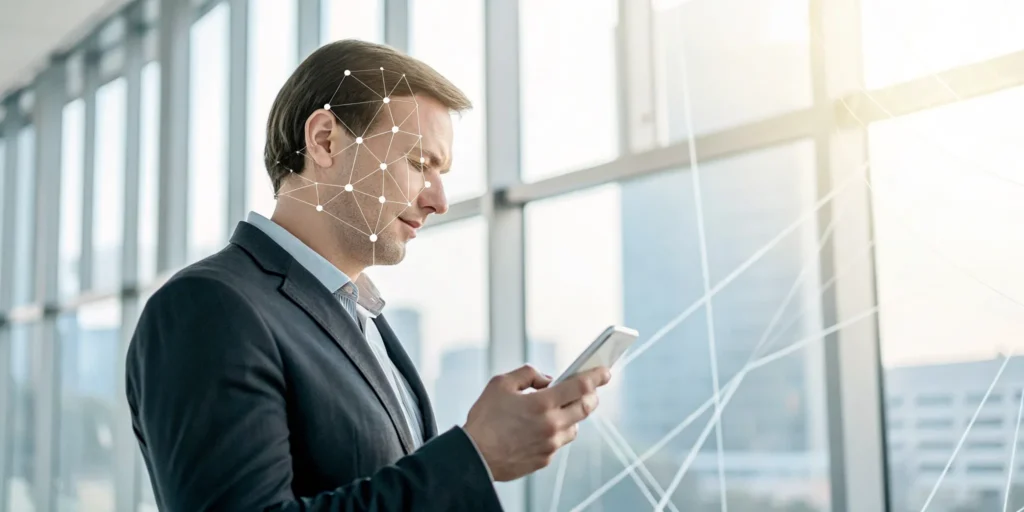
The internet is losing its human touch. Every day, platforms are flooded with bots, fake profiles, and fraudulent accounts that erode trust and create huge operational headaches. How can you be sure a real person is on the other side of the screen? This is where lightweight facial verification comes in. It’s a fast, simple, and privacy-respecting way to confirm human presence with a quick selfie, separating real users from automated threats. It’s not about surveillance; it’s about restoring authenticity to online interactions. This guide will explain what it is, how it works, and why it’s an essential tool.
Key Takeaways
- It’s About Proving Presence, Not Tracking People: Lightweight facial verification uses a simple selfie to confirm a user is a real, live person in the moment. It’s a privacy-focused tool that runs on everyday devices, unlike heavy surveillance systems.
- A Better Experience That Costs Less: This technology creates a frictionless process for users with just a quick selfie, which helps reduce drop-off rates. For businesses, it’s a highly efficient solution that significantly cuts operational costs compared to traditional ID checks.
- Successful Implementation Requires Planning: Choosing the right solution means looking beyond the technology. You must evaluate a provider’s commitment to privacy, their methods for preventing algorithmic bias, and how easily their system integrates with your existing tech stack.
What Is Lightweight Facial Verification?
When you hear “facial recognition,” you might picture something from a spy movie: a massive, power-hungry system scanning crowds from a hidden control room. Lightweight facial verification is the complete opposite. Think of it as a smart, efficient, and privacy-focused tool designed for the digital world. Instead of identifying who you are from a massive database, its primary job is much simpler and more crucial: confirming that you are a real, live human being present at that moment.
This technology is “lightweight” because it doesn’t need powerful servers or special hardware to work. It runs on the devices we use every day, like smartphones and laptops, using small but mighty AI programs. This makes it incredibly fast and accessible. The goal isn’t surveillance; it’s about creating a moment of trust in an online interaction. Whether someone is creating a social media profile, authorizing a payment, or accessing a secure platform, lightweight verification provides a quick, frictionless way to prove they are a person, not a bot or a deepfake. It’s a modern solution for a modern problem, helping businesses protect their platforms and users without compromising on privacy or user experience.
Lightweight vs. Traditional: What’s the Difference?
The key difference between lightweight and traditional systems comes down to resources and location. Older facial recognition systems often required big, powerful computers and specialized cameras to process data. The analysis happened on a central server, which could be slow and expensive. In contrast, lightweight facial verification uses a small computer program, a neural network, that can run directly on everyday devices. As Innovatrics notes, this includes everything from smartphones and tablets to kiosks and smart glasses. This on-device processing means verification is faster, more scalable, and can even work offline. It’s a shift from a heavy, centralized approach to a nimble, decentralized one that fits seamlessly into existing digital experiences.
The Core Technology Behind It
At its heart, lightweight facial verification is built with privacy as a top priority. It operates nothing like a traditional surveillance system. Instead of storing your actual photo, the technology converts your selfie into an encrypted mathematical template, often called a facial vector. This string of numbers represents the unique characteristics of a face but is completely anonymous. As security experts at Alcatraz AI explain, these vectors cannot be reverse-engineered into a recognizable face, which is a critical safeguard for user privacy. This modern, privacy-first approach ensures that platforms can verify human presence without collecting or storing sensitive personal images, building trust with users and simplifying compliance.
How a Single Selfie Confirms Identity
The magic of lightweight verification lies in its simplicity for the user. The entire process can be completed with a single, quick selfie. This is possible thanks to a technology called passive liveness detection. An AI-powered program analyzes the selfie to confirm the person is real and physically present, not just a photo, a video on a screen, or a mask. As Mitek Systems points out, this advanced method allows users to confirm their identity without needing to follow awkward instructions like blinking, smiling, or turning their head. This frictionless experience is a game-changer, reducing frustration and ensuring more people successfully complete the verification process.
How Does Lightweight Facial Verification Work?
You might be picturing a complicated, futuristic process, but lightweight facial verification is surprisingly straightforward. It all happens in a matter of seconds, using technology that’s designed to be as seamless as possible for your users. The entire system is built around a quick selfie, which is then analyzed to confirm that a real, live person is behind the screen. Let’s break down exactly how it works.
A Step-by-Step Look at the Process
It all begins with a simple selfie. When a user needs to be verified, your application prompts them to take a picture of their face. The software then instantly analyzes the image, mapping unique facial characteristics to create a secure biometric signature. This signature can be used to confirm the user is who they say they are, or to estimate their age without needing a physical ID. This efficiency is why face-based age estimation now surpasses human performance at a fraction of the cost of traditional ID checks. The whole process is quick, intuitive, and requires no special effort from the user.
Understanding Passive Liveness Detection
A critical piece of this puzzle is “liveness detection.” This is the technology that ensures the face in the image belongs to a live person who is physically present, not a photo, a deepfake video, or a mask. While some systems require users to perform actions like blinking or turning their head, lightweight verification uses passive liveness detection. It works silently in the background to confirm whether the user is real by analyzing subtle cues in the single image, like light reflections and skin texture. This approach removes friction and creates a much smoother experience for your users.
Works Offline, on Any Device
The “lightweight” part of the name is a major advantage. It means the software is small, efficient, and doesn’t require a lot of processing power to run. Because the technology doesn’t take up much space on devices, it can operate smoothly on almost any smartphone, tablet, or computer, even older models. More importantly, many of these systems can function without an active internet connection. This allows users to verify their identity from anywhere, making your platform more reliable and accessible to people in areas with limited connectivity. It’s a simple solution that works for everyone, everywhere.
What Are the Benefits of This Technology?
Adopting lightweight facial verification is about more than just adding another layer of security. It’s a strategic move that can positively impact your budget, your user experience, and your ability to build trust. When you can confirm human presence quickly and privately, it opens up a lot of doors for streamlining your operations and focusing on what really matters: your customers. Let’s look at some of the key advantages.
Save Money and Simplify Your Tech Stack
For most businesses, the bottom line is a top priority. Lightweight facial verification directly addresses this by significantly cutting down on operational costs. The process is incredibly efficient, confirming a user’s identity in seconds for just a few cents per check. This efficiency allows you to simplify your tech stack and reallocate resources to other critical areas of your business. In fact, some organizations have been able to reduce overall expenses by up to 90% by replacing clunky, expensive legacy systems with this streamlined approach. It’s a powerful way to improve data quality without breaking the bank.
Create a Smoother, More Accessible User Experience
Nobody likes a complicated sign-up or login process. Traditional verification methods often add frustrating steps that can cause users to drop off. Lightweight facial verification is designed to minimize this participant friction. Because it requires just a quick selfie and no special software, it’s incredibly easy for people to use. For your team, the technical implementation is minimal, allowing you to seamlessly integrate it into your existing workflows without a major overhaul. This creates a smoother, more accessible experience for everyone involved, which is key to maintaining engagement and user satisfaction.
Protect User Privacy and Stay Compliant
In an era of data breaches and privacy concerns, earning user trust is non-negotiable. Lightweight facial verification is built with a privacy-first approach at its core. The technology uses a clear consent framework, so users know exactly what they’re agreeing to. More importantly, it relies on anonymous face verification methods that confirm liveness and identity without storing sensitive personal data long-term. This design ensures you can meet strict compliance standards like GDPR while showing your users that you take their privacy seriously. It’s about verifying presence, not compromising personal information.
Get Real-Time Results with Less Data
Making smart decisions requires timely, accurate data. Lightweight facial verification delivers real-time results without the heavy data burden of traditional methods. For example, face-based age estimation can surpass human performance in accuracy, giving you reliable information instantly. This speed and precision come at a fraction of the cost of older systems, with some checks costing as little as two cents. That’s about 125 times cheaper than asking a user to upload an ID document. You get the insights you need to act quickly, without bogging down your systems or your users.
Common Implementation Hurdles to Prepare For
Adopting lightweight facial verification can transform your user experience and security, but let’s be real: no new technology is a simple magic wand. A successful rollout requires thoughtful planning and an awareness of the potential bumps in the road. Getting ahead of these challenges isn’t just about avoiding technical headaches; it’s about building and maintaining trust with the very people you’re trying to serve. When users feel that a verification process is difficult, unfair, or invasive, they won’t stick around.
The key is to approach implementation as a strategic initiative, not just an IT project. This means thinking critically about how the technology will impact your users, your brand, and your legal obligations. The most common hurdles fall into four main categories: handling the complex web of privacy regulations, ensuring the technology is accurate and fair for all users, designing a user experience that feels helpful instead of intrusive, and making sure the new system integrates smoothly with your existing infrastructure. By preparing for these issues from the start, you can select the right technology partner and create a verification process that strengthens your platform and your relationship with your community. A proactive approach turns potential problems into opportunities to show your users that you take their security and privacy seriously.
Meeting Privacy and Regulatory Standards
First things first: facial data is biometric data, which is one of the most sensitive types of personal information you can handle. This puts it under intense scrutiny from regulators around the world. You’ll need a clear understanding of laws like GDPR in Europe and various state-level privacy acts in the US. The goal is to implement a system that respects user privacy, not one that feels like surveillance. A clunky demo might look impressive, but you must assess the privacy risk of the technology you choose. Work with a provider that builds privacy into its products from the ground up and can provide clear guidance on how to deploy their solution in a compliant way.
Addressing Accuracy and Potential Bias
For facial verification to be effective, it has to work for everyone, every time. A significant challenge with AI-powered systems is the risk of inherent bias. If a model was trained on a dataset that wasn’t diverse, it may be less accurate for people of certain ethnicities, genders, or age groups. This isn’t just a technical problem; it’s a customer experience and ethical issue that can damage your brand’s reputation. It’s crucial to ask potential vendors hard questions about how they test for and mitigate racial bias in their systems. A trustworthy solution should perform with consistently high accuracy across all demographics, ensuring a fair and reliable experience for your entire user base.
Winning Over Users and Reducing Drop-Off
The verification process is often a user’s first interaction with your platform’s security, and it sets the tone for your entire relationship. If the experience is confusing, slow, or demanding, you risk losing them before they even get started. In fact, some studies show that up to 50% of users abandon onboarding when it becomes too difficult. The goal of lightweight verification is to remove that friction. The process should be intuitive, fast, and reassuring. Look for a solution that provides clear, simple instructions and works seamlessly on any device without requiring users to download a separate app. A smooth, respectful user experience is your best tool for encouraging adoption and building lasting trust.
Integrating With Your Existing Systems
A powerful verification tool is only useful if it works with the technology you already have. Before committing to a solution, you need a clear plan for how it will integrate with your existing applications, databases, and authentication workflows. This involves evaluating the provider’s API and SDK documentation, understanding the available support, and planning for a testing phase. As experts from Regula note, every system needs to be adjusted for its specific environment, and testing the solution in real conditions is the only way to get it right. A good partner will offer robust developer tools and responsive technical support to make the integration process as smooth as possible.
Which Industries Use Lightweight Facial Verification?
Lightweight facial verification isn’t a niche technology for just one or two sectors. Its ability to quickly and securely confirm a person’s identity makes it incredibly versatile. Any industry that needs to know a real human is on the other side of the screen, without creating a frustrating user experience, can find a use for it. From financial institutions trying to secure transactions to online stores needing to check a buyer’s age, the applications are broad and growing.
The common thread is the need for trust. As more of our lives move online, businesses need a reliable way to verify users that is both effective and respectful of their privacy. Traditional methods often fall short. They can be slow, expensive, or ask for too much personal information, causing users to abandon the process altogether. Lightweight verification offers a modern solution that balances robust security with the seamless experience customers now expect. It’s a practical tool for any organization looking to protect its platform, its users, and its reputation in a digital world where proving you’re human is more important than ever.
Finance: Stopping Fraud in Its Tracks
In the financial world, security is everything. Banks, fintech apps, and payment platforms are constantly fighting against fraud, from fake account creations to unauthorized transactions. Lightweight facial verification provides a powerful line of defense that is both fast and cost-effective. Instead of relying on cumbersome processes, a quick selfie can confirm a user’s identity during onboarding or before a high-risk transaction. This simple step helps prevent account takeovers and ensures compliance with regulations. Best of all, it dramatically reduces operational costs. Some systems can perform a check for as little as two cents, making it 125 times cheaper than traditional ID verification.
Healthcare: Verifying Patients with Ease
Telehealth and digital patient portals have made healthcare more accessible, but they also introduce new security challenges. How do you ensure the person logging in to view sensitive medical records is actually the patient? Lightweight facial verification offers a simple solution. It can be used to verify a patient’s identity before a virtual appointment or when they access their health information online. The process is quick and intuitive, even for those who aren’t tech-savvy. This not only protects patient privacy but also streamlines administrative tasks. A verification process that completes in seconds for just a few cents helps healthcare providers reduce expenses while improving the quality and security of their digital services.
E-commerce: Simplifying Age Verification
For online retailers selling age-restricted goods like alcohol or lottery tickets, proving a customer’s age is a legal requirement. Yet, traditional methods are often clumsy and ineffective. Asking users to self-certify with a checkbox is easily bypassed, while requiring a government ID scan is slow and raises privacy red flags. This friction at checkout leads to lost sales. Lightweight facial verification offers a much smoother alternative. A customer can confirm their age with a quick, private selfie, allowing the sale to proceed without interruption. It’s a far better experience than heavyweight ID checks that can cost over a dollar per customer and cause them to abandon their cart.
Government: Authenticating Citizens Securely
Government agencies are increasingly offering digital services, from processing tax returns to distributing social benefits. Authenticating citizens securely is critical to preventing fraud and ensuring services reach the right people. While facial recognition technology is a powerful tool, its use in the public sector brings valid privacy concerns. Lightweight verification provides a more privacy-preserving approach. Because it focuses on confirming liveness and matching a selfie to an existing photo without creating large, centralized databases of biometric data, it reduces many of the risks associated with traditional facial recognition. This allows agencies to offer secure and convenient online services while building public trust.
Understanding the Provider Landscape
Now that you know how lightweight facial verification works, let’s look at some of the key players in this space. Each provider offers a unique approach to confirming human presence, with different strengths in areas like privacy, accessibility, and fraud detection. Understanding these differences will help you find the right partner for your specific needs.
Realeyes VerifEye Technology
Realeyes’ VerifEye technology is designed to improve data quality and research reliability by confirming a real, attentive person is behind the screen. It’s particularly effective at detecting bots and preventing duplicate accounts, which helps ensure accurate demographic reporting. The platform operates with a privacy-first mindset, using a GDPR-compliant consent framework and anonymous face verification to protect user data. This approach maintains high security standards without compromising the user experience. The verification process is also incredibly efficient, taking just a few seconds to complete for a very low cost. This makes it a practical solution for businesses looking to enhance data integrity without incurring significant operational expenses.
Innovatrics Lightweight Solutions
Innovatrics focuses on making facial recognition more accessible with its Lightweight Facial Identification Service. The technology uses a small but powerful neural network that runs directly on everyday devices like smartphones, tablets, and kiosks. This eliminates the need for expensive, specialized hardware, making advanced facial recognition available to a much broader range of applications and businesses. By embedding the technology on common devices, Innovatrics provides a straightforward way to integrate identity checks into existing workflows. This approach is ideal for companies that need a flexible solution that works seamlessly on the hardware their customers already use.
Mitek Systems IDLive Face
Mitek Systems tackles fraud head-on with its IDLive Face technology, which uses AI to confirm a person is physically present during a selfie capture. It’s specifically built to stop sophisticated spoofing attacks, such as someone trying to use a photo, video, or screen replay of another person to trick the system. The entire verification happens in less than a second, creating a secure yet frictionless experience for legitimate users. Because it’s compatible with a wide array of devices, including phones and computers, it offers a versatile way to add a strong layer of security to any platform where identity fraud is a concern.
Neurotechnology Compact Systems
For businesses needing a versatile and self-contained option, Neurotechnology offers a compact face verification system. Its standout feature is its robust liveness detection, which can accurately distinguish a real person from spoofing attempts using photos, videos, or even masks. The software is designed to have a minimal footprint, meaning it takes up very little space on a device. A key advantage is its ability to function without an internet connection, making it a reliable choice for secure identity checks in apps and on websites, regardless of the user’s connectivity. This makes it highly adaptable for use in diverse and sometimes challenging environments.
Choosing the Right Solution for Your Business
With so many options available, picking the right lightweight facial verification tool can feel overwhelming. The best choice for your business depends on your specific needs, from the level of security you require to your budget and technical resources. To make a confident decision, it helps to break down the evaluation process into a few key areas. Let’s walk through what to look for in terms of features, accuracy, cost, and how easily a new solution will fit into your current systems.
Key Features to Look For
Start by looking for features that protect the integrity of your data. You need a system that does more than just check a face; it should actively filter out bad actors. A strong solution can detect bots, stop the same person from signing up multiple times, and help ensure your demographic data is correct. These capabilities are not just nice-to-haves. They are essential for gathering trustworthy information you can rely on for market research, user authentication, and other critical business decisions. Without them, you risk making choices based on flawed or fraudulent data.
Evaluating Accuracy and Compliance
Next, consider accuracy and security. Not all use cases are the same, so look for a provider that allows you to configure accuracy thresholds based on your specific needs. This flexibility is key to meeting industry standards without creating unnecessary friction for users. At the same time, the system must be secure against spoofing attempts. Features like liveness detection and presentation attack detection are crucial. They confirm that a real, live person is present during verification, not a photo or a deepfake, which helps you mitigate fraud and protect your users’ identities.
Balancing Cost and Scalability
Of course, budget is always a factor. The good news is that lightweight verification is designed to be cost-effective. Look for a solution that can complete the process quickly and affordably, often in just seconds for a few cents per check. This efficiency allows you to scale your operations without facing huge costs. For example, some modern systems offer lightweight age estimation that is not only more accurate than human review but also dramatically cheaper than traditional ID verification methods. This balance of low cost and high performance makes it possible to protect your platform at scale.
Checking for Technical and Integration Needs
Finally, think about how the solution will fit into your existing technology. A complicated implementation can cause headaches for your team and disrupt the user experience. The ideal tool offers seamless integration that requires minimal technical work from your developers. Look for providers that offer robust Software Development Kits (SDKs). A good SDK handles the entire verification workflow, from capturing the image to managing camera permissions, which simplifies the development process and helps you get up and running much faster.
Related Articles
- What Is Light Verify? A Guide to Facial ID Tech
- How Lightweight Facial Verification Works: A Simple Guide
- The 5 Best Facial Verification APIs for 2026
Frequently Asked Questions
Is this the same as the facial recognition technology used for surveillance? Not at all. The key difference is the goal. Surveillance technology tries to identify a specific person by matching their face against a large database of images. Lightweight facial verification has a much simpler and more private purpose: to confirm that you are a real, live human being present at that moment. It isn’t about figuring out who you are, but simply proving that you are a person, not a bot or a deepfake.
How exactly is my users’ privacy protected with this technology? Privacy is central to how this technology is designed. Instead of storing a user’s photo, the system instantly converts their selfie into an encrypted mathematical code, sometimes called a facial vector. This string of numbers is completely anonymous and cannot be reverse-engineered back into a recognizable face. This means you can confirm a user is real without ever collecting or holding onto sensitive, identifiable images, which is essential for building trust and meeting regulatory standards.
Will this technology work accurately for all of my users? This is a critical question, as bias in AI is a valid concern. Reputable providers of lightweight facial verification address this directly by training their AI models on vast and diverse datasets that represent a wide range of ethnicities, ages, and genders. It’s important to choose a partner who is transparent about how they test for and mitigate bias to ensure the technology performs reliably and fairly for everyone in your community.
How difficult is it to add this to my company’s app or website? The goal of a “lightweight” solution is to be easy to implement. Most providers offer robust developer tools, like SDKs (Software Development Kits), that are designed to integrate smoothly into your existing platforms. A good SDK handles the entire verification workflow, from accessing the camera to processing the image, which means your development team doesn’t have to build it from scratch. The process is designed to be a seamless addition, not a major technical overhaul.
Why is a quick selfie better than just asking users to upload a photo of their ID? While asking for an ID is a common verification method, it often creates a slow and frustrating experience for users, causing many to abandon the process. Lightweight facial verification is significantly faster, confirming a person’s liveness in seconds. It’s also much more cost-effective, often costing just a few cents per check compared to a dollar or more for manual ID review. This creates a smoother, more accessible, and more affordable way to secure your platform.