

We’ve all been there: squinting at a grid of grainy images, trying to decide if a sliver of a traffic light counts, or deciphering wavy letters a calligrapher would struggle with. For years, CAPTCHA has been the internet’s necessary evil—the bouncer keeping spam bots out. But as online threats get smarter, is this clunky gatekeeper still up to the job? This question is at the heart of the Liveness Detection vs. CAPTCHA debate. It’s about more than just user annoyance; it’s a critical look at how we prove we’re human online and if a simple puzzle is enough to protect the platforms we use every day.
Key Takeaways
- Focus on Presence, Not Puzzles: CAPTCHA tests if a user can solve a simple task—a hurdle that modern bots can easily clear. Liveness detection confirms a user is a real, live person, providing a necessary defense against sophisticated spoofing and deepfake attacks.
- Choose Security That Welcomes Users: Strong security shouldn’t mean a frustrating user experience. While CAPTCHAs often create friction, modern passive liveness checks offer a fast and seamless way to verify identity, protecting your platform without driving legitimate users away.
- Align Your Authentication With Your Risk: Your security needs to match the stakes. CAPTCHA can filter basic spam on low-risk pages, but for high-value interactions like account creation or financial transactions, liveness detection is the essential standard for proving genuine human presence.
What Is Liveness Detection?
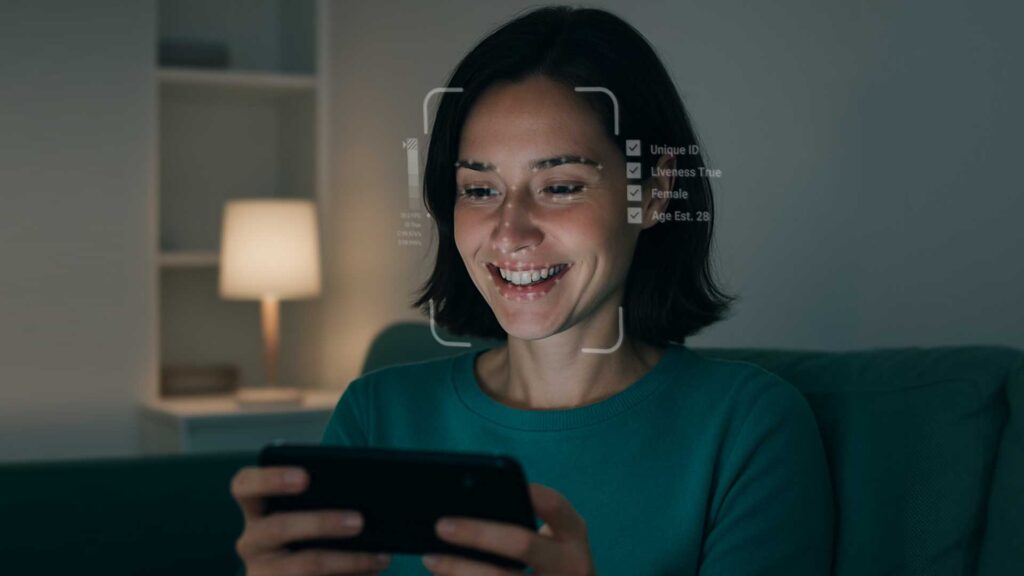
Liveness detection is a security process that confirms a real person is physically present during a digital interaction. Think of it as a digital bouncer that checks if you’re a living, breathing human and not just a photo, video, or sophisticated mask. By analyzing biometric data in real-time, this technology separates genuine users from bots and fraudsters trying to spoof the system. It’s a critical tool for securing online platforms and serves as a foundational layer of trust in our digital world, ensuring the person on the other side of the screen is exactly who they claim to be.
A human verification platform can confirm genuine presence without forcing every legitimate user through a puzzle.
How It Confirms You Are Actually There
So, how does liveness detection actually know you’re a real person and not just a clever fake? Instead of testing your puzzle-solving skills, it looks for biological proof that you are physically present in that exact moment. The technology analyzes subtle, real-time biometric cues that a static photo or pre-recorded video simply can’t replicate. Early versions of this tech used “active” liveness checks, which required you to perform an action like smiling or turning your head. While it worked, it still added a step for the user. Today, the best systems use “passive” liveness detection, which operates seamlessly in the background. It can analyze elements like skin texture and natural, involuntary facial movements from a single image to instantly confirm you’re real, without you having to do a thing. This is crucial for stopping sophisticated presentation attacks, where a fraudster might use a photo or deepfake video to try and fool the system.
Active vs. Passive Detection: What’s the Real Difference?
Liveness checks generally fall into two categories: active and passive. Active liveness detection requires you to perform a specific action, like smiling for the camera or turning your head. While highly secure, it can add a bit of friction to the user experience. On the other hand, passive liveness detection works quietly in the background. It uses AI to analyze a user’s video stream for subtle, natural cues of life—like tiny movements or changes in lighting—without asking them to do anything. This approach is fast, seamless, and ideal for situations like customer onboarding where a smooth, welcoming experience is key.
How Multimodal Biometrics Add Another Layer of Security
To stay ahead of sophisticated fraud, many platforms now use multimodal biometrics. Instead of relying on a single identifier, this approach layers multiple checks together, such as combining facial recognition with voice analysis or gesture recognition. By requiring multiple forms of proof, it becomes significantly harder for a bad actor to fool the system. Think of it as a digital version of a bank requiring both a signature and a PIN. This layered security strategy creates a much higher barrier against deepfakes and other advanced presentation attacks, ensuring a more confident verification of a user’s identity.
The AI Magic Behind Modern Liveness Checks
The secret sauce behind modern liveness detection is artificial intelligence. Advanced systems use deep neural networks, like 3D Convolutional Neural Networks (3D CNNs), to perform incredibly detailed analyses. These AI models are trained to spot the subtle differences between a real person and a fake representation. For instance, a 3D CNN can analyze the spatial depth and texture of a face to distinguish a real, three-dimensional person from a flat photo or video screen. This level of AI-powered analysis is what gives today’s liveness checks their high degree of accuracy and makes them so effective against digital fraud.
Is CAPTCHA Still Relevant Today?
Before we can talk about liveness detection, we have to talk about the original gatekeeper of the internet: CAPTCHA. We’ve all been there—squinting at distorted letters or clicking on endless pictures of traffic lights. For years, it’s been the standard way to separate people from programs. The core idea is simple: protect websites from spam and abuse by asking users to complete a task that’s supposedly easy for a human but difficult for a bot.
But as bots have grown more sophisticated, CAPTCHA has been forced to evolve. The journey from those early, clunky text puzzles to the more subtle tests we see today tells a story about the constant cat-and-mouse game between platform security and automated threats. While it was a necessary first step in digital identity, its limitations have become more apparent as the stakes for proving human presence get higher.
From Squiggly Lines to “I’m Not a Robot”
The first CAPTCHAs (an acronym for “Completely Automated Public Turing test to tell Computers and Humans Apart”) were all about visual puzzles. Users had to decipher wavy, distorted text or identify objects in a grainy image. The logic was sound at the time—computers struggled with this kind of abstract recognition. As bots got better at optical character recognition, however, the puzzles had to become more difficult. This led to a frustrating user experience where legitimate users were often locked out for failing a test that was too obscure, while bots were finding new ways to get through.
How Google’s reCAPTCHA Rewrote the Rules
Google’s reCAPTCHA marked a significant shift in this approach. Instead of relying solely on a visual puzzle, it introduced a more intelligent system. Modern CAPTCHA technology, like reCAPTCHA, uses advanced risk analysis techniques to test behavior behind the scenes. When you click that simple “I’m not a robot” checkbox, the system is analyzing signals like your mouse movements, IP address, and browsing history to calculate a risk score. If your behavior seems human, you pass right through. This move toward behavioral analysis made the process much smoother for most users while still providing a layer of security.
The User Experience and Accessibility Problem
Let’s be honest: nobody likes CAPTCHAs. While reCAPTCHA made the process smoother, the underlying issues persist. When the system isn’t confident, it defaults back to a visual puzzle, creating a frustrating roadblock for legitimate users. These tests can be confusing, with blurry images or ambiguous prompts that lead to multiple failed attempts and, ultimately, site abandonment. This isn’t just an annoyance; it’s a direct hit to your conversion rates. More importantly, these visual-based challenges create significant accessibility barriers for users with visual impairments, effectively excluding a segment of the population from accessing a service. When your security measure actively turns away real customers, it’s working against your business goals.
How Human Click Farms Defeat CAPTCHA
The biggest flaw in CAPTCHA’s logic is that it tests for task-solving ability, not genuine human presence. This vulnerability is exploited at scale by human click farms. Bad actors can easily hire real people, often in low-wage countries, to solve thousands of CAPTCHAs for pennies on the dollar. These workers provide the “human” solution that bots need to bypass security and create fake accounts, post spam, or commit fraud. This completely undermines the purpose of the test. The system successfully confirms a human solved the puzzle, but it can’t determine the human’s intent or verify that they are the actual user. It’s a security loophole that proves a simple puzzle is no longer a reliable defense against organized, automated attacks.
Privacy Issues with Data Collection
Beyond its security flaws, reCAPTCHA introduces serious privacy concerns. To assess risk, the system analyzes a vast amount of user data, including IP address, browser history, and even mouse movements. The problem is that this data collection often happens without explicit user consent, placing businesses in a tricky position with regulations like GDPR. Users are rarely informed about what specific information is being gathered or how Google might use it. This lack of transparency erodes the very trust that security tools are meant to build. For platforms dedicated to protecting their communities and respecting user privacy, relying on a tool with such an opaque data-gathering process is a significant liability.
Why CAPTCHA Is in a Never-Ending Fight with Bots
Despite these improvements, the arms race continues. While newer systems are a big improvement over the distorted text that frustrated so many of us, they aren’t foolproof. Today, smart bots can solve them, and some fraudsters even pay humans in “click farms” to solve CAPTCHAs at scale, completely bypassing the intended security. This reality exposes a fundamental weakness: CAPTCHA is designed to test for human-like action, not authentic human presence. As long as a bot or a bad actor can mimic that action, the system remains vulnerable to sophisticated attacks.
Liveness Detection vs. CAPTCHA: A Head-to-Head Comparison
When you’re deciding how to verify users, the choice often comes down to two main contenders: liveness detection and CAPTCHA. Both aim to separate humans from bots, but they go about it in vastly different ways, with significant implications for security and user experience. Think of it as the difference between asking someone to solve a simple puzzle versus asking for a quick, secure ID check. One is a basic filter, while the other provides a much higher degree of certainty.
This distinction is critical because the threats we face online have evolved. Basic bots are no longer the primary concern for platforms that handle sensitive information, manage communities, or process transactions. Today, the real danger comes from sophisticated AI, deepfakes, and coordinated fraud attempts that can easily bypass outdated security measures. Choosing the right verification method isn’t just a technical decision—it’s a fundamental choice about how you protect your platform and the people who use it. Let’s break down how liveness detection and CAPTCHA stack up against each other in the areas that matter most.
Which Is Better at Stopping Bots and Spoofing?
The primary job of any verification tool is to stop bad actors. CAPTCHAs were originally designed to protect websites from spam and abuse by asking users to complete a simple task that a basic bot would find difficult. The problem is, bots aren’t basic anymore. Sophisticated AI can now solve CAPTCHA challenges with ease, rendering them less effective against determined attackers.
Liveness detection, on the other hand, answers a more complex question: Is this a real, live person right now? It confirms that a biometric sample, like a facial scan, is coming from a physically present human, not a photo, a video, or a sophisticated deepfake mask. This makes it a powerful defense against spoofing attacks, where a fraudster tries to trick a system with a fake representation of a real user.
Which One Offers a Smoother User Journey?
We’ve all been there: squinting at a grid of grainy images, trying to decide if a traffic light pole counts as part of the crosswalk. CAPTCHAs are notoriously frustrating for real users, creating friction that can lead to abandonment. When a legitimate customer can’t pass the test, you risk losing their business and their trust. It’s a clunky experience that often feels like an accusation rather than a simple security check.
A modern liveness check, especially a passive one, can be nearly invisible. The user simply looks at their device’s camera for a moment, and the technology does the work in the background. While it is an extra step, it’s a fast, intuitive one that feels more like unlocking your phone than taking a test. It replaces frustrating guesswork with a seamless, modern interaction that respects the user’s time.
Comparing the Costs and Implementation Headaches
This is where CAPTCHA has traditionally held an edge. It’s generally cheap and easy to implement, making it an accessible first line of defense for websites of all sizes. For platforms that only need to deter low-level spam bots, the low cost and simple integration can be appealing. The trade-off, of course, is its limited effectiveness against more serious threats.
Liveness detection is a more advanced technology, and its implementation can involve higher costs. It requires more sophisticated software and processing power to analyze biometric data in real time. However, viewing this as a cost center is shortsighted. For any platform handling sensitive data, financial transactions, or valuable accounts, the cost of a single successful spoofing attack can far exceed the investment in robust security.
What About Privacy and Data Security?
Handling biometric data rightfully brings up questions about privacy. Reputable liveness detection providers operate under strict data protection protocols, often using encryption and other security measures to protect user information. The goal is to verify presence without storing unnecessary personal data. This technology is specifically designed to prevent serious identity-based attacks like spoofing and deepfakes, which are themselves a massive threat to user privacy and data security.
A smart strategy often involves a layered approach. For instance, you might use other signals to filter out obvious bots first, then deploy a liveness check for higher-risk interactions. This optimizes costs and ensures your most powerful security tool is used when it matters most, protecting both your platform and your users’ data from compromise.
Myths About Liveness Detection and CAPTCHA, Busted
One common belief is that CAPTCHA is “good enough” for most situations. While it can stop some nuisance bots, it often creates a poor experience for legitimate users and is no match for the automated threats targeting platforms today. Relying on it for anything beyond basic spam filtering gives a false sense of security, as CAPTCHAs can hinder usability for the very people you want to welcome.
Another misconception is that liveness detection is overly complex or intrusive. Modern passive liveness solutions are designed to be quick, intuitive, and frictionless. They provide an essential extra layer of security that is becoming non-negotiable in an era of AI-driven fraud. It’s not about adding a hurdle; it’s about adding a necessary safeguard that confirms genuine human presence with confidence.
Why Liveness Detection Is Pulling Ahead
While CAPTCHA was a solid defense for its time, the digital landscape has changed dramatically. The threats we face today are far more sophisticated than the simple bots of the past. Liveness detection is gaining ground because it directly addresses the modern challenges of digital identity, from AI-generated fakes to stringent regulatory demands. It provides a level of assurance that older methods simply can’t match, confirming not just humanity, but genuine, real-time presence.
How Liveness Detection Fights Deepfakes and AI Spoofing
The rise of generative AI means that bad actors are no longer just using stolen photos or videos; they can create convincing deepfakes to fool authentication systems. This is where liveness detection becomes essential. It’s designed to spot these spoofing attacks by looking for subtle cues that prove a person is physically present and not a digital fabrication. By analyzing factors like depth, texture, and micro-movements, liveness checks can distinguish between a live person and a presentation attack, keeping biometric authentication secure.
Why Liveness Detection Helps You Stay Compliant
For many businesses, especially in finance, verifying user identity isn’t just good practice—it’s the law. Regulations like Know Your Customer (KYC) and Anti-Money Laundering (AML) require companies to confirm that their customers are who they say they are. Liveness detection is a critical component of a modern, compliant onboarding process. It adds a robust layer of security to identity verification, helping businesses prevent identity theft and fraud from the very first interaction. This helps companies meet these important rules while building trust with legitimate customers.
Securing High-Stakes Industries like FinTech and Healthcare
When sensitive information or large sums of money are on the line, you need more than a basic bot check. Industries like online banking, healthcare, and cryptocurrency exchanges all handle high-stakes interactions that are prime targets for fraud. A security breach in these fields can have devastating consequences for both the business and its users. Liveness detection provides the high level of assurance needed to protect these critical transactions, serving as a reliable gatekeeper to ensure the person on the other side of the screen is a real, live human.
Tips for a Seamless Liveness Detection Setup
Strong security shouldn’t come at the cost of a frustrating user experience. The best liveness detection systems are designed to be both effective and seamless. For a smooth process, especially on mobile devices, passive liveness detection is often the ideal choice. It works quietly in the background during a quick selfie video, analyzing biometric data without requiring the user to follow complex instructions. This approach minimizes friction and reduces drop-off rates during onboarding. The entire verification, including the liveness check, can often be completed in just a couple of minutes.
How to Choose the Right Authentication for Your Platform
Deciding between liveness detection and CAPTCHA isn’t just about picking a technology—it’s about defining how you want to interact with your users and protect your platform. The right choice depends on what you’re trying to secure, the level of risk you face, and the kind of experience you want to create. A simple blog might not need the same level of security as a financial institution. By understanding the specific strengths of each tool, you can build a security framework that protects your assets without frustrating the real people who rely on your service.
When Liveness Detection Is the Clear Winner
For any platform where trust and identity are non-negotiable, liveness detection is the only way forward. Think about financial services, online marketplaces, or any system handling sensitive data. In these high-stakes environments, you need absolute certainty that the person on the other side of the screen is real, alive, and physically present. Liveness technology is specifically designed to stop many types of fraud that can easily bypass other checks, including printed photos, video replays, 3D masks, and increasingly, AI-generated deepfakes. If your goal is to securely onboard users, prevent account takeovers, or verify high-value transactions, liveness detection provides the robust proof of human presence that modern threats demand.
When CAPTCHA Still Makes Sense
While its limitations are becoming more apparent, CAPTCHA still has a place in low-risk scenarios. Consider a blog’s comment section or a simple contact form. Here, the primary goal is to filter out basic spam bots and prevent low-level abuse. CAPTCHAs are a familiar, inexpensive way to differentiate between real users and bots in these contexts. They can effectively block unsophisticated automated attacks without requiring significant investment or complex integration. However, it’s a trade-off. The user experience can be clunky and frustrating, and CAPTCHAs are largely ineffective against more advanced bots and determined human fraudsters. For anything beyond basic gatekeeping, you’ll need a more powerful solution.
Could a Hybrid Approach Be Your Best Bet?
You don’t always have to choose just one tool. In fact, the strongest security strategies often layer different technologies to create multiple lines of defense. For example, you could use less intrusive signals like device or network analysis to flag a potentially suspicious login attempt. If the risk score is high, you can then trigger a liveness check as a step-up authentication measure. This hybrid model provides robust protection where it’s needed most without adding unnecessary friction to every user interaction. Combining different technologies allows you to build a flexible and intelligent security system that adapts to varying levels of risk, ensuring a smoother experience for legitimate users while effectively blocking bad actors.
Exploring Other Bot Prevention Methods
While liveness detection and CAPTCHA represent two of the most direct ways to verify a user, they aren’t the only tools in the security toolkit. Many of the most effective bot prevention strategies work quietly in the background, analyzing data and behavior to spot threats without ever interrupting the user. These methods often form the invisible layers of a hybrid security approach, providing crucial signals that help platforms distinguish between genuine human activity and automated attacks. By understanding how these technologies work, you can build a more intelligent and resilient defense system.
Machine Learning Algorithms
Machine learning is a game-changer for bot detection because it moves from static rules to dynamic analysis. Instead of just looking for one red flag, these algorithms analyze huge volumes of traffic to learn what normal human behavior looks like on your platform. By establishing this baseline, they can instantly identify anomalies that signal bot activity. The real strength here is adaptability. As bots evolve their tactics, machine learning models can learn and adjust to new threats, making them a constantly improving defense. This is often achieved through supervised learning, where developers train the model on labeled data, essentially teaching it the difference between a legitimate user and a scraper.
Device Fingerprinting
Another powerful, behind-the-scenes technique is device fingerprinting. Think of it as creating a unique digital signature for every user’s device. This method gathers a collection of data points—like the operating system, browser type, screen resolution, and even network information—to build a distinct profile. While no single piece of information is unique, the combination creates a highly accurate identifier. This technique is rarely used in isolation. Instead, it serves as a crucial signal within a broader, layered security strategy. By analyzing a user’s device characteristics and behavior, platforms can flag suspicious activity, like multiple accounts being created from the same device, and then decide whether to trigger a more direct verification method.
How to Build a Future-Proof Authentication Strategy
As you plan for the future, your authentication strategy needs to do more than just block today’s bots—it must build and maintain user trust. Integrating liveness detection is a key part of this, as it helps businesses sign up customers safely and meet critical compliance standards like KYC (Know Your Customer) and AML (Anti-Money Laundering). More importantly, it prepares you for what’s next. AI-powered threats like deepfakes are evolving at an incredible pace. A forward-thinking strategy relies on equally advanced, AI-driven liveness detection to stay ahead of these threats. By prioritizing proof of real human presence, you create a secure and trustworthy environment that protects your platform and your community for the long run.
How to Prevent Bots Without CAPTCHA
Several user-friendly, CAPTCHA-free methods can stop bots while keeping your real users’ experience completely frictionless. These work quietly in the background, distinguishing human users from automated scripts without a single puzzle or image challenge.
Set a Trap with Honeypot Fields
Add a hidden field to your forms that is invisible to human users (hidden via CSS) but visible to bots in the HTML code. Bots fill in every field they find; when your server receives a submission with the honeypot field populated, it’s an immediate signal to discard it. No friction for real users whatsoever.
How to Set Up Your First Honeypot
Add a hidden form field with a label like name=”website”, hide it with display:none in CSS, then check server-side: if that field has any value on submission, reject it automatically.
Why the Honeypot Method Is So Effective
Exploits the non-discerning nature of spam bots that read and complete every form field in the HTML, regardless of visibility. Excellent at catching low-to-medium sophistication scripts with zero user impact.
Common Honeypot Mistakes to Avoid
Advanced bots can detect CSS-hidden fields and intentionally skip them. Don’t rely on honeypot alone — layer it with other methods for comprehensive defense.
Control Submission Speed with Rate Limiting
Humans and bots interact at very different speeds. Monitor request counts per IP per time window. Flag any submission that arrives faster than a human could possibly complete the form. Temporarily block IPs exceeding your threshold.
Secure Sessions with CSRF Tokens
Generate a unique, single-use secret token for each form session, stored server-side. When the form is submitted, verify the token matches. Bots that submit forms directly without loading the page won’t have a valid token and are blocked automatically.
How Proof-of-Work Verifies Humanity Invisibly
Give the user’s device a tiny background computational puzzle (e.g., Friendly Captcha). Trivial for one user in milliseconds; prohibitively expensive for a bot submitting thousands of requests per second. Completely invisible to the user.
Advanced Bot Verification: Behavioral Analysis and Facial Liveness
When simpler methods aren’t sufficient for your risk level, these advanced approaches provide a higher degree of certainty while remaining user-friendly.
Analyze User Behavior to Spot Bots
Track mouse movements, typing cadence, scroll patterns, and device fingerprints (browser type, OS, screen resolution) in real time. Bots exhibit rigid, unnatural patterns. These signals are analyzed silently in the background without user involvement.
Using AI to Fight AI
Modern bots can solve traditional CAPTCHA puzzles faster and more accurately than humans. The most effective defense is machine learning that continuously analyzes thousands of data points to detect the subtle anomalies that distinguish a bot from a human, adapting dynamically as bot tactics evolve.
Is Facial Liveness Verification Right for You?
For critical interactions (account creation, high-value transactions), a quick, live camera check confirms a real person is present in real time. Realeyes VerifEye uses lightweight facial verification to fight bots far more effectively than CAPTCHA — as simple as a selfie for the user, nearly impossible for a bot to fake.
Related Articles
- What Is Liveness Detection? The Ultimate Guide
- 7 Best CAPTCHA Alternative Options for 2025
- What Is a Passive Liveness Check & How It Works
Frequently Asked Questions
My site uses CAPTCHA and it seems to work fine. Why would I need to switch? Think of it this way: CAPTCHA was designed to see if a user can perform a human-like action, like identifying a bus or typing distorted text. The problem is that modern bots are now excellent at mimicking those actions. Liveness detection answers a much more important question: Is there a genuine, physically present human behind this interaction right now? It confirms real presence, not just behavior, making it a far stronger defense against the sophisticated fraud and account takeover attempts that target valuable platforms.
What’s the difference between ‘active’ and ‘passive’ liveness detection? The difference really comes down to the user experience. Active liveness detection requires you to do something specific, like smile or turn your head on command. It’s a direct challenge to prove you’re real. Passive liveness detection, on the other hand, works seamlessly in the background. It analyzes a short, natural video of your face for subtle cues of life—like tiny muscle movements or the way light reflects off your skin—without asking you to perform any special actions. This makes the process much faster and smoother for the user.
How does liveness detection protect user privacy if it’s using my face? This is a great question, and it’s a top priority for any reputable provider. The technology is designed to verify your presence in a specific moment, not to collect and store your biometric data indefinitely. Reputable systems use strong encryption and are built to confirm that a biometric sample is from a live person, then discard any unnecessary information. The goal is to prevent identity fraud—a massive threat to privacy in itself—by ensuring that no one can use a photo or video to impersonate you.
Is liveness detection only for big banks and financial companies? While it’s absolutely essential for finance, its use goes far beyond that. Any platform where trust and safety are critical can benefit. This includes online marketplaces that need to verify buyers and sellers, social networks protecting their communities from bot armies, and healthcare platforms securing sensitive patient information. If you need a high degree of confidence that the person on the other side of the screen is real, liveness detection is the modern standard.
Do I have to completely replace CAPTCHA with liveness detection? Not necessarily. The smartest security strategies often use a layered approach. You don’t need the same level of security for every single interaction. For example, you might keep a simple CAPTCHA on a blog comment section but trigger a liveness check for more sensitive actions, like resetting a password or authorizing a large payment. This allows you to apply the strongest protection where the risk is highest, creating a secure system that doesn’t add unnecessary friction for your users.