
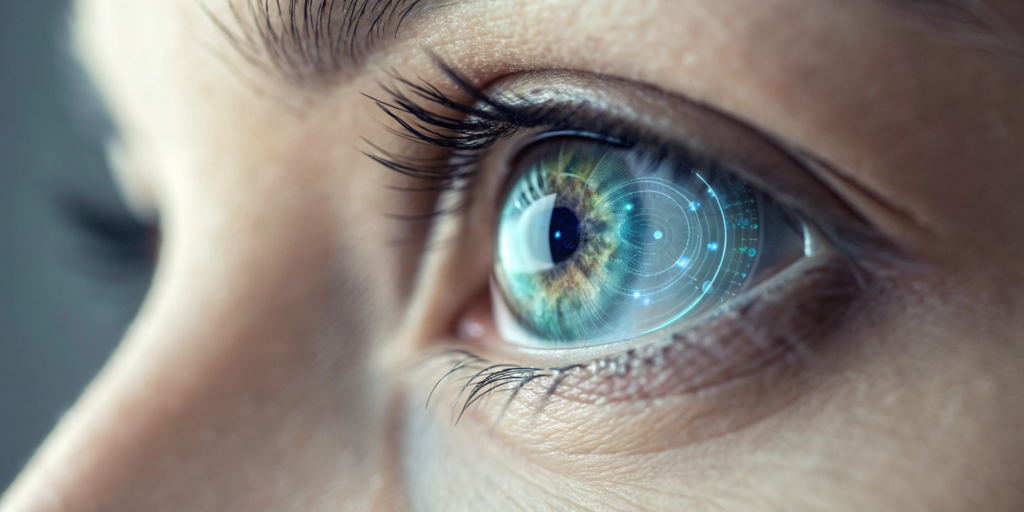
How can you tell the difference between a real person and a high-resolution photo of them on a screen? The answer is in the tiny, involuntary cues that prove someone is physically present. This is the core of a passive liveness check. It’s a smart, silent security layer that runs during any identity verification process. Instead of asking users to do anything, it analyzes a short video feed for subtle signals—like natural micro-movements and the way light reflects off skin. This confirms you’re interacting with a real, three-dimensional person, effectively shutting down fraudsters using photos, videos, or masks.
Key Takeaways
- Security and a Great User Experience Can Coexist: Passive liveness stops sophisticated fraud like deepfakes by working silently in the background, confirming a real person is present without making them perform any awkward actions.
- It Works by Analyzing Tiny, Involuntary Cues: The technology uses advanced AI to spot the subtle signals of a live human—like natural micro-movements and unique skin texture—that are nearly impossible for a photo, video, or 3D mask to fake.
- Your Partner Determines Your Success: When adopting this technology, choose a provider whose system can adapt to new fraud tactics, perform reliably in real-world conditions like poor lighting, and integrate easily into your existing security while prioritizing user privacy.
What Exactly Is Passive Liveness Detection?
Imagine verifying a user’s identity without asking them to do a thing—no blinking, no head-turning, no smiling on command. That’s the core idea behind passive liveness detection. It’s an innovative method that works quietly in the background during a biometric scan, confirming a real, live person is present, not just a photo or a sophisticated deepfake. This technology uses advanced algorithms to analyze biometric features, like a person’s face, to ensure the interaction is genuine. It’s all about adding a powerful layer of security that’s completely invisible to the user, making the entire process seamless and secure from the start.
Passive vs. Active: What’s the Real Difference?
The main difference between passive and active liveness checks comes down to user effort. Active liveness is probably what you’re used to seeing—it asks you to perform a series of “challenge-response” actions to prove you’re a live person. You might be prompted to nod your head, follow a dot with your eyes, or read a phrase aloud. While effective, these steps add friction to the user experience. Passive liveness, on the other hand, conducts all the necessary checks without the user even knowing it’s happening. It’s a silent, instant verification that respects the user’s time and creates a much smoother journey.
Exploring Hybrid Liveness Detection
So, if active liveness adds friction and passive is completely seamless, is there anything in between? Yes, and it’s called hybrid liveness detection. This approach combines the strengths of both methods, primarily relying on passive checks to keep the process smooth for the user. However, if the system detects something suspicious or needs a higher degree of certainty, it can trigger a simple active challenge for extra assurance. Think of it as an intelligent, adaptive security measure. This flexibility allows the system to balance robust security with a good user experience, making it more resilient against new and evolving fraud tactics. Instead of treating every verification the same, a hybrid system steps up its security checks only when necessary, ensuring most users have a quick and easy experience while still catching potential threats.
The Technology Working Behind the Scenes
So, how does it work without any user input? The magic is in the AI. Passive liveness detection uses sophisticated AI neural networks to analyze a user’s face or other biometrics the moment they are captured. These networks are trained on massive datasets, learning to distinguish the subtle characteristics of a live human from a digital or physical spoof. The system uses algorithms to analyze data collected from the device’s camera or sensors, determining in a split second whether the source is a live person or a clever reproduction, like a high-resolution photo or video.
Beyond Faces: Incorporating Voice Authentication
While facial analysis is a cornerstone of passive liveness, some systems go a step further by incorporating voice authentication. This method adds another powerful layer of security by verifying a user based on their unique vocal traits—like pitch, tone, and cadence. Just as you can recognize a friend’s voice in a crowded room, advanced algorithms can analyze these subtle vocal patterns to confirm an identity. This creates a multi-factor approach to security, making it significantly harder for fraudsters to succeed. Even if they manage to get a high-quality photo for a spoofing attempt, they would also need a perfect replica of the user’s voice, which is incredibly difficult to obtain and synthesize convincingly.
Creating 2D and 3D Facial Maps for Layered Security
When a passive liveness system analyzes a face, it’s doing more than just matching a picture. It’s creating a complex digital map. This process often involves both 2D and 3D recognition to build a comprehensive understanding of the user’s facial structure. While a 2D map can identify key features, it’s the 3D facial mapping that provides the real security advantage. By analyzing depth, contours, and the subtle textures of the skin, the technology confirms the presence of a genuine, three-dimensional person. This makes it nearly impossible for a fraudster to fool the system with a flat photo, a video on a screen, or even a basic mask, as these spoofs lack the authentic depth of a living human.
Analyzing Behavioral Signals and Device Binding
The most advanced systems look beyond static biometrics to analyze a user’s unique behaviors. This can include subtle cues like the way a person holds their phone, the slight tremor in their hand, or even the rhythm of their interactions. These behavioral signals create a digital signature that is incredibly difficult to forge. To tighten security even further, this data can be combined with device binding, which links a user’s verified identity to their specific smartphone or computer. This means that even if a fraudster somehow managed to steal biometric data, they would still be blocked if they weren’t using the trusted, registered device, adding a robust and practical barrier against account takeovers.
Verifying Real People with Texture and Light Analysis
Passive liveness gets incredibly granular, looking for details the human eye would miss. The technology often captures a quick series of frames to measure natural micro-movements, like the tiny, involuntary motions of a living person. It also analyzes how light reflects off the skin’s texture and the 3D contours of a face. A flat screen or a printed photo reflects light uniformly, while a real human face has depth, pores, and subtle imperfections that create unique patterns. By analyzing these light and texture cues, the system can confidently detect a presentation attack and confirm a genuine human presence.
The Escalating Threat of Digital Identity Fraud
The game has changed. Fraudsters are no longer just stealing passwords or credit card numbers; they’re faking human identity itself. The same AI technology that powers innovation is also being used to create incredibly realistic digital puppets. This new reality demands a security approach that can reliably distinguish between a real person and a sophisticated fake. As these methods advance, traditional identity checks that rely on simple challenges are becoming alarmingly easy to bypass, leaving platforms and their communities vulnerable to deception on a massive scale. The core challenge is no longer just verifying a document, but confirming the genuine presence of the person holding it.
The Alarming Rise of Deepfakes and AI-Generated Fraud
Fraudsters have become masters of illusion, using advanced tools to create convincing fakes that can fool both humans and machines. We’re seeing a surge in attacks using AI-generated deepfakes, hyper-realistic 3D masks, and manipulated high-resolution photos to trick verification systems. These aren’t amateur tricks; they are sophisticated deceptions designed to mimic the look and feel of a live person. As a result, older methods of proving liveness, like asking a user to blink or turn their head, are quickly becoming obsolete. Bad actors can now use AI to animate a static image or create a video that performs these actions on command, making it clear that a more intelligent and passive form of verification is essential.
Understanding Presentation and Injection Attacks
These advanced fakes are typically deployed in what are known as presentation attacks. This is when a fraudster tries to fool a system’s camera by presenting it with a fake artifact. Common examples include holding up a printed photo, playing a video of the victim on a phone, or even wearing a custom-made 2D or 3D mask. A more advanced method is the injection attack, where the criminal bypasses the device camera entirely. Instead of presenting a fake to the lens, they inject a pre-recorded or digitally created video stream directly into the system’s data feed. This type of attack is much harder to detect because it happens behind the scenes, highlighting the need for security that analyzes the entire data capture process, not just what the camera sees.
How Does a Passive Liveness Check Actually Work?
Passive liveness detection feels like a bit of everyday magic, but it’s powered by some seriously smart technology working behind the scenes. It all happens in the blink of an eye, without you having to follow any instructions. The system simply analyzes a quick, selfie-style video from your device’s camera to confirm you’re a real, live person. It’s a sophisticated process designed to be completely effortless for the user while creating a major roadblock for fraudsters. Let’s pull back the curtain to see how it all comes together.
How AI and Machine Learning Power the Process
At the heart of passive liveness is artificial intelligence. This isn’t just a simple photo-matching tool; it’s a complex system built on advanced AI neural networks that analyze the user’s face in real time. Think of it as a digital detective that has been trained on millions of images and videos, learning the subtle differences between a living person and a fake representation, like a photo or a deepfake video. These sophisticated algorithms are designed to assess the “liveliness” of what the camera sees, going far beyond what the human eye can catch to spot even the most convincing spoofs.
Analyzing Subtle Human Cues in Real Time
So, what is the AI actually looking for? It’s all about the tiny, involuntary signals that prove you’re a living, breathing person. The technology analyzes data from the camera’s sensor to determine if the source is live or a reproduction. This includes looking for natural, subtle movements like slight head tilts, blinking, and changes in facial expression. It also examines how light reflects off the unique texture of your skin and the depth and dimension of your facial features. A flat photo held up to the camera or a digital video playing on a screen won’t have these authentic, three-dimensional human characteristics, and the AI can spot the difference instantly.
Get Instant Proof with Zero User Effort
The best part about this entire process is that it happens without you having to do a thing. The technology works by capturing multiple frames in a fraction of a second to measure those natural micro-movements. It then instantly analyzes the data to provide a clear “yes” or “no” on whether a real person is present. This all happens quietly in the background of the verification process, creating a secure and frictionless user experience. There are no hoops to jump through—just a quick, seamless check that confirms you are who you say you are, letting you get on with your day.
Why Your Business Needs Passive Liveness Checks
Adopting passive liveness checks isn’t just about adding another layer of security; it’s a strategic move that addresses three core business needs at once. In a digital world where trust is fragile, you need a way to confirm genuine human presence without frustrating your users or draining your budget. Passive liveness technology offers a powerful solution by stopping sophisticated fraud in its tracks, creating a seamless user experience, and providing a cost-effective way to secure your platform. It’s about building a safer, more human-centric online environment where your business and your customers can interact with confidence.
Stop Sophisticated Fraud in Its Tracks
The nature of online fraud has evolved far beyond stolen passwords and phishing emails. Today, platforms face highly sophisticated attacks from deepfakes, 3D masks, and presentation attacks designed to fool standard verification systems. Passive liveness detection is your frontline defense against these threats. It uses advanced neural networks to analyze subtle, almost imperceptible signs of life—like skin texture, light reflection, and micro-movements—that are incredibly difficult for fraudsters to replicate. This innovative liveness detection method runs quietly in the background, differentiating between a real person and a digital fake without any user action, effectively shutting down even the most advanced spoofing attempts.
Give Your Users a Smooth, Frictionless Experience
Security measures often come at the cost of user convenience, leading to high drop-off rates during onboarding and checkout. Passive liveness flips that script. Unlike active methods that require users to blink, smile, or turn their head, passive checks are completely invisible to the user. The verification happens seamlessly in the background while they simply look at their camera. This creates a fast, intuitive, and frictionless process that respects your user’s time and patience. By removing these barriers, you not only secure your platform but also improve conversion rates and build a positive brand experience from the very first interaction.
Complete Verifications in Seconds, Not Minutes
When a user needs to verify their identity, every second counts. Traditional or active verification methods can turn a quick sign-up into a lengthy chore, asking users to follow multi-step instructions that can be both confusing and time-consuming. Passive liveness detection streamlines this entire process into a single, invisible step. It all happens in the blink of an eye, analyzing a quick selfie-style video from the user’s camera to confirm they are a real person. This efficiency is a game-changer for the user experience, eliminating the frustrating wait times that often lead people to abandon a process altogether. It respects your user’s time by making security instant and effortless.
Reduce Customer Drop-Off Rates
One of the biggest challenges during user onboarding is the dreaded drop-off. Every point of friction—a confusing instruction, a failed attempt at verification, a slow-loading page—is an opportunity for a potential customer to leave and never come back. Active liveness checks, with their specific commands to smile or turn your head, can be a significant source of this friction. Passive liveness removes this hurdle entirely. Because the check happens silently in the background, the user isn’t even aware of it. This creates a truly frictionless onboarding experience, guiding more users to successfully complete sign-ups, checkouts, and other critical actions on your platform.
Improve Accessibility for All Users
A truly secure platform should also be an inclusive one. Active liveness challenges, which require users to perform specific physical actions like blinking or nodding, can create unintentional barriers for some people. For individuals with motor impairments or other disabilities, completing these tasks can be difficult or even impossible. Passive liveness detection offers a more equitable solution. Since it requires no specific movements from the user, it ensures that everyone can access your platform securely, regardless of their physical abilities. By adopting a passive approach, you build a more welcoming and user-friendly environment for a much broader audience.
Secure Your Platform Without Breaking the Bank
Implementing robust security can feel like a major financial undertaking, but passive liveness offers an efficient and cost-effective solution. By preventing fraudulent accounts and transactions at the source, it saves your business from the significant downstream costs associated with chargebacks, manual reviews, and customer support for fraud-related issues. The automated nature of passive checks also reduces the operational overhead required to manage your security protocols. It’s a smart investment that provides top-tier protection against identity fraud while helping you maintain a budget-friendly approach to security, allowing you to allocate resources where they matter most.
Key Industries Where Passive Liveness Is a Game-Changer
Passive liveness technology is becoming a cornerstone of digital trust across the board, but its value is especially clear in industries where security and identity are non-negotiable. For these sectors, verifying that a real person is present isn’t just a nice-to-have feature—it’s fundamental to their operations, protecting everything from financial assets to sensitive personal data. Let’s look at where this technology is making the biggest difference.
Securing Digital Banking and Fintech
In the world of finance, the stakes couldn’t be higher. That’s why passive liveness detection has become a key part of checking someone’s identity online, especially for banks and other financial institutions. It provides a fast, secure way to verify users during critical moments like opening a new account, authorizing a large transfer, or resetting a password. This helps financial services meet strict Know Your Customer (KYC) requirements and prevent devastating account takeover fraud, all without making legitimate customers jump through frustrating hoops.
Protecting E-commerce and Online Payments
For online retailers, fraud is a constant threat that can eat into profits through chargebacks and fake orders. Passive liveness detection offers a powerful solution for fraud prevention at scale, ensuring that the person making a purchase is a real human and not a bot using stolen credit card information. By seamlessly verifying a user’s presence during checkout or account creation, platforms can reduce fraudulent transactions and build a safer shopping environment. This protects revenue and strengthens customer trust without adding friction that could cause a shopper to abandon their cart.
Verifying Identities in Telehealth and Healthcare
The rise of telehealth has made healthcare more accessible, but it has also introduced new security challenges. Protecting sensitive patient information is paramount. Passive liveness is ideal for this environment because it can be used remotely with standard webcams and phones to confirm patient identities during online doctor visits or when accessing medical records. This helps organizations maintain HIPAA compliance by ensuring that only authorized individuals can access protected health information, securing the digital connection between patients and their providers.
Building Trust in Government and Public Services
As more government services move online, from filing taxes to applying for benefits, the need to verify citizen identities has become critical. Passive liveness detection is crucial for stopping various fraud attempts in this sector. By confirming that a real person is behind an application or a request for access, agencies can ensure that public funds and services are distributed correctly and are not diverted by fraudsters. This technology helps protect essential programs and builds public confidence in digital government platforms.
Safeguarding Telecommunications and the Gig Economy
From signing up for a new phone plan to onboarding as a rideshare driver, the telecom and gig economy sectors depend on fast, reliable identity verification. But as fraudsters get smarter, using deepfakes and 3D masks to create fake accounts, these platforms need a stronger defense. Passive liveness detection serves as a crucial tool to fight modern fraud by confirming a real person is present during signup. It creates a completely frictionless user experience, meaning people can get verified without any hassle or awkward steps. This allows platforms to authenticate users with confidence, protecting their communities and systems from bad actors trying to exploit their services.
Protecting Gaming, Crypto, and Retail Platforms
Gaming, cryptocurrency, and retail platforms are prime targets for automated bot attacks and large-scale fraud. Whether it’s bots using stolen credit card information to make purchases or creating thousands of fake accounts to manipulate a game’s economy, the threat is constant. Passive liveness detection offers a powerful solution for fraud prevention at scale, ensuring that the person making a purchase or creating a profile is a real human. By quietly confirming a live presence, these platforms can block fraudulent transactions before they happen, protect the integrity of their communities, and build a foundation of trust with their legitimate users.
Streamlining Border Security and Travel
Long lines and cumbersome identity checks are a familiar frustration for travelers. Passive liveness technology is changing that by making the process faster and more secure. Instead of manual checks or clunky verification steps, travelers can be verified “in seconds” at border checkpoints and airport gates. This technology makes identity checks fast, easy, and highly secure, allowing security personnel to process more people efficiently while strengthening their ability to spot fraudulent identity documents. It’s a perfect example of how robust security can be implemented without sacrificing convenience, creating a better experience for everyone involved.
Securing High-Risk Actions Like Password Resets
Some online actions carry more risk than others. Resetting a password, changing account details, or authorizing a large payment are critical moments that fraudsters love to target for account takeovers. Passive liveness detection adds a strong layer of security to these sensitive tasks. By requiring a quick, silent liveness check before a high-risk action is completed, platforms can confirm the legitimate account holder is the one making the request. This provides an essential safeguard for online tasks like resetting passwords or using multi-factor authentication, giving both the business and the user peace of mind that their accounts are protected.
Addressing the Challenges of Passive Liveness
Passive liveness technology is incredibly powerful, but it’s not a magic wand. Like any advanced security measure, it faces its own set of challenges. The good news is that the best systems are designed specifically to meet these challenges head-on. The digital landscape is a dynamic place, with fraudsters constantly inventing new ways to trick automated systems. From sophisticated deepfake videos to simple presentation attacks using a printed photo, the threats are real and varied.
On top of that, you have to account for the unpredictability of the real world. Your users won’t always be in a perfectly lit room with a clean background. They might be trying to verify their identity in a dimly lit car, on a busy street, or with sunlight streaming in from a window behind them. A truly effective passive liveness solution must be smart enough to distinguish a real person from a fake, even in these less-than-ideal conditions. The key is to find a technology that not only provides robust security but also respects user privacy and adapts to the ever-changing tactics of online fraud.
Outsmarting Advanced Spoofing and 3D Masks
One of the biggest jobs for a liveness check is to stop what are known as presentation attacks. This is when a fraudster tries to fool a system by presenting a fake artifact, like a high-resolution photo, a video playing on a screen, or even a realistic 3D mask. Early biometric systems were vulnerable to these tricks, but modern passive liveness is much smarter. It uses sophisticated algorithms to analyze subtle details that fakes can’t replicate. The technology examines things like skin texture, the way light reflects off a curved human face, and involuntary micro-movements in a person’s expression. These tiny, natural signals are what confirm a living, breathing person is truly present.
How to Handle Poor Lighting and Tricky Environments
Your users live in the real world, not a photo studio. A passive liveness check has to work reliably whether someone is in a dark room, sitting in front of a bright window, or has a cluttered background behind them. This is where the quality of the underlying AI makes all the difference. Robust systems are trained on massive, diverse datasets containing images and videos from countless real-world scenarios. This training teaches the algorithm to filter out environmental “noise” and focus on the essential biometric data. It learns to identify the unique characteristics of a human face, regardless of poor lighting or a distracting background, ensuring the verification process is both accurate and dependable for everyone.
Working with Device and Hardware Constraints
Your users will try to verify their identity on every device imaginable—from the latest smartphone to an older laptop with a grainy webcam. This wide range of hardware presents a real challenge. The quality of a device’s camera sensor, its resolution, and its ability to perform in low light can all vary dramatically. A passive liveness system must deliver accurate results across this entire spectrum. The goal is to ensure that a user on a five-year-old computer gets the same secure and seamless experience as someone with a brand-new phone. This is where the sophistication of the AI model becomes critical, as it must be able to find the truth even with imperfect data.
Staying Current as Fraud Tactics Evolve
The fight against fraud is a constant cat-and-mouse game. As soon as security measures improve, bad actors start working on new ways to get around them. The rise of generative AI and convincing deepfakes is a perfect example. This is why the best passive liveness solutions are built on a foundation of machine learning. They don’t just rely on a static set of rules; they continuously learn. By analyzing new and emerging attack patterns, the system’s neural networks can adapt and update their defenses in real time. This ensures your platform is protected not just from the threats of today, but also prepared for the fraudulent tactics of tomorrow.
How to Balance Strong Security with User Privacy
In a world where data privacy is paramount, asking users for biometric information can feel like a big request. That’s why it’s so important to handle it responsibly. Passive liveness detection is inherently more privacy-preserving than active methods because it doesn’t require users to perform specific, sometimes awkward, actions. The process is seamless and happens in the background. A well-designed system captures and analyzes video frames in real time to confirm liveness, then immediately discards any data that isn’t essential for the verification record. By pairing this approach with strong data encryption and a commitment to compliance standards, you can offer your users top-tier security without compromising their trust.
How to Get Started with Passive Liveness Technology
Adopting passive liveness technology might sound like a massive undertaking, but it’s more straightforward than you think. It’s not about overhauling your entire security infrastructure. Instead, it’s about adding a powerful, invisible layer that strengthens what you already have. By focusing on smart integration, choosing the right partner, and staying on top of compliance, you can build a more secure and human-centric platform. Think of it as a strategic upgrade that protects your users and your business from the ground up. Here’s how you can get started.
How to Integrate with Your Existing Security Stack
The best part about passive liveness is that it’s designed to work behind the scenes. It’s not a standalone system that creates friction; it’s a feature that enhances your current security measures. This technology runs quietly in the background during your existing biometric verification process, adding a crucial layer of proof without asking the user to do anything extra. The goal is to slip it into your workflow seamlessly, whether that’s during account creation, login, or a high-stakes transaction. It complements multi-factor authentication and other security protocols by answering one simple question: Is there a real, live human here right now?
What to Look for in a Technology Partner
Not all passive liveness solutions are created equal. The effectiveness of the technology hinges on the sophistication of its algorithms and the quality of its AI models. When you’re evaluating partners, look for a provider that can clearly explain how their system analyzes biometric data to distinguish between a live person and a spoof attempt. A strong partner will be transparent about their detection capabilities, especially against advanced threats like deepfakes and 3D masks. Ask about their training data, their accuracy rates, and how they handle different lighting conditions and camera qualities. Your goal is to find a partner whose technology is as resilient and reliable as your business needs it to be.
Ensuring Compliance with Key Industry Standards
Introducing any new technology that handles user data, especially biometrics, requires a sharp focus on privacy and compliance. Passive liveness detection uses advanced AI neural networks to analyze a user’s features, so it’s essential that your chosen solution adheres to global data protection regulations like GDPR and CCPA. Work with a provider that prioritizes privacy by design, ensuring that data is processed securely and ethically. This includes providing clear information to users about how their data is being used and obtaining the necessary consent. Staying compliant doesn’t just protect you from legal trouble; it builds trust with your users, showing them you take their privacy seriously.
Look for Independent Certifications Like NIST and iBeta
With so many providers in the market, it can be tough to tell whose technology truly stands up to sophisticated attacks. This is where independent, third-party testing comes in. Certifications from globally recognized labs like the National Institute of Standards and Technology (NIST) and iBeta are the gold standard for verifying performance. These organizations conduct rigorous, unbiased tests to see if a liveness detection system can be fooled by the latest presentation attacks. When a provider has achieved these certifications, it’s not just a marketing claim—it’s objective proof that their technology performs reliably under pressure. It shows their system can effectively spot fakes in real-world conditions while respecting user privacy, giving you confidence in the partner you choose.
Building a Layered Security Approach
Passive liveness detection is a powerful tool, but it’s most effective when it’s part of a broader, layered security strategy. Think of it as your first line of defense. Its primary job is to answer the most fundamental question: Is there a real, live human interacting with your platform right now? By confirming genuine human presence at the very beginning of any verification process, it strengthens every other security measure you have in place. It ensures that your identity document checks, multi-factor authentication, and fraud monitoring systems are all interacting with a real person, not a bot or a deepfake. This approach creates a formidable barrier against fraud without adding any friction for your legitimate users.
Future-Proofing Your System with Continuous Updates
The world of digital fraud is constantly changing. As soon as a new security measure is in place, bad actors are already working on ways to defeat it. That’s why passive liveness isn’t a “set it and forget it” solution. Your technology partner should be committed to continuous improvement, constantly updating their algorithms to detect new and emerging spoofing techniques. This proactive approach ensures your defenses evolve alongside the threats. A partner dedicated to research and development will help you stay ahead of the curve, protecting your platform not just from today’s fraud tactics but from tomorrow’s as well.
Frequently Asked Questions
Is passive liveness the same as facial recognition? That’s a great question, and it’s a common point of confusion. While they often work together, they do two different jobs. Passive liveness detection answers the question, “Is this a real, live person right now?” It analyzes subtle cues to make sure it’s not looking at a photo, a mask, or a deepfake. Facial recognition, on the other hand, answers the question, “Who is this person?” It matches the user’s face to a stored image to confirm their identity. Think of liveness as the first gatekeeper that ensures a real human is at the door before facial recognition checks their ID.
How does it work in bad lighting or with low-quality cameras? This is where a high-quality solution really shows its value. The best systems are built on AI models that have been trained on millions of images and videos from all sorts of real-world situations—not just perfect studio shots. This teaches the technology to focus on the essential biometric signals that prove liveness, like skin texture and tiny, involuntary movements, even when the lighting is dim or the camera resolution isn’t great. It’s designed to be robust enough to handle the unpredictable conditions your users will actually be in.
What happens if a legitimate user fails the liveness check? While the goal is to be incredibly accurate, no system is perfect. A well-designed platform plans for this. If a real user fails the check, it’s usually not a dead end. The system can simply prompt them to try again, perhaps suggesting they move to a spot with better lighting. In some cases, the platform might offer an alternative verification path as a fallback. The key is to stop fraudsters effectively without permanently blocking legitimate customers, ensuring the security process is both strong and fair.
How does this technology keep up with new threats like deepfakes? The fight against fraud is always evolving, and passive liveness technology is built for that reality. It’s not based on a static set of rules. Instead, it relies on machine learning, which means the system is constantly learning and adapting. As new fraud techniques and more sophisticated deepfakes emerge, the AI models are updated with new data. This allows the system to recognize and defend against new threats, ensuring your security stays a step ahead of those trying to break it.
Will adding this feature create a slow or clunky experience for my users? Quite the opposite, actually. The entire point of passive liveness is to be completely invisible and instantaneous. The analysis happens in a fraction of a second, right as the user is looking at their camera for a selfie. There are no instructions to follow or actions to perform. From the user’s perspective, nothing has been added to the process at all. It replaces the friction of older, active methods with a seamless check that provides stronger security without slowing anyone down.