
How AI Age Estimation Works (No ID Required!)

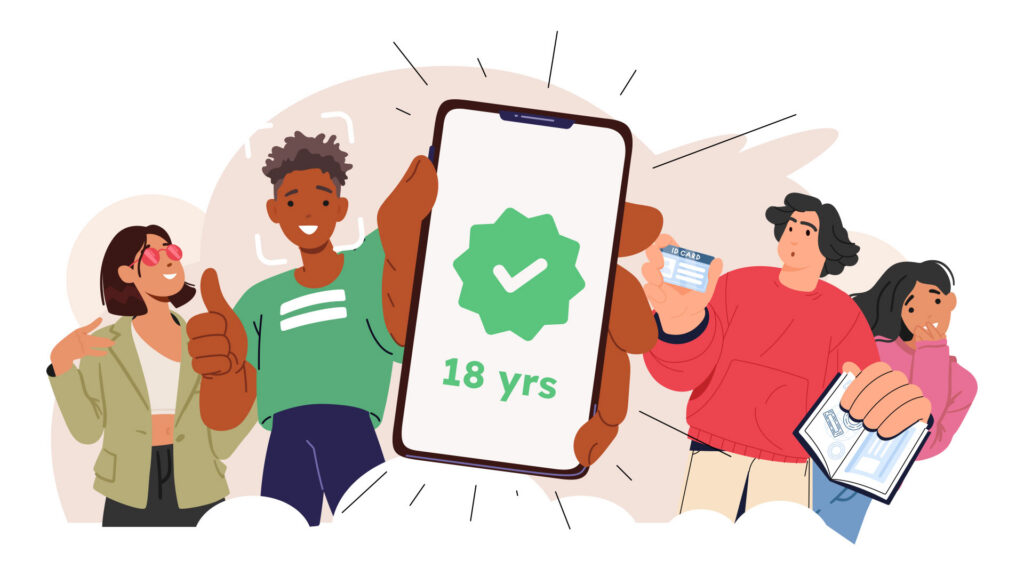
A person using a privacy-safe method for age verification without an ID.

The idea of using a camera for age verification can sound intimidating, often bringing to mind invasive facial recognition. But the reality of the technology is far more elegant and privacy-focused. It’s not about identifying a person, but simply estimating their age. An advanced AI analyzes a live image for a few seconds, assesses facial characteristics against millions of data points, and provides a confident age range. Then, the image is gone forever. This isn’t science fiction; it’s the practical application of ai age estimation, no id required! This guide will walk you through how this technology works and why it’s becoming the new standard for building safer, more trustworthy online spaces.

Key Takeaways

  • Ditch the ID Check for a Better Approach: Traditional ID verification creates unnecessary friction and security risks for your users. Modern methods can confirm a user’s age without collecting sensitive documents, leading to a safer and more user-friendly experience.
  • Verify an Attribute, Not an Identity: The goal is to answer a simple question, like “Is this user over 18?”, without needing to know who the user is. This privacy-first mindset minimizes data collection and protects user anonymity by design.
  • Choose the Right Tool for the Job: There is no one-size-fits-all solution. The best method for your business depends on your industry, risk level, and user base, balancing strong security with a seamless experience.

Is Age Verification Without an ID Possible?

The short answer is yes, and it’s quickly becoming the standard. For years, the go-to method for checking a user’s age online involved asking for a government-issued ID. But as more of our lives move online—from social media and gaming to e-commerce and dating apps—that approach just doesn’t scale. Let’s be honest, the process is clunky, expensive, and raises serious privacy flags for users. Think about it: asking someone to upload their driver’s license just to access a new app feels like a huge overstep. It forces a trade-off between safety and privacy that nobody wants to make, often causing potential users to abandon the sign-up process altogether.

Fortunately, technology has caught up. We now have smarter, more secure ways to confirm age without ever needing to see a passport or ID card. These modern methods focus on verifying an age attribute, not a person’s entire identity. They offer a way to respect user privacy while still meeting legal and safety requirements for age-gated content or services. This shift is crucial for any business that needs to protect younger users, comply with global regulations, and build lasting trust with its entire audience. It’s about making the internet safer without making it more invasive.

Understanding the Terminology: Verification, Assurance, and Estimation

To pick the right approach, it helps to get clear on the language. The terms “verification,” “assurance,” and “estimation” sound similar, but they represent very different ways of thinking about age confirmation. Understanding the nuances is the first step to building a system that works for both your business and your users. Each term describes a unique process with its own balance of security, privacy, and user experience, so let’s break down what they really mean.

Age Verification

Think of age verification as the digital equivalent of a bouncer checking your ID at the door. It’s the most stringent method, designed to confirm a person’s exact age by cross-referencing it with an official document like a driver’s license or passport. While this approach offers a high degree of accuracy, it comes at a cost. It requires users to hand over sensitive personal data, creating significant friction in the sign-up process and raising valid privacy concerns. For many platforms, asking for this level of information is an overstep that can deter users and create unnecessary data security risks.

Age Assurance

Age assurance shifts the question from “How old are you exactly?” to “Are you old enough?” This approach focuses on confirming that a user meets a specific age threshold—like being over 18 or under 13—without needing to know their precise birthday. It’s a more flexible and privacy-conscious framework that aims to balance regulatory compliance with a better user experience. Instead of demanding an exact identity, age assurance provides confidence that a user belongs to the appropriate age group, making it a more practical solution for most online interactions.

Age Estimation

This is where the magic happens. Age estimation is the technology that makes privacy-first age assurance possible. It uses artificial intelligence to analyze a person’s face from a selfie or a brief video and predict their age. The system isn’t trying to figure out *who* you are; it’s simply determining *how old* you appear to be. As a leading method for age verification without an ID, modern AI can achieve 95% to 99% accuracy in confirming if someone is over 18. Best of all, the image is analyzed in seconds and then immediately deleted, ensuring user data is never stored.

Why Traditional ID Checks Fall Short

Traditional verification methods have created a perfect storm of security risks, frustrating user experiences, and high costs. When you ask a user to upload a government ID, you’re not just adding friction to their sign-up process; you’re also taking on the massive responsibility of storing that sensitive data. This makes your platform a prime target for data breaches.

On top of that, the process is expensive, often costing around $1.50 per check, which adds up quickly as you scale. Users are understandably hesitant to hand over their personal documents, leading to high drop-off rates. And simpler methods, like asking someone to self-certify their age with a checkbox, are so easily bypassed they offer almost no real protection.

The Global ID Gap

It’s easy to assume everyone has a driver’s license or passport ready to go, but that’s far from reality. Globally, about 850 million people lack a government-issued ID. This isn’t just an issue in developing countries; it includes a wide range of people right here at home. Think about teenagers who aren’t old enough to drive, adults who choose not to (which is about 11% of the US adult population), or people living in remote areas. Then there are those who simply don’t feel comfortable sharing their personal information online. By relying solely on ID-based verification, you’re unintentionally shutting the door on a massive segment of your potential audience, forcing them to choose between accessing your service and protecting their privacy.

The High Cost of Manual Checks

Beyond excluding users, the financial and operational burdens of manual ID checks are significant. That $1.50 per check might not sound like much, but for a growing platform, it quickly becomes an unsustainable expense. This is where AI-powered age estimation changes the game. Not only is it faster—delivering a result in under three seconds—but it’s also incredibly accurate. Modern AI can determine if a user is over 18 with 95% to 99% accuracy, often outperforming human reviewers. While the average guess might be off by about 3.5 years, this level of precision is more than enough for most age-gating needs, offering a scalable, cost-effective, and reliable alternative to outdated methods.

Moving Beyond IDs for Age Verification

The world of online age verification is changing fast, and for good reason. This evolution is driven by smarter technology, new regulations, and a growing demand for user privacy. People are more aware than ever of their digital footprint and are looking for services that respect their data. They want to prove they meet an age requirement without having to reveal their full identity.

The goal is to find a way for users to prove they’re a real, unique human of a certain age while preserving their anonymity. This is the new standard for building trust online. By moving away from outdated ID checks, businesses can create safer environments, comply with regulations like COPPA and GDPR, and offer a seamless experience that shows users you take their privacy seriously.

Common Use Cases for ID-Free Age Checks

So, where does this technology actually make a difference? The applications for ID-free age checks are expanding across the digital landscape as more businesses recognize the need for a verification method that is both effective and respectful of user privacy. From social networks to online stores, companies are finding that confirming a user’s age doesn’t have to be an invasive process. Instead, it can be a seamless part of the user experience that builds trust from the very first interaction. This shift is helping create safer online environments for everyone, especially younger users, while allowing businesses to meet their compliance obligations without alienating their customers.

Protecting Minors on Social Platforms

Social media platforms are on the front lines of online safety, and protecting minors is one of their biggest challenges. They need a reliable way to ensure users are old enough to be on their platform without creating a difficult sign-up process. This is where facial age estimation shines. Using a quick, live selfie, these systems can verify a user’s age with remarkable accuracy, often within just one or two years. The best part is that it requires no sensitive documents, so users don’t have to upload their IDs. This approach allows platforms to enforce their age policies effectively, filter age-inappropriate content, and build safer communities without compromising the privacy their users expect.

Restricting Access to Adult Content

For websites and apps that offer age-restricted products or content—like alcohol, gaming, or dating services—a simple checkbox asking “Are you over 18?” just doesn’t cut it. These businesses need a more robust solution to ensure they are complying with the law and acting responsibly. Facial age estimation provides a powerful, privacy-preserving alternative. The technology is highly effective, with some systems demonstrating up to 99% accuracy in determining if someone is an adult. It offers a strong layer of protection that prevents minors from accessing inappropriate material while providing a frictionless experience for legitimate adult users, who can get verified in seconds without sharing personal identification.

Age-Gated Retail and E-Commerce

Online retailers selling age-gated products face a unique dilemma: how to verify a customer’s age without disrupting the path to purchase. Asking for an ID upload at checkout is a surefire way to increase cart abandonment. ID-free age checks solve this problem by integrating seamlessly into the shopping experience. A customer can complete a quick facial scan to confirm they meet the age requirement, and the transaction proceeds without a hitch. Crucially, the system doesn’t store the user’s image or exact birthdate. Instead, it simply confirms whether the user is over the required age threshold and then immediately deletes the data, ensuring both compliance and customer privacy.

Your Guide to Age Verification Without an ID

Asking users to upload a government-issued ID creates friction and raises serious privacy concerns. Many people will simply abandon the process rather than hand over sensitive documents. The good news is, you don’t have to rely on this outdated method. A growing number of privacy-friendly techniques can confirm a user’s age without ever needing to see their driver’s license or passport. These approaches are designed to be less intrusive, faster, and more secure for everyone involved.

Instead of asking for a specific birthdate, these methods often focus on confirming that a user meets a certain age threshold—for example, that they are over 13, 18, or 21. This approach, known as age estimation or verification, gives you the assurance you need without collecting unnecessary personal data. From using AI to analyze a simple selfie to leveraging existing data from mobile phone or bank accounts, you can build a verification process that respects user privacy while still protecting your platform and community. Let’s walk through five of the most effective ways to do this.

Try AI Age Estimation (No ID Required!)

One of the most innovative ways to verify age is through facial age estimation. This technology uses an AI system to analyze a person’s face from a selfie or a short video and provide a confident estimate of their age. It’s a quick, intuitive process for the user—they just have to look at their camera for a moment. The system isn’t trying to identify who the person is, only how old they appear to be. This makes it an excellent tool for confirming if someone meets a minimum age requirement, like being over 18, without ever collecting or storing sensitive ID documents.

Look at Financial and Payment Data

Financial information can serve as a reliable proxy for age. Since opening a bank account or getting a credit card requires proof of age, you can leverage this existing verification. For example, a system can use a credit card transaction or a secure bank login to confirm the account holder meets the age requirement. This method relies on the rigorous identity checks already performed by financial institutions. It’s a low-friction option for users, as they are simply using payment details they already have, and it provides a strong signal of age without exposing other personal data.

Analyze Social Media Profiles

Another approach involves using AI to analyze a user’s digital footprint. By looking at publicly available information on social media profiles, the system can make an educated guess about a person’s age. This method considers factors like the user’s stated interests, the type of content they engage with, and the general age range of their connections. While not as precise as other techniques, it can be a useful, low-friction signal in a multi-layered verification process. These passive age verification methods mean the user doesn’t have to do anything extra to complete the check.

Check Mobile Account Records

Mobile phone carriers are another valuable source for age verification. Many carriers require customers to prove their age before they can disable parental controls or access age-restricted content. A verification service can securely check with the mobile network operator to see if the user’s phone number is associated with an account that has already been age-verified. This confirms the user’s age without you or the service ever seeing the underlying proof, making it a clever and privacy-preserving way to get the confirmation you need.

Secure Parental Consent for Minors

For platforms and services intended for younger audiences, parental consent is often the most appropriate method. Instead of verifying the child’s age directly, the system focuses on verifying the parent or guardian. The adult goes through a quick age verification process using one of the methods we’ve discussed. Once confirmed, they can grant permission for their child to use the service. This approach not only helps you verify age without an ID but also aligns with legal frameworks like the Children’s Online Privacy Protection Act (COPPA), ensuring you remain compliant while protecting minors.

How Does AI Age Estimation Actually Work?

It might sound like something out of a sci-fi movie, but using artificial intelligence to estimate someone’s age from their face is a practical and increasingly common technology. Instead of asking for a physical ID, a system can analyze a live image from a camera to determine if a user meets a certain age requirement. This process is quick, adds very little friction for the user, and, when done right, can be more private than traditional methods.

The core idea is that an AI model is trained on a massive dataset of facial images with known ages. By analyzing millions of examples, the model learns to identify the subtle patterns, textures, and geometric proportions associated with different age ranges. It’s not just looking for wrinkles; it’s assessing a complex combination of features to make a highly educated guess. This allows platforms to verify age in real-time without ever needing to see or store a sensitive document like a driver’s license.

What Does an AI See in a Face?

When an AI looks at a face, it’s not “seeing” it in the way a human does. Instead, it breaks the image down into a set of numerical data points. The system analyzes key facial features and their relationships—things like skin texture, the shape of the jawline, and the areas around the eyes. The AI then compares these patterns to the vast library of faces it was trained on to find a match and estimate an age. This method of facial age estimation can be incredibly precise, often reaching 95% to 99% accuracy when determining if someone is over 18. In many cases, the technology is even better at the task than humans are.

How Accurate Is AI Age Estimation?

No system is perfect, but AI-powered age estimation is getting more accurate all the time. To account for any potential margin of error and add a layer of confidence, many systems build in a “buffer.” For example, if the legal age requirement is 18, the system might be configured to verify that the user appears to be at least 20. This simple adjustment helps ensure compliance and reduces the risk of accidentally granting access to someone who is underage. This lightweight, face-based approach to AI age verification now consistently surpasses human performance. It provides a reliable signal that platforms can use to make decisions, all without the hassle and security risks of handling physical IDs.

Understanding Accuracy Metrics and Error Rates

When we talk about accuracy in AI age estimation, it’s helpful to know what’s being measured. The system isn’t trying to guess a user’s exact birthday; it’s making a judgment call on whether they meet a specific age threshold, like 13 or 18. Top-tier systems can do this with 95% to 99% accuracy, a level of performance that consistently surpasses a human’s ability to guess someone’s age. This precision is the result of training the AI on millions of diverse facial images, which teaches it to recognize the subtle patterns associated with different age groups. The goal is to get a confident “yes” or “no” answer to the question, “Is this person over the required age?”

Of course, no system is perfect, which is why managing the small margin of error is so important. This is where we look at two types of mistakes: letting an underage user through (a false acceptance) or blocking a legitimate user (a false rejection). To minimize the first and most critical error, platforms can set a confidence buffer. For example, to verify a user is over 18, the system can be configured to require them to appear at least 20. This creates a safety margin that protects the platform without adding friction for users. Businesses can configure these settings to find the right balance between robust security and a smooth user experience.

Is Using Biometric Data for Age Checks Safe?

Naturally, people have questions about privacy when it comes to facial analysis. The key to a trustworthy system is how it handles the data. Privacy-forward solutions are designed to minimize data collection from the start. For instance, a system like VerifEye processes the image of your face on the spot and then immediately discards it. It doesn’t store your photo. What the system keeps is the result—the biometric data, such as the age estimation and a numerical representation of the facial scan. This data is anonymized and can’t be used to identify you personally. The entire process is designed to prove you’re a real, unique human of a certain age while preserving complete anonymity. It answers the question “Is this person over 18?” without needing to know who the person is.

The Role of Liveness Detection

A major piece of the puzzle is ensuring the person in front of the camera is actually a living, breathing human. It’s not enough to just analyze a face; you have to confirm it’s not a photo, a video, or a sophisticated deepfake trying to trick the system. This is where liveness detection comes in. It’s a crucial security layer that verifies the user is physically present during the check. The technology analyzes subtle facial movements and cues in real-time to distinguish between a live person and a static image or digital spoof. This process is fundamental to building a trustworthy system, as it prevents the most common forms of fraud and ensures that the age estimation is being performed on the right person, right now.

Third-Party Validation and Compliance

Navigating the web of global regulations like COPPA and GDPR can be a full-time job. Building a compliant age verification system from scratch is not only complex but also carries significant legal risk. This is why many businesses choose to partner with third-party specialists. These companies live and breathe digital identity and compliance, offering robust solutions that are already designed to meet strict legal standards. By using a trusted third-party service, you can offload the regulatory burden and focus on your core business. It also sends a clear signal to your users that you take their privacy and security seriously, which goes a long way in building lasting trust with your community.

Using an Optional ID Fallback

While AI age estimation is highly accurate, there will always be edge cases where the system isn’t 100% certain. What happens then? A smart approach is to implement an optional ID fallback. This means that for the vast majority of users, the process is quick and ID-free. However, if the AI’s confidence is low—perhaps due to poor lighting or an unusual camera angle—the system can then prompt the user to provide a government-issued ID as a secondary verification method. This tiered approach strikes the perfect balance between a seamless user experience and the need for accuracy. It respects user privacy by ensuring that sensitive documents are only requested when absolutely necessary, making it a thoughtful and effective strategy.

What Else Can You Use to Verify Age?

Beyond analyzing a user’s face, a variety of other digital footprints can help create a more complete and reliable picture of their age. Think of it as building a case with multiple pieces of evidence. Instead of relying on a single, high-stakes check, you can use a combination of low-friction signals to confidently establish that a user meets your age requirements. This layered approach not only strengthens accuracy but also offers more flexibility, allowing you to choose the least intrusive methods for your specific audience and risk level. Let’s look at a few of the most effective data points you can use.

Using Digital Payments as an Age Clue

Financial data is one of the strongest and most widely accepted proxies for age. Since financial institutions are legally required to verify a customer’s identity and age before issuing a credit or debit card, their due diligence can work in your favor. If a user can provide valid payment information, it’s a powerful signal that they are an adult. This method is especially seamless for ecommerce platforms or subscription services where a user is already entering payment details. The check happens in the background, leveraging the trust already established by a financial institution’s own verification process without adding extra steps for the user.

Checking School and University Records

For platforms and products geared toward young adults, educational records offer a clever and privacy-friendly way to verify age. By asking a user to verify their status with a valid .edu email address or through a student portal login, you can confirm they are enrolled in a high school or university. This effectively establishes that they fall within a specific age bracket without ever needing to ask for their exact date of birth. This method is popular for offering student discounts and academic software licenses, as it relies on the trusted identity systems that educational institutions already have in place to manage their student populations.

Looking at Employment History

Just as school records can place a user in a certain age group, so can their employment history. For professional networks, B2B services, or platforms centered on career development, asking a user to verify their identity with a work email address can serve as a solid indicator of age. While it doesn’t provide a specific number, it strongly suggests the user is of working age and helps filter out minors. This approach aligns with the user’s context and intent on the platform, making it feel natural. It’s less about proving an exact age and more about confirming a user’s status as a professional adult in a relevant and low-friction way.

Tapping into Utility Bills and Other Accounts

Another common method involves checking the personal information a user provides against trusted third-party databases. When a user signs up, they might enter their name, address, and date of birth. Your system can then ping a service that cross-references this information with data from sources like credit bureaus, public records, or utility providers. The service simply returns a “yes” or “no” on whether the person is over a certain age, without sharing any of the underlying data with you. The user never has to upload a bill or a sensitive document; the check is entirely invisible to them, making it a secure and seamless experience.

Reusable Digital IDs and Tokens

Imagine verifying your age just once and then being able to use that proof everywhere you go online. That’s the promise of reusable digital IDs. With this approach, a user completes a one-time, thorough verification with a trusted provider, like a secure digital identity platform. Once confirmed, they receive a secure, reusable credential—often called a “token”—that they can store in a digital wallet on their phone. When a website or app needs to check their age, the user can simply present this token. The platform gets a simple yes or no answer to their question (“Is this person over 18?”) without ever seeing the user’s name, birthdate, or ID document. This method is incredibly user-friendly and puts privacy first by preventing the oversharing of personal data across the internet.

Professional Vouching

Sometimes, the best way to confirm someone’s age is to ask a trusted person who already knows. This concept, known as vouching, leverages existing relationships to provide assurance. While it could theoretically involve a doctor or teacher, the most common and practical application is parental consent. For platforms serving users under 13, this is often a legal requirement. Instead of trying to verify a child directly, the system verifies the parent or guardian using one of the strong methods we’ve already covered. Once the adult’s age is confirmed, they can grant permission for their child to access the service. This approach neatly solves the challenge of verifying young users and helps platforms comply with regulations like COPPA by placing a verified adult in the loop.

How Can You Verify Age and Protect Privacy?

For a long time, verifying someone’s age online felt like a necessary evil. To keep platforms safe, users had to hand over sensitive documents like driver’s licenses or passports, creating a direct trade-off between security and privacy. Thankfully, that’s no longer the case. Modern approaches are flipping the script, proving that you can confidently verify age without forcing users to share their personal information.

The key is a shift in focus: instead of collecting and storing a user’s identity, the goal is simply to verify a specific claim, like “I am over 18.” This approach respects user privacy from the start and builds the trust that is so essential for online communities. This isn’t just a nice-to-have; it’s becoming a business imperative. Users are more aware than ever of how their data is used, and they are increasingly choosing platforms that prioritize their privacy. When you implement a privacy-first age verification system, you reduce your company’s risk profile by minimizing the amount of sensitive data you hold. At the same time, you create a smoother, less intrusive experience for your users, which can lead to higher sign-up rates and greater engagement. It’s a win-win that strengthens your platform’s integrity and your relationship with your community.

Protect Data with Zero-Knowledge Proofs

Imagine wanting to prove you’re old enough to enter a venue without showing your ID. What if you had a special pass that simply confirmed you were over 21, without revealing your name, address, or exact birthday? That’s the basic idea behind Zero-Knowledge Proofs. This technology allows a user to prove a statement is true—in this case, that they meet an age requirement—without revealing any of the underlying information that proves it. The system gets a simple, cryptographically secure “yes” or “no” answer, and the user’s personal data stays completely private. It’s a powerful way to verify facts without sharing secrets.

Collect Only the Data You Absolutely Need

The safest data is the data you never collect in the first place. This principle, known as data minimization, is at the heart of modern, privacy-safe age verification. Instead of asking for a trove of information upfront, these systems are designed to request the absolute bare minimum needed to do the job. For example, a system might use a facial scan to estimate age and then immediately delete the biometric data once the check is complete. This “collect and discard” approach ensures that sensitive information isn’t sitting on a server, vulnerable to breaches. It’s a smarter, more respectful way to operate that builds trust with your users.

Aim for Anonymous Age Verification

Verifying a user’s age doesn’t have to mean identifying who they are. The most advanced systems are now able to completely separate the act of verification from a user’s personal identity. The goal is to confirm that a real, unique human meets a specific age threshold, not to attach a name and face to that confirmation. Technologies like Realeyes’ VerifEye can prove human presence and attributes while preserving total anonymity. This means you can enforce your platform’s rules and protect your community without creating a database of sensitive personal information, ensuring user privacy is the default, not an afterthought.

Are You Following the Rules for Age Verification?

Verifying age without an ID isn’t just a technical puzzle—it’s a legal and ethical one, too. As you explore different methods, you have to keep a close eye on the rules that govern user data, especially when it comes to minors and personal privacy. The world of online age verification is constantly evolving, driven by new regulations and a growing demand for user privacy. Getting this right is about more than just avoiding fines; it’s about building a foundation of trust with your users. When people feel that their data is handled responsibly, they’re more likely to engage with your platform.

Navigating this landscape means understanding key regulations like COPPA and GDPR, being transparent with your users about what you’re doing, and committing to ethical practices that put privacy first. Think of compliance not as a hurdle, but as a core part of creating a safe and trustworthy online environment. It’s your chance to show your community that you value their privacy as much as they do.

Staying Compliant with COPPA

If your platform could be used by children in the United States, the Children’s Online Privacy Protection Act (COPPA) is non-negotiable. This federal law gives parents control over what information is collected from their young children online. The Federal Trade Commission (FTC) enforces it strictly, and violations can lead to serious penalties. The rule applies to any site or service directed at children under 13, or any general audience site that knowingly collects personal information from them.

This is why responsible age verification is so critical. You need a reliable way to screen users without over-collecting sensitive data. For example, at Realeyes, we ensure our processes align with these protective standards by not knowingly obtaining information from participants under the age of 18 without the proper consent.

Follow GDPR and Other Data Protection Laws

For businesses with a global reach, the General Data Protection Regulation (GDPR) in Europe sets a high bar for data privacy. It requires a clear legal basis for processing any personal data, including biometrics that might be used in facial age estimation. Similar data protection laws exist worldwide, from Brazil’s LGPD to California’s CCPA. These regulations empower users with rights over their data, such as the right to access or delete it.

This means any age verification system you use must be built with privacy by design. You should only collect the minimum amount of data necessary to verify age and be transparent about how that data is processed and stored. Adopting a privacy-first mindset ensures you not only comply with the law but also meet the expectations of an increasingly privacy-conscious user base.

Navigating Global Regulations like the UK Online Safety Act

The UK’s Online Safety Act is another major piece of the puzzle, representing a global shift toward holding platforms accountable for user safety. This landmark legislation places a “duty of care” on online services to protect their users, especially children, from illegal and harmful content. In practice, this means that simple self-declaration age gates are no longer enough. The law requires platforms to implement robust age verification or age assurance systems to prevent minors from accessing inappropriate material. This push for stronger enforcement is forcing businesses to adopt more effective solutions that can stand up to regulatory scrutiny while still respecting user privacy, making ID-free methods more critical than ever.

Always Get Consent and Be Transparent

Trust is built on transparency. Before you ask a user to verify their age, you need to clearly explain why you’re asking and how the process works. Vague requests and confusing privacy policies create friction and suspicion. Instead, use plain language to describe the steps involved, what data you’re collecting, and how you’re protecting it. This is your opportunity to reassure users that their privacy is a top priority.

The goal isn’t just to verify age; it’s to do so in a way that respects user privacy and strengthens your relationship with your community. When users understand and consent to the process, they feel more in control and secure. This simple act of clear communication can turn a potential point of friction into a moment that reinforces their trust in your platform.

Stick to Ethical Best Practices

Legal compliance is the baseline, but ethical best practices are what set you apart. This means going beyond what the law requires to truly protect your users. A key principle here is data minimization—only collecting what is absolutely essential. For age verification, the ideal outcome is a simple “yes” or “no” answer to the question, “Is this person over the required age?” without storing the user’s image or exact age.

This is where privacy-preserving technologies make a huge difference. For instance, a system can prove you’re a real, unique human while preserving complete anonymity. By focusing on solutions that deliver a simple verification result without retaining sensitive personal data, you can uphold the highest ethical standards. This approach demonstrates a genuine commitment to user privacy and helps build a safer, more trustworthy internet for everyone.

What Are the Challenges of ID-Free Verification?

Moving away from traditional ID checks is a huge step forward for user privacy and experience, but it’s not a simple switch. Adopting ID-free methods introduces a new set of challenges that every platform needs to consider. The core of the issue is finding a delicate balance. You need a system that is strong enough to meet legal requirements and protect your community, yet seamless and respectful enough that it doesn’t drive users away. It’s a constant push and pull between security, privacy, user experience, and cost.

The landscape is also changing quickly. New technologies emerge, regulations evolve, and user expectations for privacy are higher than ever. A solution that works today might be obsolete tomorrow. Successfully implementing ID-free verification means tackling these hurdles head-on. It requires a thoughtful approach that prioritizes not just what the technology can do, but how it makes your users feel. Getting it right means building trust, ensuring safety, and creating a more human-centered internet.

Finding the Sweet Spot Between Privacy and Accuracy

The biggest challenge in ID-free verification is walking the tightrope between protecting user privacy and getting an accurate age estimate. Your goal isn’t just to verify age; it’s to do so in a way that respects your users and strengthens your relationship with your community. If your process feels too invasive or demands unnecessary data, you risk alienating the very people you’re trying to serve. On the other hand, a method that’s too lenient can fail to meet compliance standards and expose your platform to risk.

The key is to find a solution that provides a high degree of confidence without over-collecting information. Technologies like AI age verification are designed to solve this problem by analyzing facial characteristics to estimate age without ever needing to know or store a person’s actual identity. This approach confirms a user meets an age threshold while keeping their personal information completely private.

Dealing with Technical Implementation Challenges

The world of online verification is constantly evolving, driven by smarter technology, new regulations, and a growing demand for user privacy. What was considered secure yesterday might be vulnerable today. For example, the rise of sophisticated deepfakes and synthetic media means that simply seeing a face on a screen is no longer definitive proof of a live, real person. Your verification system has to be smart enough to distinguish between a genuine user and a digital impersonation.

On top of that, legal frameworks like GDPR and COPPA are continuously updated, requiring businesses to stay agile. A verification method must be flexible enough to adapt to these changing rules. This means you can’t just set up a system and forget about it. You need a solution that is actively maintained and updated to counter emerging threats and stay compliant with the latest online age verification standards.

How to Earn User Trust and Ensure Security

Users are more skeptical than ever, and for good reason. Traditional verification methods have often created a perfect storm of security vulnerabilities, poor user experiences, and high friction. People are tired of uploading sensitive documents to unfamiliar platforms and worrying about where their data will end up. For any ID-free method to succeed, it must first earn the user’s trust. This starts with transparency—clearly explaining how the process works and what data, if any, is being used.

The experience also needs to be seamless and secure. A clunky, confusing, or slow process will lead to high drop-off rates. More importantly, the underlying system must be robust enough to protect against fraud and data breaches. Users need to feel confident that their interaction is private and that the platform is taking their security seriously.

Addressing Potential Bias in AI Systems

It’s a fair question to ask: can AI be biased? The answer is yes, and it’s a challenge that any responsible developer must address head-on. An AI model is only as smart and unbiased as the data it learns from. If a system is trained on a dataset that predominantly features one demographic, its accuracy will naturally be higher for that group and less reliable for others. This isn’t just a technical flaw; it’s an ethical one that can erode user trust. The solution is to be intentional about how an AI model is trained. By learning from millions of facial images that reflect a global population, the AI gets better at recognizing the subtle patterns associated with age across all people. This commitment to data diversity is fundamental to creating a system that is not only accurate but also fair and equitable for everyone.

The Cost vs. Accuracy Trade-Off

For any business, decisions often come down to the bottom line. Implementing a new verification system is an investment, and you need to weigh the cost against the accuracy and reliability it provides. Some low-cost solutions may seem appealing at first, but if they have high error rates, they can lead to significant problems, from non-compliance fines to letting bad actors onto your platform. Inaccurate systems can also lock out legitimate users, resulting in lost revenue and a damaged reputation.

The ideal solution is one that delivers high accuracy at a scalable cost. This is where new technologies are making a major impact. For instance, VerifEye represents a fundamental breakthrough by proving you’re a real, unique human while preserving complete anonymity. This approach can dramatically reduce costs compared to traditional ID-based checks while offering superior fraud detection and a better user experience.

Why You Might Need a Third-Party Verification Service

Building a secure, private, and user-friendly age verification system from the ground up is a huge technical and logistical challenge. Instead of trying to reinvent the wheel, many businesses turn to third-party verification services. These specialized platforms handle the entire process, allowing you to get reliable age assurance without the headache of building and maintaining your own system.

What Do Verification Platforms Actually Do?

Think of a verification platform as a dedicated partner that handles the heavy lifting of confirming a user’s age. They replace outdated, clunky, and expensive methods with modern, streamlined solutions. Traditional approaches like SMS verification can be a perfect storm of problems, creating security holes, frustrating users, and racking up huge costs. For example, a platform can easily spend over $500,000 a year just on SMS delivery fees, before even accounting for fraud or users who abandon the process. Modern verification platforms are designed to eliminate fraud while reducing costs by providing a more secure and cost-effective alternative.

Key Providers in the Age Estimation Market

When you start looking for an age estimation partner, you’ll find a growing market full of specialized providers. For example, a company like Yoti is a popular choice for frictionless checks in retail and gaming. If your main concern is staying on the right side of global regulations, a provider like Incode focuses specifically on helping businesses comply with rules like COPPA and GDPR. Then you have companies that put privacy at the forefront. Both Trust Stamp and Didit offer AI-powered solutions that don’t require an ID and include liveness checks to stop deepfakes—a crucial feature for building trust. Similarly, Ondato provides anonymous and reusable verification options, while specialists like Daon offer advanced, spoof-resistant technologies for high-security needs. The key is to find a service that aligns with your specific risk level and the seamless experience you want for your users.

How Does Real-Time Verification Work?

So, how do these services work without an ID? The most innovative solutions use AI-powered, real-time facial age estimation. This technology is fundamentally different from facial recognition—it’s not about identifying who someone is. Instead, the system briefly analyzes a person’s face via their device’s camera to estimate their age. The process is quick, intuitive, and happens in seconds. This represents a breakthrough in verification because it can prove you’re a real, unique human while preserving complete anonymity. No images are stored, and no personally identifiable information is required, giving you the assurance you need without compromising user privacy.

How to Integrate a Service into Your System

Bringing a third-party service into your digital ecosystem is typically a straightforward process. Most providers offer a simple API (Application Programming Interface) that your development team can easily integrate into your website, app, or sign-up flow. This allows you to add a powerful verification layer without having to build the complex infrastructure yourself. The world of online age verification is constantly evolving with new technologies and regulations. By partnering with a specialist, you ensure your platform remains compliant and up-to-date, letting you focus on your core product while an expert handles the verification.

Which Age Verification Method Is Right for You?

Picking the right age verification method isn’t a one-size-fits-all decision. The best approach for your platform depends on who your users are, what industry you’re in, and how much friction your audience will tolerate. It’s a balancing act between meeting legal requirements, protecting your users, and creating a seamless experience that doesn’t send people running for the exit. Let’s walk through the key factors to help you find the perfect fit.

Start with Your Industry’s Needs

First, think about the specific rules and risks of your industry. A social media platform trying to comply with COPPA has different needs than an online store selling alcohol or a gaming company with age-rated content. The world of online age verification is constantly evolving, driven by smarter technology, new regulations, and a growing demand for user privacy. Take stock of the legal landscape you operate in and the level of assurance you need. A simple age gate might be enough for low-risk content, but higher-stakes industries require more robust, reliable methods to prevent fraud and protect minors.

Put Your Users and Their Privacy First

Your users are at the heart of this decision. How will they react to your chosen method? Asking for a government ID creates a lot of friction and can feel invasive, potentially causing users to abandon the process altogether. The goal isn’t just to verify age; it’s to do so in a way that respects user privacy and strengthens your relationship with your community. Consider methods like AI age verification, which can offer a quick, anonymous check without requiring sensitive documents. Being transparent about why you’re verifying age and how you handle data is key to building and maintaining trust.

Can You Get Secure Age Verification Without User Friction?

The ultimate challenge is finding a method that is both effective and effortless. Traditional age verification often forces a choice between weak security and a poor user experience. Self-certification checkboxes are easily bypassed, while asking for a government ID is heavyweight, expensive, and raises privacy concerns. A better approach proves someone is a real, unique human while preserving complete anonymity. Modern solutions represent a fundamental breakthrough in identity verification, integrating smoothly into your user flow. This balance protects your platform from fraud and liability while keeping your legitimate users happy.

Related Articles

Frequently Asked Questions

Is facial age estimation really private? What happens to my selfie? This is a great question, and it gets to the heart of why modern verification is so different. With a privacy-first system, your image is analyzed in real-time and then immediately discarded. The platform never stores your photo. The only thing it keeps is the result—an anonymous confirmation that you meet the age requirement. The entire process is designed to answer the question “Is this person over 18?” without ever needing to know or remember who you are.

Why can’t I just use a simple age gate or ask for a birthdate? While asking a user to check a box or type in their birthday is simple, it offers almost no real protection. Anyone can easily provide false information, which means this method doesn’t satisfy legal requirements like COPPA and fails to protect minors from accessing age-restricted content. Relying on self-certification leaves your platform vulnerable and doesn’t create the safe environment that users expect.

How accurate are these ID-free methods? The accuracy is surprisingly high, especially with leading AI-powered solutions. Facial age estimation, for example, is often more accurate than a person trying to guess someone’s age from an ID photo. To account for any small margin of error, many systems build in a buffer. So, to verify a user is over 18, the system might confirm they appear to be at least 20, adding an extra layer of confidence and ensuring compliance.

With so many options, how do I choose the right one for my platform? The best method really depends on your specific situation. You should consider your industry’s risk level, your users’ expectations for privacy, and how much friction they’ll tolerate. A gaming platform might prioritize a fast, seamless facial scan, while a B2B service could use a work email to verify a user is of professional age. The goal is to find the right balance that keeps your community safe without disrupting the user experience.

Are these newer methods compliant with major regulations like COPPA and GDPR? Yes, absolutely. Reputable verification services design their technology from the ground up with regulations like GDPR and COPPA in mind. They focus on principles like data minimization—only collecting what is absolutely necessary—and provide the transparency required by law. By partnering with a specialized service, you can ensure your verification process stays current with evolving legal standards around the world.

The Future of Age Verification

The world of age verification is moving beyond a single snapshot in time. While facial age estimation is a massive leap forward, the next frontier is about creating a more intelligent, layered, and user-centric approach. The future isn’t about one perfect method; it’s about combining multiple, low-friction signals to build a more complete and confident picture of a user’s age. This evolution is pushing toward systems that are not only more accurate but also more deeply integrated into our digital lives, all while placing an even greater emphasis on personal privacy and control.

Beyond Facial Analysis: Voice and Behavioral Cues

While an AI can learn to estimate age from facial geometry, the same principles can be applied to other unique human signals. The future of verification involves using AI to analyze a user’s broader digital footprint, incorporating voice patterns and even behavioral biometrics like typing cadence or mouse movements. Just as an AI model is trained on millions of facial images to recognize age-related patterns, it can also be trained to identify subtle cues in speech or interaction that correlate with age. This creates a more robust, multi-factor system that is much harder to spoof, adding layers of assurance without adding significant friction for the user.

The Rise of Digital ID Wallets

Perhaps the most significant shift on the horizon is the move toward user-controlled digital identities. Imagine having your age verified once, securely stored in a digital wallet on your phone. You could then use that credential to instantly access any age-restricted site or service without repeating the verification process. This is the promise of digital ID wallets, like those being developed in Europe. The goal is to create a reusable, privacy-preserving way for users to prove they are a real, unique human of a certain age. This approach puts users in control of their own data and is quickly becoming the new standard for building trust online.

Stop Overpaying for MFA

VerifEye is a fraction of SMS cost, highly secure, easy to integrate, easy to use, proving they’re real and unique in seconds.

Age Assurance vs. Age Verification: What’s the Difference?

Get clear on age assurance vs age verification. Learn the key differences, privacy impacts, and how to choose the right approach for your online platform.

Is Your Age Verification Fooled by a Fake Face?

Learn how age verification fake face technology helps prevent online fraud, protect user privacy, and keep your platform secure with practical solutions.

How Does Age Verification Work Online? A Complete Guide

Get clear answers to how does age verification work online, including key methods, privacy tips, and best practices for safer, compliant digital platforms.