

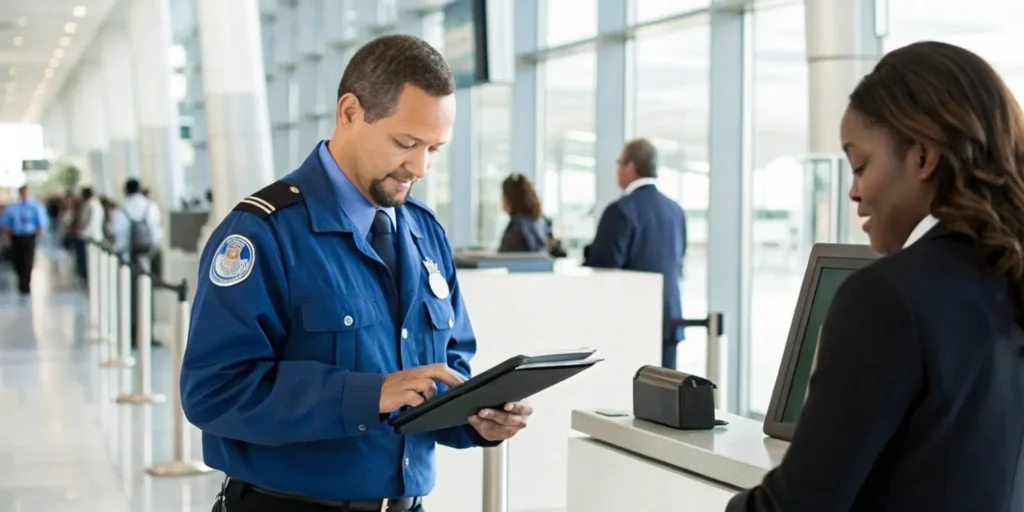
Bots are no longer just annoying spam accounts. They are sophisticated actors capable of manipulating financial systems, swaying public opinion, and committing fraud on a massive scale. Add AI-generated deepfakes to the mix, and telling a human from a machine becomes a monumental challenge. The TSA has its own robust system: checking a “watch list,” using a photo display, and following a strict TSA airport checklist. This is their answer to what is manual verification at the airport. But how do you do that online? For any platform, this isn’t just a technical problem—it’s an existential threat to user safety and the trust that holds your community together.
Key Takeaways
- Know Your ID Options Before You Fly: A valid driver’s license or passport is standard, but the TSA also accepts digital IDs on your phone in many airports. Checking the official list of accepted documents ahead of time prevents last-minute surprises at the checkpoint.
- Arrive Early If You Don’t Have an ID: Forgetting your identification doesn’t mean you’ll miss your flight, but it does require a separate verification process. Plan for at least an extra hour to answer personal questions and undergo a detailed physical and baggage screening.
- Verification Technology Authenticates Both You and Your Document: The airport security process uses a multi-layered approach to keep travel safe. Scanners check for fake IDs while biometric systems confirm your face matches the photo, ensuring the person presenting the credential is the one it belongs to.
Why Does the TSA Check Your ID at the Airport?
At its core, airport identity verification is the process the Transportation Security Administration (TSA) uses to confirm you are who you say you are. It’s the modern-day equivalent of a gatekeeper asking for the secret password, but with much higher stakes. When you hand over your driver’s license or passport, a TSA officer is doing more than just matching your face to a photo. They are confirming that your identity is valid and checking it against government watchlists to ensure everyone can travel safely.
This process is a fundamental layer of security that protects the entire air travel system. Think of it as the first and most important checkpoint. By confirming that every passenger is a known and verified individual, the TSA can focus its resources on screening for physical threats. In recent years, this process has evolved beyond physical ID cards to include sophisticated technologies that make verification faster, more accurate, and more secure for everyone involved.
How ID Checks Keep You and Other Travelers Safe
Identity verification is the bedrock of airport security. Every day, airports use a combination of biographic and biometric information to validate that travelers are who they claim to be. When a TSA agent scans your ID, they are cross-referencing your information with the Secure Flight watch list in real time. This system is designed to prevent individuals who pose a known threat from boarding an aircraft.
To make this process even more robust, many airports are adopting advanced biometric methods to improve identity validation. You may have already seen this in action with fingerprint scanners or facial recognition cameras at the security line. This kind of facial recognition technology is becoming a game-changer for air travel, offering a more accurate and seamless way to verify your identity at multiple points, from check-in to boarding. It reduces the chance of human error and makes it significantly harder for someone to use a fraudulent document.
Why Every Traveler Benefits from This Process
While it might feel like just another line to wait in, a strong identity verification process is designed to protect you. The primary goal is to create a secure environment, but it also makes the travel experience smoother. When the TSA can quickly and confidently confirm a traveler’s identity, it helps keep security lines moving efficiently. This is especially true for new systems that can help you get through security even if you’ve forgotten your ID.
These modern systems also offer greater privacy. For instance, Digital IDs allow you to share only the specific information the TSA needs to verify your identity—and nothing more. Instead of an agent seeing your home address and date of birth on a physical license, the system simply receives a “yes” or “no” confirmation that you are cleared to fly. This minimizes the exposure of your personal data while ensuring you can move through the airport safely and with less friction.
Which IDs Can You Use to Fly?
We’ve all had that moment of panic in the security line—did I remember my ID? The good news is that the Transportation Security Administration (TSA) accepts more than just your driver’s license. Understanding your options ahead of time can save you a lot of stress. While a government-issued photo ID is the gold standard, the TSA has several ways to verify you are who you say you are, ensuring the process is both secure and flexible for travelers.
A List of TSA-Approved Photo IDs
For most travelers, a standard government-issued photo ID is the quickest way through security. The most common and widely accepted forms are a valid driver’s license or a state photo identity card that is REAL ID compliant. Your U.S. passport or passport card also works perfectly for domestic and international travel. Other standard IDs include U.S. military IDs, permanent resident cards, and trusted traveler cards like Global Entry or NEXUS. The key is that the ID must be unexpired and issued by a recognized government entity. The TSA provides a full list of acceptable identification on its website, which is a great resource to check before you fly.
What to Use If You Don’t Have a Standard ID
What if your wallet is at home or your ID isn’t on the standard list? The TSA has protocols for these situations. They may accept other forms of identification, such as a foreign government-issued passport, a Canadian provincial driver’s license, or an Indian and Northern Affairs Canada card. For travelers who don’t have a REAL ID or another acceptable form of identification, the TSA has a service called TSA ConfirmID. This system allows TSA officers to verify your identity using alternative methods, which might involve cross-referencing information from public and private databases to confirm the details you provide. It’s a solid backup plan that keeps you moving without compromising security.
Can You Use a Digital ID at the Airport?
In a move toward a more streamlined and secure future, the TSA is increasingly accepting digital forms of identification. You can now use a Digital ID stored in your Apple Wallet, Google Wallet, or a state-issued app at a growing number of airports across the country. This technology allows you to present your ID on your phone, which is then verified by a TSA officer using a special scanner. It’s a convenient option that not only speeds up the process but also enhances security by using cryptographic verification to ensure the ID is authentic. As more states and airports adopt this technology, it’s becoming a go-to for tech-savvy travelers.
Can You Still Fly If You Forget Your ID?
That sinking feeling when you realize your ID is sitting on your kitchen counter is a traveler’s nightmare. But don’t panic. Forgetting your ID doesn’t automatically mean you’ll miss your flight, as the Transportation Security Administration (TSA) has a backup plan. You won’t breeze through the checkpoint, but you can still get to your gate by going through a few extra steps. The key is to stay calm, be cooperative, and give yourself plenty of extra time. The process is designed to confirm you are who you claim to be, ensuring everyone’s safety.
How the TSA Verifies Your Identity Without a Photo ID
If you arrive without a valid ID, a TSA officer will start an identity verification process. You may still be allowed to fly as long as your identity can be confirmed through other means. You’ll be asked to provide information like your name, current address, and other personal details that the officer can use to find you in various databases. Essentially, they are trying to build a complete picture of your identity without the physical card. This process relies on cross-referencing information to verify your identity and make a confident match.
Getting Ready for the Additional Screening Process
Once identity verification begins, prepare for a more intensive security screening. This isn’t optional; it’s a required part of the procedure for travelers without an ID. These extra checks will include a pat-down and a thorough search of your carry-on bags. Every item will likely be inspected more closely to ensure you aren’t carrying any prohibited items. While it can feel a bit invasive, remember that these protocols are in place to maintain the same level of security for all passengers and protect everyone on board.
How Much Extra Time Should You Plan For?
Patience is your best friend in this scenario. The identity verification and additional screening processes take time. There’s no set timeline, as the delay depends on how busy the airport is and how quickly the TSA can confirm your information. It’s wise to add at least an extra hour to your standard airport arrival time, though more is always better. Rushing through this process isn’t possible, so giving yourself a generous time cushion will reduce your stress and increase the chances of making your flight without a last-minute sprint to the gate.
What Is Manual Verification at the Airport?
That sinking feeling when you reach the security line and realize your ID is on the kitchen counter is a traveler’s worst nightmare. But it doesn’t automatically mean your trip is over. The TSA has a robust process for verifying your identity, even without a physical ID card. It’s a real-world example of how high-stakes identity confirmation works when a primary credential is missing. The process involves a combination of personal knowledge questions and database checks to ensure you are who you claim to be. While it will add some time to your security screening, it’s a system designed to keep travel safe and accessible. The key is to stay calm, be patient, and be prepared to answer a few questions about yourself.
What Kinds of Questions Will the TSA Ask You?
When you arrive at the security checkpoint without an ID, a TSA officer will ask you to step aside to begin the verification process. The first step usually involves a series of personal questions. These aren’t your typical “What’s your mother’s maiden name?” security questions. Instead, they are often drawn from your public and private records, covering things like previous addresses, car registrations, or other details that only you would likely know. The TSA explains this is part of the extra security checks they perform to confirm a traveler’s identity. Your answers help them build a preliminary picture of who you are before they move on to the next step.
How Databases Help Confirm Your Identity
Your answers are then used to pull up your information from various public and private databases. The TSA officer isn’t just taking your word for it; they are actively cross-referencing the details you provide with official records in real time. This system is designed to match your biographic information against secure government watch lists and other data sources to ensure safety and compliance. It’s a sophisticated method of identity proofing that relies on a wide net of data points to create a confident match. This step is crucial for preventing fraud and ensuring that everyone passing through the checkpoint has been properly vetted, even without a physical ID.
What Is the TSA’s ConfirmID Program?
For travelers who frequently face ID issues or don’t have a REAL ID-compliant license, the TSA offers a more streamlined, fee-based solution called TSA ConfirmID. This program allows you to have your identity verified by the TSA, making the process at the airport a bit smoother. For a $45 fee, your identity is confirmed, and this verification is valid for multiple trips within a 10-day period, though you’ll need to go through the confirmation process each time you fly. It’s an interesting example of a dedicated service created to solve the specific problem of identity verification in a high-traffic, high-security environment, ensuring travelers can proceed safely.
Understanding Government Watch Lists and Screening Programs
When a TSA officer scans your ID, they aren’t just looking at your photo. They’re tapping into a complex network of security programs that operate behind the scenes. These systems are designed to cross-reference your information against vast databases in real time, all to answer one critical question: is this person a potential threat? This invisible layer of verification is what transforms a simple ID check into a powerful security measure. It’s a process that happens millions of times a day, protecting travelers by identifying risks long before they reach the gate. Understanding how these programs work gives you a clearer picture of the immense challenge of verifying identity at scale, whether it’s in an airport or on an online platform.
What Is a Terrorist Watch List?
The foundation of modern airport security is the terrorist watch list. This isn’t a single list but a consolidated database managed by the government to track individuals who may pose a threat. According to the U.S. Government Accountability Office, the watch list was created after the September 11th attacks to centralize and share information about potential terrorists. When you present your ID, your name is checked against this database. It’s the government’s primary tool for ensuring that known threats are identified. Think of it as the ultimate source of truth for security screenings, providing the critical data that informs decisions at every checkpoint.
The Secure Flight Pre-Screening Program
Long before you arrive at the airport, your information has already been screened by a program called Secure Flight. The Transportation Security Administration describes this as a system that checks airline passengers before they even leave for their trip. When you book a ticket, your airline sends your name, date of birth, and gender to the TSA. Secure Flight then compares this information against government watch lists, including the FBI’s no-fly list. The goal is to identify and flag potential security risks at the earliest possible moment, preventing dangerous individuals from ever being issued a boarding pass.
How Secure Flight Screens Passengers Before They Arrive
The Secure Flight system is a testament to the power of real-time data processing. It operates 24 hours a day, seven days a week, constantly matching passenger details against updated watch lists. The TSA notes that this process is incredibly fast, often taking just milliseconds to complete. This speed is essential for handling the massive volume of daily travelers without causing delays. It ensures that by the time you check in for your flight, a preliminary security screening has already been completed, adding a crucial layer of protection to the air travel system.
The “Quiet Skies” Surveillance Program
Not all screening programs are focused on known threats. A more controversial initiative, known as “Quiet Skies,” takes a different approach. According to reporting from The Boston Globe, this secret TSA program tracks ordinary American travelers who are not on any terrorist watch list and are not suspected of any crime. Federal air marshals are assigned to monitor these individuals’ behavior on flights and in airports. This program highlights the ongoing debate between security and privacy, showing how surveillance can extend beyond known risks to include predictive monitoring of everyday citizens, raising important questions about where the line should be drawn.
The Technology Behind Modern Airport ID Checks
When you hand your ID to a TSA agent, a lot more is happening than a simple photo comparison. Behind the counter, a sophisticated suite of technologies is working together to confirm you are who you say you are. This process is designed to be fast and efficient, but its primary goal is to ensure security by verifying every traveler’s identity with a high degree of accuracy. It’s a multi-layered approach that leaves very little to chance, combining hardware and software to create a formidable security checkpoint.
This system relies on three core pillars of technology. First, biometrics, particularly facial recognition, compares your live image to the photo on your ID, ensuring the person standing there is the same one pictured on the document. Second, advanced scanners authenticate the physical document itself, checking for hidden security features to ensure it’s not a forgery. Finally, intelligent fraud detection systems analyze all the data in real time, looking for subtle signs of manipulation or more advanced threats like deepfakes. Together, these tools create a robust verification process that protects the integrity of air travel, ensuring that the person holding the ticket is the person who gets on the plane. This isn’t just about matching a name to a face; it’s about confirming the authenticity of both the person and their credentials.
The Broader Challenge of Identity Verification
The TSA’s process offers a clear model for high-stakes identity verification, but it has one major advantage: it happens in a controlled, physical space. Online platforms face a far more complex version of this challenge. They need to confirm that millions of users are who they say they are, but without a person-to-person interaction. The core task shifts from simply validating a document to answering a more fundamental question: Is there a real human being on the other side of this screen? This is where the problem scales exponentially, as platforms must defend against not just individual bad actors, but automated bot networks and AI-driven fraud.
While the TSA is focused on spotting a fake ID, online businesses are fighting against deepfakes and synthetic identities that can be created in seconds. The multi-layered security approach used in airports—combining biographic and biometric data—is the right idea, but it needs to be adapted for a world where the person you’re verifying might not be a person at all. Protecting systems, decisions, and communities online requires a new layer of security focused on proving liveness and authentic human presence. It’s about ensuring the interactions that power your platform are genuine, a challenge that has become central to maintaining digital trust in an increasingly artificial world.
How Biometrics and Facial Scans Work
Biometrics are unique physical characteristics—like your fingerprints or your face—that can be used to identify you. At the airport, facial recognition is becoming the go-to biometric tool. When you step up to the podium, a camera captures a high-resolution image of your face. Specialized software then measures the unique geometry of your facial features, like the distance between your eyes or the shape of your chin. This digital map of your face is then compared against the photo on your government-issued ID. The technology is so precise that it can account for changes in hairstyle, glasses, or minor aging. As companies have shown, these passenger processing solutions are designed to make security checkpoints faster and more accurate, reducing human error and getting you to your gate more smoothly.
How Scanners Authenticate Your ID Instantly
That machine the TSA agent slides your license or passport into does more than just scan your name and photo. It’s a powerful authentication device designed to spot a fake ID. Modern identification documents are packed with complex security features, many of which are invisible to the naked eye. These can include microprinting, holographic overlays, and special inks that only appear under ultraviolet (UV) light. The scanner instantly checks for these features to confirm the document is legitimate. Using AI and machine learning, these systems can perform automated travel identity verification by cross-referencing the ID against a database of known document templates. This helps ensure that the ID wasn’t just printed at home—it’s a genuine, government-issued document that hasn’t been altered.
Using Real-Time Data to Catch Fake IDs
The final layer of technology is all about spotting sophisticated fraud attempts that go beyond a simple fake ID. Modern security systems are built to proactively detect advanced threats, including manipulated photos, morphed images (where two faces are blended into one), and even deepfakes. The system isn’t just asking, “Does this person match the photo?” It’s also asking, “Is this a real, live human being?” This concept, often called liveness detection, is crucial for preventing bad actors from using masks, photos, or digital images to fool the system. It’s a fundamental breakthrough in identity verification that focuses on proving you’re a real, unique human in that specific moment. By analyzing subtle cues, the technology ensures the person at the checkpoint is physically present, adding a critical defense against the most advanced forms of identity fraud.
What Does Additional Screening Actually Involve?
Finding yourself at the airport without an ID can feel like a travel nightmare, but it doesn’t automatically mean your trip is canceled. The TSA has a process for these situations, but it’s important to know that it involves more than just a few extra questions. If you can’t present an acceptable ID, you’ll be directed to an additional screening process designed to verify your identity and ensure you’re not a security risk. This isn’t the standard security line experience; it’s a much more hands-on and time-consuming procedure.
The goal of this enhanced screening is to maintain the same high level of security applied to all other passengers. To do this, TSA officers will need to perform a more detailed physical search of you and your belongings. Think of it as a manual override when the standard, document-based system isn’t an option. Understanding what this entails ahead of time can help you stay calm and cooperative, which is the best way to get through the process as smoothly as possible. Expect a thorough pat-down, a detailed inspection of your carry-on bags, and potential delays that could impact your travel plans.
Preparing for a More Thorough Pat-Down
Once you’re moved to the secondary screening area, the first step is typically a comprehensive pat-down. A TSA officer of the same gender will conduct a physical inspection over your clothing to check for any prohibited items. While it can feel invasive, this is a standard part of the TSA’s screening procedures when a passenger’s identity can’t be immediately confirmed. You have the right to request a private screening with a companion of your choice if it makes you more comfortable. The key is to remain calm and follow the officer’s instructions. This isn’t personal; it’s a methodical process to ensure flight safety for everyone on board.
What to Expect During a Baggage Inspection
Along with the physical screening, your carry-on luggage will get a much closer look. TSA officers will manually search your bags, which means they will likely open every compartment and may remove items for a better view or for additional testing. They might also swab your belongings to test for explosive residues. This is far more detailed than the typical X-ray scan your bags go through in the main security line. To help things move along, try to answer any questions about the items in your bag clearly and concisely. It’s another layer of security designed to close any potential gaps that arise when a traveler doesn’t have a standard ID.
Planning for Delays and Potential Restrictions
The most important thing to prepare for is a significant delay. The identity verification and additional screening process takes time, so you’ll need to be patient. It’s also critical to understand that there are no guarantees. Even after you’ve answered personal questions and gone through the enhanced physical screening, the TSA may not be able to confirm your identity. According to the agency, its TSA ConfirmID program is not a sure thing, and the final decision rests with the on-site officers. If they can’t get the confirmation they need from their databases, you may be denied entry to the secure area and will not be able to fly.
How to Solve Common ID Problems at the Airport
Even the most organized traveler can run into an ID issue at the airport. A driver’s license that expired last week, a name that doesn’t quite match your ticket, or the sinking feeling that you left your wallet on the kitchen counter—these situations are stressful, but they don’t have to ruin your trip. The TSA has procedures for these exact scenarios. The key is knowing what to expect and how to prepare, so you can still make it to your gate with time to spare.
What to Do If Your ID Is Expired or Damaged
Showing up with an ID that’s expired or too worn to read can feel like a trip-ending mistake, but it’s usually manageable. If your ID is expired, the TSA may still accept it for up to a year after the expiration date. For a damaged ID, like one that’s cracked or peeling, the officer will try to verify your identity using the information they can see. In either case, be prepared for some extra steps. A TSA officer will likely ask you a series of personal questions to confirm you are who you say you are. This is part of the standard identity verification process for travelers without a valid ID.
What Happens When Your Name Doesn’t Match Your Ticket?
A name mismatch between your ID and your boarding pass is a common hiccup, especially for newlyweds or anyone who has recently changed their name. The TSA’s main goal is to confirm that the ID and ticket belong to the same person. If you’ve changed your name, it’s smart to travel with supporting documents, like a marriage certificate or a court order. Having this paperwork ready can quickly clear up any confusion and show the officer why the names don’t align. It’s a simple step that proves your identity and helps the screening process move along smoothly, preventing unnecessary delays for you and other travelers.
Your Action Plan for a Lost or Forgotten ID
Realizing you’ve lost or forgotten your ID at the airport is a moment of pure panic, but there is a path forward. The TSA has a system in place for this exact situation. You’ll have to go through an identity verification process, which involves providing other information like your name, address, and birth date. The TSA officer uses this to cross-reference public and private databases to confirm it’s you. For travelers without a REAL ID or other accepted ID, the agency also offers a service called TSA ConfirmID. For a fee, this program allows the TSA to use additional methods to verify your identity and help you get through security.
Your Ultimate TSA Airport Checklist for a Faster Screening
The airport security line is often the most dreaded part of any trip. The combination of long waits, confusing rules, and the pressure to move quickly can create a lot of stress. But with a little planning, you can walk up to the checkpoint with confidence. Knowing what documents you need, having a backup plan, and following a few simple tips will make the screening process feel like just another step in your journey, not a major hurdle.
The Essential Document Checklist Before You Fly
Before you even think about leaving the house, do a quick check for your government-issued photo ID. This simple habit can save you a massive headache later. If you’re worried about misplacing your ID or just want a solid backup, you can proactively sign up for TSA ConfirmID before your trip. This service allows the TSA to verify your identity using other information, giving you a digital safety net. If you do use it, be sure to have your payment confirmation email or a screenshot of the receipt ready to show the officers at the checkpoint. It’s a small step that provides great peace of mind.
What to Bring to the Airport If You Don’t Have an ID
Realizing you’ve arrived at the airport without your ID can cause a moment of panic, but it doesn’t automatically mean you can’t fly. The good news is that the TSA has a process for this exact situation. You will, however, need to go through a more thorough identity verification process and additional screening. Be prepared for extra checks that will include a pat-down and a complete search of your carry-on and personal items. The most important thing to have ready is extra time—and plenty of it. This process takes significantly longer than a standard ID check, so arriving at the airport even earlier than recommended is essential.
Easy Ways to Avoid Common Security Delays
A smooth security experience often comes down to small, smart habits. First, make it a ritual to double-check your wallet or travel bag for your ID before you head to the airport. Once you’re in line, have your boarding pass and ID out and ready to hand to the TSA officer. Don’t wait until you’re at the front of the line to start digging through your bag. As you get closer to the scanners, start preparing to place your items in the bins. Take off your jacket and shoes, and remove any large electronics from your bag. These simple actions help keep the line moving efficiently and reduce stress for you and everyone around you.
Understanding the 45-Minute Rule
The 45-minute rule is a standard policy for most domestic airlines that requires you to have your bags checked and your check-in complete at least 45 minutes before your scheduled departure. This isn’t an arbitrary deadline; it’s a crucial window that allows airline staff to finalize the passenger manifest, load all the luggage, and complete pre-flight safety checks without causing delays. Think of it as the final call before the complex process of getting a plane off the ground begins. Missing this cutoff can mean your checked bags won’t make the flight, and you may even lose your seat. It’s a prime example of a system-wide rule designed to keep a massive, complex operation running on time, ensuring that one person’s delay doesn’t create a ripple effect for hundreds of other travelers.
The 3-3-3 Rule for Flights Explained
You’ve probably heard of the airport liquids rule, often called the 3-3-3 rule, but the official TSA guideline is actually the 3-1-1 rule. It’s a simple but strict policy designed to streamline security and keep flights safe. The rule states that any liquids, aerosols, gels, creams, and pastes in your carry-on must be in containers of 3.4 ounces (100 milliliters) or less. All of these containers must then fit comfortably into a single, clear, quart-sized zip-top bag. Each passenger is limited to just one of these bags. Following this rule is one of the easiest ways to avoid a delay at the security checkpoint, as it allows TSA officers to quickly screen your liquids. You can find the full details on the TSA’s liquids rule page.
Commonly Confiscated Items to Leave at Home
Nothing slows you down at security like having an item confiscated from your carry-on. While some prohibited items like firearms and explosives are obvious, many everyday objects can also get you flagged for additional screening. The most common culprits are liquids that exceed the 3.4-ounce limit, but sharp objects like pocket knives, box cutters, and scissors with blades longer than four inches are also frequently taken. Certain sporting goods, such as baseball bats and ski poles, must be checked. To avoid any surprises, it’s always a good idea to consult the TSA’s official “What Can I Bring?” list before you pack. A quick search can tell you whether an item is allowed in your carry-on, checked bag, or not at all, saving you time and the hassle of surrendering your belongings.
What Happens If the TSA Can’t Verify Your Identity?
Even with multiple backup systems, there are rare instances where the TSA cannot confirm a traveler’s identity. This is a stressful scenario that directly impacts your ability to travel. While the TSA aims to get every passenger to their gate, its primary mission is security. If your identity can’t be authenticated to their standards, you may not be able to fly. Understanding the potential outcomes and your rights can help you manage the situation if it ever happens to you.
Understanding Why You Might Be Denied Boarding
The most significant consequence of a failed identity verification is being denied entry to the secure area of the airport, which means you will miss your flight. This isn’t a decision the TSA takes lightly. It typically happens only after you’ve gone through the alternative screening process and agents are still unable to match you with confidence to your flight information and security watchlists. If you don’t have an acceptable ID and are unable to complete the additional verification steps, you will likely be denied boarding. The final call rests with the on-site TSA officers, who must ensure every person is who they claim to be.
What Are Your Options If You Can’t Fly?
If you arrive at the airport without a valid ID, your first step is to inform a TSA officer at the security checkpoint. They will direct you to an alternative identity verification process. This involves more than a few extra questions; you should expect to provide personal information that only you would know. The TSA uses this to cross-reference various databases. According to the TSA, this may involve collecting details like your fingerprints to check your identity against secure records. Be prepared to cooperate fully and answer all questions honestly to help the process move as smoothly as possible.
Know Your Rights as an Air Traveler
While the TSA provides an alternative verification path, it’s important to have realistic expectations. There is no guarantee that agents will be able to verify your identity, even if you provide all the requested information. For programs like TSA ConfirmID, the agency is clear that using the service does not ensure a successful outcome. As a traveler, you have the right to be treated professionally, but you also have a responsibility to be truthful. Providing false information to a federal agent is a serious offense, and the TSA warns that any fraudulent activity will result in federal penalties.
Related Articles
- How Biometrics Work Without Storing Your Data
- Using Age Verification to Prevent Online Fraud
- How Face Verification Will Revolutionize Ad Spend
Frequently Asked Questions
What if my driver’s license just expired? Can I still use it to fly? You might be in luck. The TSA generally accepts an expired driver’s license or state-issued photo ID for up to one year after the expiration date. However, don’t expect to breeze through the checkpoint as usual. The TSA officer will likely ask you to go through some additional identity verification steps, similar to the process for someone who has no ID at all. It’s always best to travel with a current ID, but this policy provides a helpful buffer if you get caught in a bind.
Is a digital ID on my phone accepted at all airports? Not yet, but the list is growing quickly. While digital IDs are a convenient and secure option, they are currently only accepted at specific TSA checkpoints in participating airports. Before you rely solely on your phone, you should check the TSA’s official website for an up-to-date list of locations that accept them. Until this technology is available everywhere, it’s wise to keep your physical ID with you as a reliable backup.
How does the TSA actually know it’s me if I don’t have my license? It’s less about magic and more about data. When you don’t have an ID, the TSA officer will ask you a series of questions that are pulled from various public and private records. Think about information tied to your credit history, property records, or past addresses. The system cross-references your answers in real time to confirm that you are the only person who would know these specific details. It’s a sophisticated way of building a confident identity match without a physical document.
If I forget my ID, am I guaranteed to get through security if I answer all the questions correctly? Unfortunately, there is no guarantee. While the TSA’s identity verification process is designed to help travelers in this situation, the final decision rests with the officers at the checkpoint. If they are unable to confidently confirm your identity through their databases, you may be denied entry to the secure area and will not be able to fly. This is why it’s so important to give yourself plenty of extra time and cooperate fully with the process.
What’s the real difference between the free no-ID process and the paid TSA ConfirmID service? The free process is the reactive solution you go through when you show up at the airport and realize you’ve forgotten your ID. It happens on the spot and involves answering personal questions and undergoing extra screening. TSA ConfirmID, on the other hand, is a proactive, fee-based service you can use if you know ahead of time that you won’t have an acceptable ID. It allows the TSA to verify your identity in advance, which can help streamline the process at the airport, though you will still need to go through the confirmation steps each time you fly within a 10-day period.