

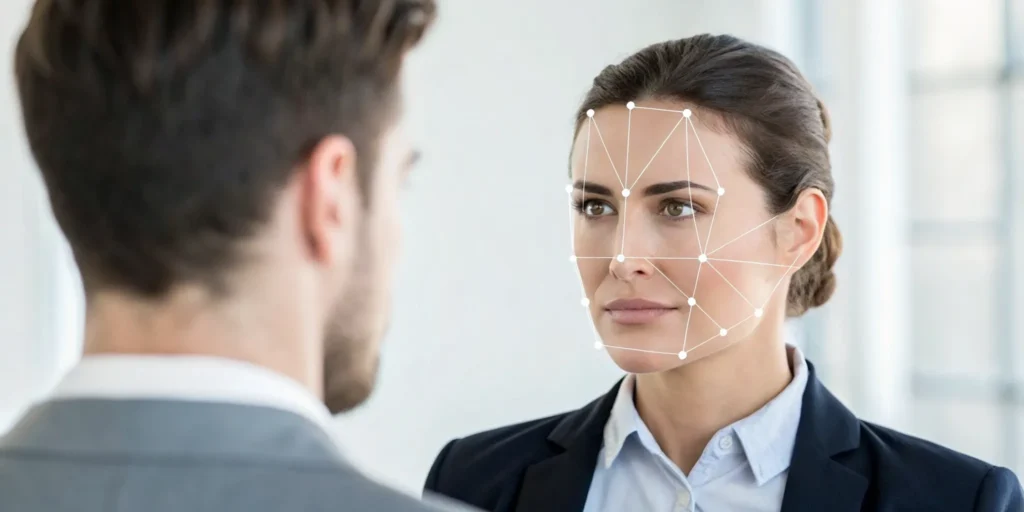
Security checks are often a source of friction for users. Asking someone to blink, smile, or turn their head on camera can feel awkward and clunky, leading to high drop-off rates during critical moments like onboarding or checkout. But what if you could confirm a user’s identity without them having to do anything at all? That’s the power of modern facial liveness detection. This technology works silently in the background, analyzing subtle, natural cues to verify a person is real and present in a fraction of a second. It provides the robust security you need to stop fraud while delivering a seamless, invisible experience for your customers.
Key Takeaways
- Confirm Real Presence to Stop Sophisticated Fraud: Liveness detection goes beyond simple facial recognition by verifying a user is physically present. This is your most effective defense against spoofing attacks, from printed photos to realistic deepfakes.
- Prioritize a Seamless User Experience with Passive Liveness: The best security is invisible. Passive liveness detection confirms a user is real without requiring them to perform specific actions, which reduces friction and prevents customers from abandoning the process.
- Select a Partner Based on Performance and Privacy: When choosing a solution, focus on proven accuracy metrics, a strong commitment to user privacy through methods like on-device processing, and how easily it integrates with your existing platform.
What Is Facial Liveness Detection?
At its core, facial liveness detection is technology that answers one simple question: Is the person in front of the camera real and alive, right now? It’s a crucial security check that businesses use to confirm a selfie or video comes from a living person, not a spoof like a printed photo, a mask, or a sophisticated deepfake. Think of it as the step beyond just matching a face to a photo ID. While traditional facial recognition confirms what you look like, liveness detection confirms that you are physically present for the interaction.
This technology is becoming essential for any process that requires remote identity verification. When a customer opens a new bank account from their couch or a user verifies their profile on a social platform, liveness detection acts as a digital gatekeeper. It ensures the person creating the account is who they claim to be and is genuinely interacting with the service in real time. By adding this layer of verification, platforms can confidently protect their systems and communities from bad actors attempting to commit identity fraud.
The Tech Behind Proving You’re Really You
So, how does a camera know if it’s looking at a real person or a picture? It’s not magic, it’s a smart combination of artificial intelligence and machine learning. These systems are trained to look for the subtle, almost invisible cues that signal a living human. This includes analyzing things like tiny head movements, blinking, and natural changes in facial expression. The technology also examines skin texture and how light reflects off a three-dimensional face, details that are incredibly difficult to replicate with a flat photo or a basic video. It’s designed specifically to catch spoofing attempts before they can cause any harm.
Why Standard Face Recognition Falls Short
You might be thinking, “Doesn’t my phone already use face recognition to unlock?” And you’re right, but that technology serves a different purpose. Standard facial recognition is excellent at pattern matching, comparing the geometry of your face to a stored image. However, it can often be tricked. A high-resolution photo or video can sometimes fool these systems because they are only looking for a match, not for signs of life. This is where liveness detection becomes so important. It protects against what security experts call “presentation attacks,” where a fraudster presents a fake item like a photo, a screen, or a mask to the camera. Without liveness detection, any identity system is left vulnerable to impersonation.
How Does Facial Liveness Detection Actually Work?
So, how does a system tell the difference between you and a picture of you? It’s a sophisticated process that looks for the subtle signs of life. Unlike standard facial recognition, which just matches your face to a photo on file, liveness detection actively verifies that you are a real person present at that exact moment. It does this by analyzing a combination of visual cues, from tiny movements to the way light interacts with your skin, effectively confirming you are who you say you are, right here and now.
Using AI to Analyze Facial Cues
At its heart, facial liveness detection uses artificial intelligence to act as a digital detective. The technology checks if a face shown to a camera belongs to a live person, not a fake like a photo, video, or deepfake. The AI is trained on massive datasets containing both real faces and common spoofing techniques. This process teaches it to spot the tell-tale signs of a presentation attack, like the glare from a screen or the unnatural stillness of a mask. It’s an essential security layer that confirms genuine presence before granting access or approving a transaction.
Detecting Natural Movement and Skin Texture
A key part of the process involves looking for signs of life that are almost impossible to fake convincingly. The system’s AI looks for micro-movements, like blinking, slight shifts in posture, and natural changes in facial expression. It also analyzes skin texture. Real skin reflects and absorbs light in a unique way, creating subtle variations in tone and shadow that a flat photograph or a digital screen can’t replicate. By examining these characteristics in real time, the technology can quickly distinguish between the dynamic quality of a living person and the static nature of a spoof attempt.
Mapping a Face in Three Dimensions
To defeat more advanced fakes, like realistic masks, many liveness systems create a 3D map of the user’s face. Some advanced methods use sensors to measure facial depth, confirming the object in front of the camera has the natural contours of a human head. This approach effectively separates a real, three-dimensional face from a flat, 2D image being held up to the camera. By creating this depth map, the system gets undeniable proof that it’s interacting with a person, not a picture or a video playback. It’s a powerful technique for stopping common fraud attempts.
Active vs. Passive Liveness: What’s the Difference?
When it comes to verifying that a user is a real, live person, liveness detection technology splits into two main paths: active and passive. Both are designed to stop fraud by confirming a user’s physical presence, but they go about it in completely different ways. The choice between them isn’t just a technical detail; it’s a fundamental decision that directly shapes your user experience. One approach asks your users to perform specific tasks to prove they’re human, while the other works silently in the background.
Understanding the distinction is key to building a verification process that feels secure without frustrating the very people you’re trying to protect. As fraudsters get more creative with deepfakes and spoofing attacks, platforms need a way to confirm human presence that is both effective and effortless. The method you choose can be the difference between a user who feels safe and one who abandons the process altogether. Let’s break down how each approach works and what it means for your platform and your users.
The Active Method: Prompts, Poses, and Actions
Active liveness detection is the more traditional approach, and it works by asking the user to do something specific on camera. You’ve likely encountered this before. It’s the digital equivalent of being asked to prove you’re not a robot by following instructions. The system might prompt you to blink, smile, nod, or turn your head from side to side. The idea is that a static photo or a simple video loop wouldn’t be able to replicate these specific, real-time actions. This method directly engages the user to confirm they are a live person, but that interaction can also be its biggest weakness, creating a clunky and sometimes frustrating experience.
The Passive Method: A Quick, Invisible Scan
Passive liveness detection is the modern, user-friendly alternative. Instead of asking the user to perform any actions, it works quietly in the background. During a brief, seamless scan, the technology analyzes subtle cues from a user’s face to confirm they are a real person. It looks for things like natural, involuntary movements, skin texture, and light reflections that are nearly impossible to fake with a photo or video. This entire liveness check happens in a split second, often without the user even realizing it. The result is a secure verification process that feels completely effortless, removing friction and keeping the user experience smooth.
Which Approach Is Right for Your Users?
While both methods aim to prevent fraud, the best systems prioritize a seamless user journey. Active detection forces an extra step on your users, and as one expert puts it, asking people to perform actions can be “annoying.” This friction can lead to higher drop-off rates, especially during critical moments like onboarding or checkout. Passive liveness, on the other hand, respects the user’s time by providing robust security that’s completely invisible. For businesses focused on building trust and maintaining a positive user experience, the passive approach is the clear winner. It offers the security you need without sacrificing the smooth, human-first interactions that keep users coming back.
Why Liveness Detection Is Your Best Defense Against Fraud
In a digital world where fakes are becoming incredibly realistic, simply matching a face to a photo ID is no longer enough to guarantee security. Fraudsters are constantly finding new ways to trick systems, from using simple printed photos to creating sophisticated AI-generated deepfakes. This is where liveness detection steps in. It’s a technology designed to answer one fundamental question: Is the person in front of the camera a real, live human being, present at this very moment?
Think of it as the digital equivalent of a security guard asking for ID and also making sure you’re not a cardboard cutout. By analyzing subtle cues that prove a person is physically there, liveness detection adds a critical layer of defense that traditional verification methods miss. It’s not just about confirming an identity; it’s about confirming a presence. This capability is essential for preventing fraud, securing user accounts, and ultimately, building a platform that people can trust. It’s a proactive step that protects your business and your users from the ground up.
Outsmarting Deepfakes and Spoofing Attacks
The most common way fraudsters try to bypass facial recognition is through spoofing attacks. This can be as simple as holding a printed photo or a video on a screen up to the camera. More advanced attempts use realistic masks or AI-generated deepfakes that can look incredibly convincing. Standard facial recognition might be fooled because it’s only designed to match the geometric patterns of a face to a stored image.
This is where facial liveness detection changes the game. It looks for the subtle, almost imperceptible signs of life that a fake image or video can’t replicate. This includes natural blinking, slight head movements, and the way light reflects off real skin. By analyzing these dynamic, real-time cues, the technology can confidently distinguish between a living person and a spoof, stopping fraudsters in their tracks.
Preventing Costly Identity Fraud
A successful spoofing attack is often the first step toward costly identity fraud. Once a fraudster gains access to an account, they can drain funds, steal personal information, or cause significant damage to a user’s reputation and your platform’s integrity. The financial and operational fallout from these incidents can be massive. Liveness detection serves as a powerful gatekeeper at the most critical points of the user journey, like account creation or payment authorization.
By requiring proof of physical presence, you can ensure that the person performing an action is the legitimate account holder. This is especially vital for remote identity verification, where you don’t have the benefit of in-person interaction. It’s a proactive security measure that prevents fraudulent accounts from ever being created and stops account takeovers before they happen.
Building a Trusted and Secure Platform
Ultimately, security is about building and maintaining trust. When your users know their accounts and data are protected by advanced measures, they feel safer and more confident using your platform. This trust is the bedrock of user loyalty and engagement. Implementing liveness detection sends a clear signal that you are committed to protecting your community from bots, fake accounts, and other bad actors.
In today’s digital landscape, robust identity verification is no longer a background feature; it has become a foundational component of a trustworthy online experience. By ensuring that the interactions on your platform are genuinely human, you create a more secure and reliable environment for everyone. This not only protects your users but also preserves the integrity and reputation of your brand.
The Toughest Challenges in Liveness Detection
Liveness detection is a powerful tool, but it’s not a simple solution. The technology operates where threats constantly evolve and real-world conditions are rarely perfect. For any system to be effective, it has to overcome several significant hurdles, from outsmarting fraudsters to ensuring fairness for every single user.
Keeping Up with Sophisticated Spoofing Methods
The world of digital fraud is a constant cat-and-mouse game. As liveness detection gets smarter, so do the methods used to trick it, from realistic masks to convincing deepfakes. To stay ahead, security researchers host ongoing facial liveness challenges to test systems against the latest attacks like face morphing and impersonations. This continuous pressure forces the technology to evolve, ensuring defenses are always being sharpened against the next wave of spoofing techniques. It’s a race without a finish line, where innovation is the only way to maintain a secure environment.
Accounting for Lighting and Environment
A liveness detection system has to work in the real world, not just a lab. It must perform reliably under a huge range of conditions, like in a dimly lit room or with bright sunlight from one side. Each of these factors can affect how a camera captures a face and potentially confuse the system. Developing robust anti-spoofing systems means training them to cut through this environmental noise and focus on the essential biological cues that prove a person is physically present, regardless of the setting.
Ensuring Fairness with Diverse Training Data
An AI is only as good as the data it’s trained on. If a liveness model is trained on a limited dataset, it can develop biases that cause it to perform less accurately for certain groups of people. High-quality, diverse training data is essential for building a fair and effective system. This means including people from various demographics, with different skin tones, ages, and facial features, to ensure the technology works equally well for everyone. Without this commitment to inclusivity, a system risks being both unfair and less secure for a significant portion of users.
Balancing Tight Security with a Smooth User Experience
The goal is to stop fraud without frustrating legitimate users. This creates a natural tension between security and user experience. Some systems use active liveness detection, which requires users to perform actions like blinking or turning their head. While secure, this adds friction. The alternative, passive liveness detection, works invisibly in the background for a seamless experience. The challenge is making this passive analysis powerful enough to catch sophisticated attacks. Finding the right balance means creating a security check that is formidable to fraudsters and nearly invisible to your customers.
Where Is Liveness Detection Making an Impact?
Facial liveness detection isn’t just a futuristic concept; it’s a practical tool that’s already making digital interactions safer across many industries. As our lives move more online, proving you are who you say you are becomes critical. From opening a bank account to accessing healthcare,
Securing Banking and Financial Services
The financial world runs on trust, and the stakes couldn’t be higher. When customers onboard remotely, banks need absolute certainty that the person opening an account is real and present. Liveness detection serves as a digital bouncer, stopping fraudsters who might try to use a photo, a video, or a mask to create an account. This technology verifies a user’s physical presence during the identity verification process, which is a critical step in preventing identity fraud from the very beginning. By confirming liveness, financial institutions can protect customer assets, comply with regulations, and build a secure foundation for digital banking.
Protecting E-Commerce Platforms and Users
For e-commerce to thrive, both buyers and sellers need to feel safe. Liveness detection is becoming a cornerstone of platform security, helping to prevent account takeovers, fake reviews, and fraudulent chargebacks. When a user’s identity is tied to their real, live presence, it becomes much harder for bad actors to create armies of bots or hijack legitimate accounts. This technology acts as a pivotal layer of defense, ensuring that the person logging in, making a purchase, or leaving a review is genuine. This builds a more trustworthy marketplace where real people can connect and transact with confidence.
Verifying Identity in Healthcare and Telecom
Accessing your health records or setting up a new phone plan involves highly sensitive personal information. Liveness detection helps protect this data by ensuring only authorized individuals can gain access. In telehealth, it can confirm a patient’s identity before a virtual appointment. For telecom companies, it helps stop criminals from using synthetic identities to open fraudulent lines of credit. By incorporating a quick liveness check during mobile onboarding, these industries can add a powerful security layer that protects user privacy and prevents fraud without creating a frustrating user experience.
Confirming Age for Restricted Content
Many online platforms are required to verify a user’s age before granting access to certain content or products. Simply asking for a birthdate is no longer enough. Liveness detection offers a more robust solution for age verification. It can confirm that the person providing an ID is the same person in the photo and that they are physically present, preventing a minor from using a parent’s ID. This is especially important in fighting the use of AI-generated images or videos to bypass age gates for online gaming, social media, or the sale of age-restricted products.
The Technology That Powers Modern Liveness Detection
Facial liveness detection isn’t a single piece of magic; it’s a sophisticated symphony of technologies working in concert to answer one simple question: Is the person in front of the camera real and physically present? The goal is to create a security check that is both incredibly difficult for fraudsters to fool and incredibly easy for legitimate users to pass. This requires a blend of artificial intelligence, clever security design, and a deep respect for user privacy.
The best systems are built on a foundation of constantly learning AI, which allows them to adapt as bad actors develop new spoofing techniques. They also layer multiple checks on top of one another, creating a formidable defense that’s much harder to breach than a single security measure. At the same time, leading solutions prioritize user privacy by processing data directly on a person’s device, so sensitive information never has to travel across the internet. Finally, all of this happens in the blink of an eye, delivering a real-time result that keeps the user experience smooth and seamless. Let’s look at how each of these components works.
Self-Improving AI and Neural Networks
At the heart of modern liveness detection are neural networks, a type of artificial intelligence modeled after the human brain. These systems are trained on enormous datasets containing millions of images and videos of both real, live faces and various spoofing attempts, like printed photos, digital screens, and realistic masks. By analyzing this data, the AI learns to recognize the subtle, almost imperceptible patterns that distinguish a living person from a fake.
What makes this technology so powerful is its ability to continuously improve. As fraudsters invent new attack methods, these new spoofs can be fed back into the system, making the AI smarter and more resilient. This constant learning cycle is essential for developing robust anti-spoofing systems that can stay ahead in the ongoing cat-and-mouse game of digital identity.
Layering Multiple Security Checks
Relying on a single method to detect liveness is like locking your front door but leaving all the windows open. A strong defense requires multiple layers of security. Instead of just looking for one sign of life, advanced systems analyze a whole range of cues at once. This can include checking for natural skin texture and light reflection, detecting subtle involuntary movements like blinking and breathing, and analyzing depth to ensure the face is a three-dimensional object, not a flat photo.
By combining these different checks, the system creates a much higher barrier for fraudsters. A deepfake video might fool a simple motion detector, but it may fail a texture analysis test. This multi-layered approach is a core part of a comprehensive fraud prevention strategy, ensuring that even if one check is compromised, others are in place to catch the attempt.
Processing Data on a User’s Device for Privacy
A major concern with any biometric technology is privacy. Where does your facial data go, and who has access to it? The most secure and user-friendly liveness detection systems solve this problem by performing the analysis directly on the user’s device, whether it’s a smartphone or a laptop. This is often called on-device or edge processing.
Because the check happens locally, the raw biometric data never leaves the device. The system simply sends back a “yes” or “no” result, confirming whether a live person was detected. This approach drastically reduces privacy risks and helps build user trust. Using on-device AI also means the system can work quickly even with a poor internet connection, ensuring a reliable experience for everyone.
Getting Results in Real Time
Security can’t come at the cost of a frustrating user experience. If an identity check takes too long, customers will simply give up, which is bad for business. That’s why modern liveness detection technology is engineered for speed, delivering a definitive result in a matter of seconds. This real-time feedback is crucial for keeping digital interactions moving smoothly, from logging into a bank account to completing an online purchase.
This speed is essential for any platform that relies on remote identity verification to onboard or authenticate users. The best liveness solutions work so quickly and passively in the background that the user barely notices the check is happening, providing top-tier security without adding friction.
Just How Accurate Is Facial Liveness Detection?
When you’re trusting technology to protect your platform and your users, the question of accuracy is everything. The good news is that modern facial liveness detection is incredibly precise. It’s not just a futuristic concept; it’s a reliable tool that businesses are using right now to stop fraud in its tracks. But accuracy isn’t a simple yes or no answer. It’s a measure of how well a system can distinguish a real, live person from a fake representation, like a photo or a deepfake video. The best systems are constantly learning and adapting to stay ahead of new threats, ensuring that their performance remains strong even as fraud tactics evolve.
Defining and Measuring Performance
So, what does high performance actually look like for a liveness detection system? It’s about getting two things right. First, the system must correctly identify and reject spoofs. This is often measured by the False Acceptance Rate (FAR), which tells you how often a fake is mistakenly let through. Second, it must correctly identify and approve real, live users without causing unnecessary friction. The metric for this is the False Rejection Rate (FRR), which tracks how often a legitimate user is blocked. The goal is to get both of these rates as close to zero as possible. Top-tier solutions achieve near-perfect scores, successfully blocking sophisticated fakes while providing a seamless experience for genuine users. This balance is the true measure of an effective biometric security system.
Factors That Can Affect Accuracy
In a perfect lab setting, liveness detection is straightforward. But in the real world, several factors can influence its accuracy. Environmental conditions like low lighting, shadows, or even a cluttered background can pose a challenge. The user’s camera quality and angle also play a significant role. A blurry, off-center video feed is much harder for an AI to analyze than a clear, well-lit one. Different systems also use various techniques to spot fakes. Some analyze skin texture and light reflection, while others focus on subtle, involuntary movements like blinking. The most robust platforms combine multiple methods to create a more resilient defense. This is especially important for passive liveness detection, which works in the background to verify users without asking them to perform any actions.
How AI Training Leads to Constant Improvement
The secret to maintaining high accuracy lies in artificial intelligence and the data used to train it. A liveness detection model is only as smart as the information it learns from. To be effective, the AI needs to be trained on a massive and diverse dataset containing a wide range of faces, ethnicities, lighting conditions, and camera types. Crucially, it also needs to be trained on an ever-growing library of spoofing attacks, from simple printed photos to hyper-realistic digital masks. This isn’t a one-and-done process. As fraudsters develop new methods, liveness detection systems must evolve, too. The best providers continuously update their AI models with new data to recognize the latest threats. This constant cycle of training and improvement ensures the technology stays a step ahead, providing reliable protection against identity fraud.
How to Choose the Right Liveness Detection Solution
With so many options on the market, picking the right liveness detection partner can feel overwhelming. The truth is, not all solutions are built the same. A system that works perfectly for a small startup might not meet the demands of a global enterprise. To find the best fit, you need to look beyond the marketing claims and focus on four key areas: performance, integration, privacy, and overall cost. Think of it as a checklist for your business. A strong solution will deliver on all four fronts, giving you a reliable way to verify real human presence without frustrating your users or creating a massive headache for your development team. Let’s walk through what you should be looking for in each of these categories.
Look for Proven Accuracy and Performance
First and foremost, the solution has to work. Its core job is to accurately distinguish between a live person and a spoofing attempt, and its success rate is the most important metric. A system with poor accuracy can lead to two major problems: letting fraudsters slip through (false acceptance) or blocking legitimate users (false rejection). Both outcomes erode trust in your platform. When evaluating vendors, ask for their performance metrics and case studies. The best systems are built on high-quality data that trains the AI to perform reliably under all sorts of real-world conditions, from low lighting to different camera angles. This ensures the technology is a robust defense against identity theft.
Check for Seamless Integration and Scalability
Even the most accurate technology is useless if you can’t easily incorporate it into your existing platform. Look for a solution that offers a straightforward integration process, typically through simple APIs and SDKs. Your development team shouldn’t have to spend months trying to get the system up and running. A great example is how VerifEye provides comprehensive solutions designed for easy implementation. Beyond the initial setup, consider scalability. As your user base grows, your liveness detection system needs to handle the increased volume without slowing down. The right partner will offer a flexible solution that can be fine-tuned to meet your specific needs, whether you’re prioritizing a frictionless user experience or adding extra layers of security.
Prioritize User Privacy and Data Protection
In an age of data breaches, users are rightfully concerned about how their personal information is handled. When you’re dealing with biometrics, the stakes are even higher. A trustworthy liveness detection solution should be designed with privacy at its core. This means it should verify a user’s presence without storing sensitive biometric data unnecessarily. The entire point of liveness detection is to enhance user privacy by preventing account takeovers and other forms of fraud. Be sure to choose a vendor that is transparent about its data policies and complies with regulations like GDPR and CCPA. This commitment not only protects your users but also protects your business from potential legal and reputational damage.
Consider the Total Cost and Implementation Lift
Finally, you need to weigh the cost. This isn’t just about the subscription fee; it’s about the total cost of ownership. This includes the resources your team will need to implement and maintain the solution, as well as any potential costs associated with user support. Some vendors have complex systems that require significant upfront investment and ongoing maintenance, which can quickly add up. You also need to factor in the “lift” of communicating these changes to your users. As we’ve covered before, you need to be clear about why you’re using facial verification in the first place. Look for a partner with transparent pricing and a clear implementation path to find a solution that provides a strong return on investment by stopping fraud effectively without breaking your budget.
Related Articles
- What Is Liveness Detection? The Ultimate Guide
- Liveness Check for Sign Up Forms: A Complete Guide
- Liveness Detection for AI Fraud: An Essential Guide
- What Is a Passive Liveness Check & How It Works
Frequently Asked Questions
How is liveness detection different from the facial recognition I use to unlock my phone? That’s a great question because they serve very different purposes. The facial recognition on your phone is designed for convenience; it matches your face to a stored image to grant you access. Liveness detection, on the other hand, is built for security. Its job is to confirm that the face it sees belongs to a real, living person who is physically present at that exact moment. It’s the critical step that prevents a fraudster from using a photo or video of you to pass a security check.
Will adding a liveness check create a difficult or annoying process for my users? It absolutely doesn’t have to. While older systems (known as active liveness) required users to follow instructions like blinking or turning their head, modern solutions are completely passive. This means the check happens instantly and invisibly in the background during a quick facial scan. The user doesn’t have to do anything extra, so you get a powerful layer of security without adding any friction to their experience.
Is this technology secure and private enough for my customers’ data? Privacy is a central concern, and the best liveness detection systems are designed with this in mind. Leading solutions perform the analysis directly on the user’s device, like their smartphone or computer. This means the raw biometric data is never sent over the internet or stored on a server. The platform simply receives a confirmation that a live person was detected, ensuring your users’ sensitive information remains protected.
How well does liveness detection work for people with different skin tones or in bad lighting? This is one of the most important challenges for any AI system. The accuracy of a liveness check depends entirely on the quality and diversity of the data used to train it. Top-tier solutions are trained on massive datasets that include people from all demographics and a wide variety of real-world conditions, like low light and shadows. This rigorous training ensures the technology performs fairly and reliably for everyone, regardless of their appearance or environment.
Can’t fraudsters just use a deepfake to trick the system? Stopping sophisticated fakes like deepfakes is precisely what modern liveness detection is built for. While a deepfake video might fool the human eye, the underlying AI is trained to spot the subtle, inorganic details that give it away. The technology analyzes cues like unnatural light reflection, inconsistent skin texture, and the absence of involuntary micro-movements that are nearly impossible for an AI-generated video to replicate perfectly.