

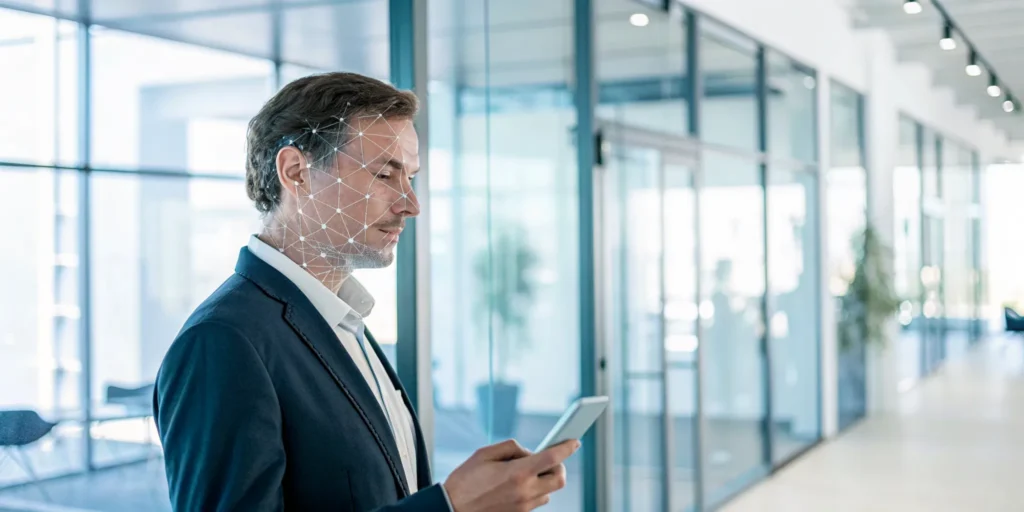
We’ve all been there—stuck battling a clunky login screen or an impossible CAPTCHA. These frustrating security checks often force you to choose between strong protection and a user experience that doesn’t cause people to leave. What if you could have both? A lightweight facial liveness detection service works silently in the background, confirming a user’s facial liveness from a single selfie in under a second. It’s powerful security that feels invisible to your real customers. This guide explains how you can use it to stop fraud, build user confidence, and reduce drop-off rates.
Key Takeaways
- Stop Fraud at the Source: Lightweight liveness detection acts as a digital gatekeeper, confirming a user is a real person in real time. This is your most effective way to block bots, fake accounts, and sophisticated spoofing attacks from ever entering your system.
- Make Security Effortless for Users: The best verification happens without users even noticing. Prioritize passive liveness solutions that work with a single selfie, creating a smooth, fast experience that prevents frustration and keeps people engaged.
- Choose a Provider That Scales with You: Your liveness detection partner should support your growth. Look for efficient, on-device technology that works on all types of hardware, processes instantly, and follows strict privacy standards to protect your business and your users.
What Is Lightweight Facial Liveness Detection?
In a digital world filled with bots, fake accounts, and deepfakes, how can you be sure the person on the other side of the screen is real? That’s the exact problem facial liveness detection solves. Think of it as a quick, digital pulse-check to confirm that a user is a living, breathing person present at that very moment. The “lightweight” part is key: it means the technology is fast, efficient, and works on almost any device with a camera, without demanding a lot of processing power or data. It’s designed to be a seamless, almost invisible layer of security.
Is Liveness Detection the Same as Facial Recognition?
It’s easy to mix these two up, but they serve very different purposes. The simplest way to think about it is that liveness detection checks if a person is real and present, while facial recognition checks who that person is. Liveness answers the question, “Are you a live human being right now?” Facial recognition answers, “Are you Jane Doe?” Liveness detection is the essential first step. Before you can verify someone’s identity, you first need to confirm you’re not dealing with a photo, a video, or a sophisticated mask. It’s the gatekeeper that ensures a real person is in front of the camera.
How Passive Liveness Tech Verifies a Real Person
You’ve probably encountered “active” liveness checks before, the ones that ask you to blink, smile, or turn your head. While effective, they add an extra step for the user. Passive liveness technology is different. It works silently in the background without requiring the user to do anything special. Using advanced AI, this technology analyzes the user’s selfie to spot the subtle signs of a real person. It’s designed to stop sophisticated spoofing attacks like deepfake videos or presentation attacks (holding up a photo or screen) without adding any friction to the user experience. The result is a fast, secure, and user-friendly verification process.
Understanding Key Performance Metrics (FAR and FRR)
So, how do you measure if a liveness detection system is actually effective? It all comes down to two key metrics: the False Acceptance Rate (FAR) and the False Rejection Rate (FRR). You can think of FAR as the system’s gullibility—it’s the percentage of times the technology is fooled into accepting a fake, like a photo or a deepfake, as a real person. A lower FAR means you have a much more secure platform. On the other hand, the False Rejection Rate (FRR) is the frustration metric. It measures how often a real, legitimate user is incorrectly blocked from access. The best liveness detection solutions find a crucial balance, creating a system that is sharp enough to block fakes without being so strict that it locks out your actual customers.
How Confidence Scores and Audit Images Work
A liveness check gives you more than a simple pass or fail. Instead, it delivers detailed feedback to help you make an informed decision. The primary output is a confidence score, typically a number from 0 to 100 that shows the system’s certainty that it saw a real, live person. A score of 99.9% gives you a high degree of assurance, while a lower score can automatically flag the attempt for a closer look. The process of detecting face liveness also provides audit images—a few frames captured during the selfie that serve as visual proof. If a verification is ever questioned, you have a clear record to review, which is essential for manual checks and maintaining a solid audit trail.
Can a Single Selfie Really Prove Someone Is Real?
With a lightweight solution, all a user needs to do is take a single selfie. There are no instructions to follow, no blinking, and no head turning. In that split second, the system gets to work. The technology analyzes the image for tiny, almost imperceptible cues that distinguish a live person from a fake. It looks at things like skin texture, light reflections on the face, and subtle movements that are unique to a three-dimensional, living person. This analysis happens instantly, confirming human presence without the user even noticing a security check took place. It’s a powerful way to verify users that respects their time and privacy.
Getting Technical: What Is Presentation Attack Detection?
So, how does a system tell the difference between your face and a picture of your face? That’s where Presentation Attack Detection, or PAD, comes in. It’s the technical term for the process that confirms a biometric sample—in this case, a face—is from a live person who is physically present. A “presentation attack” is any attempt to fool a system using a fake artifact, like holding up a photo, playing a video on a screen, or even wearing a sophisticated 3D mask. PAD is the technology designed to spot these spoofing attempts and stop them in their tracks. It acts as the essential security guard for any facial verification system, making sure that what the camera sees is genuine before any other checks happen.
To be effective, this technology has to keep up with increasingly clever fraud attempts. That’s why industry standards, like the ISO 30107-3, exist to test and certify how well a PAD system can resist different types of attacks. A robust solution can identify everything from a simple printed photo to a complex deepfake video. This check is critical because it confirms you’re dealing with a genuine, living person before any other verification step, like matching a face to an ID, can proceed. It’s the foundational layer for building digital trust and ensuring that the interactions on your platform are secure and authentically human from the very start.
Why Your Business Needs Facial Liveness Detection
In a digital world where it’s increasingly difficult to tell who is real, establishing trust is no longer a nice-to-have; it’s a business imperative. Your platform’s integrity, your users’ security, and your company’s reputation all depend on knowing that the person on the other side of the screen is genuinely present. Facial liveness detection provides that certainty, acting as a digital gatekeeper that separates real users from bots, fraudsters, and sophisticated fakes. It’s a critical layer of security that protects your ecosystem from the ground up.
Stop Digital Identity Fraud in Its Tracks
Digital identity fraud is not just a persistent problem; it’s an exploding one. With some types of identity fraud attacks jumping by over 1,000%, businesses can no longer rely on passwords and knowledge-based questions alone. Bad actors are using stolen photos, pre-recorded videos, and AI-generated identities to create fake accounts, take over legitimate ones, and exploit your platform for financial gain. Facial liveness detection serves as a powerful front line of defense. By requiring a quick, real-time selfie to prove a user is physically present, you can instantly block a huge number of automated and low-effort fraud attempts, protecting both your business and your genuine customers from harm.
The Growing Financial Impact of Digital Fraud
Fraud is more than just a security headache; it’s a direct hit to your bottom line. The financial consequences are staggering and growing every year. In the UK, for example, various fraud incidents led to losses of over £2.3 billion, with reported identity theft cases climbing steadily. These aren’t just abstract statistics. For your business, this translates into very real costs: chargebacks from fraudulent transactions, the operational drain of managing fake accounts, and the long-term damage to your brand’s reputation when users feel unsafe. As bad actors become more sophisticated, ignoring this financial threat is like leaving the vault door wide open, making proactive security an essential investment.
Outsmart Deepfakes and Modern Spoofing Attacks
As technology advances, so do the tools available to fraudsters. Deepfakes and other forms of digital impersonation, known as spoofing or presentation attacks, can fool basic verification systems. A fraudster might use a high-resolution photo, a video of the user, or even a realistic mask to try and trick your system. This is where advanced liveness detection becomes essential. The technology is designed to spot the subtle giveaways that a human eye would miss, confirming the user is a real, three-dimensional person and not a digital fake. In fact, top-tier facial liveness detection has been shown to stop 100% of these fraudulent attacks, ensuring your platform remains a secure environment for everyone.
Advanced Threats: 3D Masks and Injection Attacks
As security measures get smarter, so do the methods used to bypass them. Fraudsters are moving beyond simple photos and videos to more sophisticated presentation attacks. One common method involves using realistic 3D masks to mimic a real person’s face. Another, more technical approach is the injection attack, where a bad actor bypasses the device’s camera entirely. Instead of capturing a live video, they “inject” a pre-recorded or digitally manipulated video stream directly into the application. This can fool basic liveness systems that are only looking for simple movements. These advanced threats are designed to trick systems that aren’t equipped to analyze the subtle, complex cues of a genuine, live person, making robust detection an absolute necessity.
How AI Spots Fakes by Analyzing Depth and Motion
So, how does a passive liveness check stop a realistic mask or a deepfake video? The power lies in advanced AI that can perceive details the human eye would miss. The system analyzes the selfie for dozens of subtle cues that are unique to a living, three-dimensional person. It examines how light reflects off the skin’s texture, looks for natural, involuntary micro-movements in the face, and assesses depth to distinguish a real head from a flat screen or mask. Based on this rapid analysis, the system generates a confidence score, determining the probability that the person is real and physically present. This intelligent verification happens in a fraction of a second, providing a powerful defense that is both highly accurate and completely invisible to the user.
Earn User Trust by Prioritizing Security
Security measures are only effective if people actually use them. If your verification process is slow or complicated, users will simply give up, costing you valuable sign-ups and engagement. The best liveness detection solutions are designed to be both secure and seamless. The verification process can happen in under a second with a single selfie, creating a smooth and frictionless experience. This ease of use is key to reducing drop-off rates during onboarding and login. When users see that you can protect their accounts without making them jump through hoops, you build confidence and long-term trust. It sends a clear message: your platform is safe, professional, and respects their time.
Move Beyond Passwords That Can Be Cracked in Minutes
Passwords have become the weakest link in online security. They can be stolen, guessed, or cracked in minutes, leaving user accounts vulnerable to takeovers. Relying on them alone is like leaving your front door unlocked. Facial liveness detection offers a fundamentally stronger approach. It provides certainty where passwords create doubt, acting as a digital gatekeeper that separates real users from fraudsters. By requiring a quick, real-time selfie to prove a user is physically present, you can instantly block a huge number of automated and low-effort fraud attempts. This simple step moves your security from a guessable secret to undeniable proof of presence, building a foundation of trust that passwords can no longer provide.
Why Go Lightweight with Your Liveness Detection?
When you hear “facial verification,” you might picture complex, expensive systems. But modern liveness detection is different. A lightweight solution offers robust security that’s also efficient, affordable, and user-friendly. By processing data directly on a user’s device, these systems sidestep the heavy infrastructure and data demands of older technologies. This approach delivers some major advantages for businesses looking to build trust without creating barriers for their customers. It’s about making security feel invisible, integrating it smoothly into the technology people already use every day.
Implement on Any Device Without Breaking the Bank
One of the biggest hurdles with older security systems is the cost and complexity of implementation. They often require specialized, high-powered hardware to function. A lightweight solution completely changes the game. Because the core technology is a small, efficient program, it can run directly on the devices your customers already own, like smartphones, tablets, and laptops. This eliminates the need for you to invest in expensive, dedicated equipment. Your platform can leverage existing user hardware, making deployment faster, simpler, and far more cost-effective. It’s a scalable approach that works whether you’re verifying ten users or ten million.
Add Security Without Sacrificing User Experience
Security should never come at the expense of the user experience. Clunky, multi-step verification processes lead to frustration and high drop-off rates. Lightweight solutions prioritize a frictionless experience by using passive liveness detection. Instead of asking users to follow instructions like blinking, smiling, or turning their head, the system verifies they are a real, live person from a single selfie. This process is instant and intuitive. It effectively stops spoofing attacks using photos or videos without making legitimate users jump through hoops. This seamless approach helps you maintain high security standards while keeping your user journey smooth and fast.
Why Friction Leads to High User Drop-Off Rates
Let’s be honest: no one likes being forced to jump through hoops. Every extra step you add to your sign-up or login process is another chance for a potential user to get frustrated and leave. Security checks are often the biggest culprits. When a verification process is slow, confusing, or asks for too much effort, it creates a poor first impression. As Mitek Systems points out, these kinds of clunky, multi-step verifications are a direct cause of user frustration and high drop-off rates. After all, security is only useful if people are willing to complete it. By making verification a seamless, one-step process that happens in the background, you remove that friction. This not only protects your platform but also ensures you don’t lose valuable customers before they even have a chance to engage with your product.
Keep Your Tech Stack Lean and Efficient
Sending and processing large video files is expensive and slow. It puts a heavy load on your servers and can create a poor experience for users with slow internet connections. Lightweight liveness detection solves this by doing most of the work on the user’s device. The system analyzes the image locally to confirm liveness, then sends only a tiny packet of data (kilobytes, not megabytes) for verification. This dramatically reduces your data transfer costs and server load. It also means your verification process remains quick and reliable, even for users on mobile networks or in areas with limited connectivity, ensuring your platform is accessible to everyone.
Verify Users While Respecting Their Privacy
In an era of constant data breaches, users are rightly concerned about how their personal information is handled. A lightweight, on-device approach is inherently more private. Because the liveness check happens on the user’s phone or computer, sensitive biometric data like a full video stream never has to leave the device. This “privacy by design” methodology minimizes the data you have to collect, transmit, and store, reducing your risk and liability. It’s a powerful way to show users you respect their privacy, building the foundational trust needed to protect your community from sophisticated threats like deepfakes and presentation attacks.
How to Choose the Right Liveness Detection Service
Choosing a liveness detection partner is a critical decision for your platform. The right provider strengthens your security, protects your users, and builds trust, while the wrong one can introduce friction, create vulnerabilities, and frustrate your customers. It’s about finding a solution that is both powerful enough to stop sophisticated threats and seamless enough that your real users barely notice it’s there.
As you evaluate your options, focus on four key areas: the intelligence of the anti-spoofing tech, its performance on everyday devices, its processing speed, and its commitment to privacy and compliance. These pillars will help you find a provider that not only secures your platform but also supports its growth and integrity.
Prioritize AI-Powered Anti-Spoofing Tech
Your first checkpoint should be the sophistication of the technology itself. Modern fraud isn’t simple, so your defense can’t be either. Look for a provider that uses advanced, AI-powered technology to distinguish between a live person and a presentation attack, like a printed photo, a screen replay, or a deepfake video. The best systems use AI-driven passive facial liveness detection, which analyzes subtle cues in a single selfie to confirm human presence without asking the user to perform any actions. This approach effectively thwarts spoofing attempts while keeping the user experience smooth and intuitive, ensuring your security measures don’t get in the way of legitimate users.
Why AI Outperforms Humans in Spotting Fakes
It might seem like our own eyes are the best judge of what’s real, but that’s often not the case with digital fakes. Humans are surprisingly easy to fool. In fact, one study found that while AI correctly identified biometric fakes in 96% of cases, humans only got it right 61% of the time. This performance gap exists because AI can perceive what we can’t. It analyzes thousands of data points in a single image, detecting the subtle giveaways a human eye would miss—like unnatural light reflections, inconsistencies in skin texture, or the tiny movements that signal a real, three-dimensional person. This allows the technology to instantly shut down sophisticated presentation attacks, from a photo held up to a screen to a deepfake video, providing a level of certainty that human review simply can’t match.
Ensure It Works Flawlessly on Any Device
Security should be accessible to everyone, not just users with the latest high-end smartphones. A reliable liveness detection service must perform flawlessly across a wide range of devices, including those with limited processing power and slower internet connections. Ask potential providers about their lightweight technology, which is specifically designed for efficiency. This ensures that facial verification is quick and easy for all your users, regardless of their hardware. By prioritizing performance on low-power devices, you create a more inclusive and reliable experience, preventing user drop-off and ensuring your platform is accessible to a global audience.
Why Real-Time Processing Is a Must-Have
In the digital world, speed matters. Any delay during critical moments like sign-up, login, or checkout can cause users to abandon the process. That’s why real-time processing is non-negotiable. Your liveness detection solution should deliver a definitive result in under a second. This speed is essential for eliminating unnecessary steps and friction from the user journey. When a liveness check is instantaneous, it integrates seamlessly into your existing workflows without disrupting the user experience. This combination of robust security and immediate verification helps maintain user engagement and satisfaction, proving that you don’t have to sacrifice one for the other.
Don’t Compromise on Compliance and Privacy
Handling biometric data comes with immense responsibility. A trustworthy liveness detection provider must demonstrate an unwavering commitment to data privacy and adhere to the highest compliance standards, like GDPR and CCPA. Look for providers whose technology is trusted by various governments and other highly regulated industries, as this serves as a strong indicator of their security posture. Verifying a provider’s certifications and compliance with international standards is essential for protecting your users’ sensitive information. This not only safeguards your business from legal and reputational risks but also builds foundational trust with your user base, showing them you take their privacy seriously.
Look for Key Industry Certifications (ISO, iBeta, FIDO)
When you’re comparing liveness detection services, certifications are your best friend. They cut through the marketing noise and offer objective proof that a solution can actually do what it claims. Look for providers that have earned key industry credentials, as this shows their technology has been rigorously tested by independent labs. For example, the ISO/IEC 30107 standard is a critical benchmark for a system’s ability to detect sophisticated spoofing attempts, including 3D masks and deepfakes. Another one to watch for is iBeta Level 2 certification, which validates a system’s resilience against a wide range of presentation attacks. Finally, compliance with FIDO (Fast Identity Online) standards ensures the solution supports secure, passwordless authentication. Choosing a provider with these certifications gives you confidence that you’re investing in top-tier security that protects your platform and your users.
Comparing Enterprise-Grade Liveness Detection Solutions
When you start looking into liveness detection, you’ll quickly see that providers have different philosophies on how to prove a user is a real, live person. The landscape is full of unique technologies, each with its own strengths. Some solutions focus on creating the most secure barrier possible, sometimes asking users to perform specific actions like blinking or turning their head. Others prioritize a completely seamless experience, working silently in the background so the user barely knows they’re being verified.
The right approach for your business depends entirely on your specific needs. Are you protecting high-value financial transactions or simply trying to prevent bots from creating fake accounts? The level of security you require will guide your choice. As you compare options, you’ll find a spectrum of solutions, from heavyweight, server-based systems to nimble, on-device technologies. Understanding these key differences is the first step in finding a provider that aligns with your security goals, user experience standards, and technical infrastructure. Let’s look at a few key players to see how their approaches differ.
Realeyes VerifEye Technology
At Realeyes, our approach is built around a simple idea: security shouldn’t come at the cost of user experience. Our VerifEye technology is designed to quietly confirm that a real person is present without adding frustrating steps to the user journey. It works behind the scenes to authenticate users, detect fraud, and protect the integrity of your platform. Instead of asking for specific actions, VerifEye uses a privacy-first method to verify liveness from a single selfie. This makes it an ideal solution for platforms that need to maintain trust and security at scale while keeping the user experience smooth and intuitive. It’s about providing reliable proof of human presence without the friction.
iProov Express Liveness and Dynamic Liveness
iProov offers two distinct tiers of security for its biometric liveness detection. The first, Express Liveness, is designed for speed and convenience, making it a good fit for low-risk interactions like new account sign-ups. It effectively stops spoofing attempts from photos, masks, and pre-recorded videos. For higher-risk scenarios, iProov offers Dynamic Liveness. This more advanced system uses a unique, one-time colored illumination sequence called Flashmark to confirm a user is physically present and not a digital fake, like a deepfake. It’s built to provide maximum security against both current and future threats, adapting as attack methods evolve.
Mitek IDLive Face
Mitek’s IDLive Face takes a completely passive approach to liveness detection. The user experience is incredibly simple: they just take a single selfie. There’s no need to blink, smile, or move their head. The AI-powered system works silently in the background to analyze the image and confirm the person is real in less than a second. This frictionless process is designed to make verification seamless during onboarding or login. Mitek’s technology has proven to be highly effective, with tests from the Department of Homeland Security showing it successfully stopped 100% of presentation attacks, which include fakes made from photos and videos.
Innovatrics Lightweight Solutions
Innovatrics focuses on efficiency with its Lightweight Facial Identification Service. This technology uses a small neural network that can run directly on everyday devices like smartphones, tablets, or kiosks. Because the processing happens on the device itself, it only needs to send a tiny amount of data to a server for matching. This approach significantly reduces bandwidth and processing demands, making it a great fit for applications where connectivity might be limited. The solution is delivered as a simple API that can handle identity verification and liveness detection, offering a flexible and resource-friendly way to confirm a user’s presence.
How to Implement Liveness Detection in Your Business
Adding liveness detection to your platform might sound like a heavy technical lift, but modern solutions are designed to be surprisingly easy to integrate. The key is to approach it as a strategic project rather than a simple software purchase. By thinking through a few key areas before you start, you can ensure a smooth implementation that strengthens your security without disrupting your user experience or your budget.
The best liveness detection services are built to work with your existing systems, not against them. They operate quietly in the background, providing a powerful layer of defense against bots, fake accounts, and deepfake attacks. Getting started involves planning for the technical integration, understanding how the technology will perform on your users’ devices, and evaluating the impact on your resources and budget. Let’s walk through the essential steps to consider as you prepare to bring this critical technology into your business. By focusing on these practical considerations, you can choose a partner and a solution that fits your needs perfectly.
Map Out Your API Integration and Support Needs
Most liveness detection services connect to your website or application through an API (Application Programming Interface). Think of an API as a secure bridge that allows two different pieces of software to talk to each other. A well-designed API integration is the foundation of a successful implementation. Look for a provider that offers a simple, easy-to-use API with clear and comprehensive documentation. Your development team will thank you. Strong developer support is also non-negotiable. Having access to experts who can answer questions and troubleshoot issues will make the entire process faster and less stressful for your team.
Will It Work for All Your Users’ Devices?
Your liveness detection solution is only effective if it works for all your users, no matter what device they’re on. Modern, lightweight systems are designed to run efficiently on a wide range of hardware, from the latest smartphones to older tablets and even public kiosks. This is possible because they use small, optimized computer programs (neural networks) that perform the analysis directly on the device itself. This approach ensures broad device compatibility and a consistent, fast experience for everyone. Before committing to a provider, confirm that their technology is proven to work seamlessly across the devices your audience uses most.
Addressing Vulnerabilities on Certain Devices
It’s a reality that not all hardware is created equal. Some devices, particularly certain Android models, can remain vulnerable to simple spoof attacks like holding up a photo. Relying on the device’s native security isn’t enough. This is where a dedicated, lightweight liveness solution becomes so important. Instead of depending on the device’s built-in capabilities, it runs its own sophisticated analysis. By using a small, efficient program that operates directly on the device, the service can apply a consistent and high level of security across your entire user base. This ensures that even users on lower-end hardware are protected from fraud, closing security gaps that bad actors actively look to exploit.
Assess Your Bandwidth and Processing Capacity
A major advantage of a lightweight liveness solution is its minimal impact on your resources. Older or less efficient systems might require capturing and sending large video files to a server for analysis. This can consume significant bandwidth, leading to slow verification times for users and high data transfer costs for your business. In contrast, top-tier solutions process information on the device and only need to send a tiny packet of data (we’re talking kilobytes, not megabytes) for confirmation. This efficiency is crucial for maintaining a snappy user experience and keeping your operational costs low, especially as you scale.
Understand the Different Pricing Models
When evaluating cost, look beyond the initial price tag. The total cost of ownership is what really matters. A lightweight, on-device solution saves you money by eliminating the need for expensive server hardware and ongoing maintenance fees. Most providers use a usage-based pricing model, where you pay per verification or per active user. This can be a very cost-effective approach, as your expenses scale directly with your usage. Ask for a clear breakdown of the pricing structure and ensure there are no hidden fees. The right solution should provide a clear return on investment by preventing costly fraud and protecting your platform’s integrity.
Use Liveness as a “Step-Up” Security Measure
You don’t need to check for liveness every single time a user logs in. For many businesses, a more strategic approach is to use it as a “step-up” security measure for high-risk actions. Think of it as an extra layer of verification that kicks in only when it’s truly needed, like when a user is transferring a large sum of money, changing their password, or accessing sensitive personal information. This targeted approach keeps the everyday user experience fast and fluid while adding robust protection at critical moments. Facial liveness detection serves as a powerful front line of defense in these scenarios. By requiring a quick, real-time selfie to prove a user is physically present, you can instantly block a huge number of automated and low-effort fraud attempts without adding friction to every interaction.
Choose Your Deployment Model: Cloud vs. On-Premise
When implementing liveness detection, you’ll generally choose between a cloud-based or an on-premise (often called on-device) model. With a cloud solution, biometric data is sent to the provider’s servers for analysis. An on-device solution, however, performs the analysis directly on the user’s hardware. Because the core technology is a small, efficient program, it can run directly on the devices your customers already own, like smartphones, tablets, and laptops. This eliminates the need for you to invest in expensive, dedicated equipment. This lightweight approach, which we use here at Realeyes, offers significant advantages in privacy and speed, as sensitive data never has to leave the user’s device and the results are nearly instantaneous.
Ensure Fairness and Plan for Failed Checks
No technology is perfect, so it’s crucial to have a plan for when a legitimate user fails a liveness check. This could be due to poor lighting, an unusual camera angle, or other rare edge cases. A good implementation includes a clear and simple fallback path, whether that’s prompting the user to try again in a better-lit environment or offering an alternative verification method. It’s also vital to ensure the system is fair and unbiased. A trustworthy liveness detection provider must demonstrate an unwavering commitment to data privacy and adhere to the highest compliance standards, like GDPR and CCPA. Ask potential partners about how they test for and mitigate bias to ensure their technology works reliably for everyone.
Consider Linking Biometrics to Specific Devices
For an even higher level of security, consider a strategy that links a user’s biometrics to their specific device. This concept, often called device binding, creates a powerful connection between the user’s face and their trusted phone or laptop. This means that even if a fraudster manages to create a perfect deepfake of a user, the attack will fail if it doesn’t come from the registered device. As one provider, Keyless, explains, this approach links a user’s face to their specific device, so even a flawless deepfake won’t work from a different phone or computer. This method adds a formidable barrier against sophisticated takeover attempts and is an excellent strategy for protecting high-value accounts and transactions.
Key Applications and Future Trends in Liveness Detection
Liveness detection is quickly moving beyond a niche security feature to become a foundational layer of trust for the digital economy. As our lives become more integrated with online platforms, the need to confirm that a real person is on the other side of the screen is becoming essential. From securing financial transactions to protecting online communities, this technology provides the critical proof of human presence that businesses need to operate safely. It’s not just about stopping fraud; it’s about enabling more meaningful and secure digital interactions across a growing number of industries.
Critical Use Cases: From KYC to Age Verification
In any high-stakes digital interaction, confirming a user is a real, live person is the crucial first step. This is especially true in financial services, where liveness detection is a cornerstone of Know Your Customer (KYC) regulations for online bank account opening. It’s also essential for securing logins to sensitive apps, verifying identities for government services, and authorizing high-risk transactions. The technology serves as the primary defense against face presentation attacks, where a fraudster uses a photo, video, or even a sophisticated mask to fool a system. By ensuring a real person is present, liveness detection protects platforms from fraud and helps them meet strict compliance requirements.
What’s Next: Smarter AI and New Industries
The world of digital fraud is constantly evolving, and liveness detection technology is advancing right alongside it. The future is focused on developing even smarter AI that can detect increasingly sophisticated deepfakes and other digital impersonations. This includes a major push toward faster, more efficient checks that happen entirely on a user’s device, strengthening both security and privacy. As the technology becomes more lightweight and accessible, its applications are expanding into new areas like healthcare for verifying patients in telemedicine, and smart homes for secure, personalized access. The industry standard is quickly becoming AI-driven passive facial liveness, which confirms human presence from a single selfie, making security truly invisible.
Making Your Final Decision on a Liveness Solution
With a clearer picture of the liveness detection landscape, you can start narrowing down the options to find the perfect fit for your platform. Choosing the right provider isn’t just about picking the most advanced technology; it’s about finding a solution that aligns with your specific security needs, performance demands, and user experience goals. A lightweight solution that works seamlessly for a social media app might not be robust enough for a financial institution that needs to verify high-value transactions. The goal is to strike the right balance between robust security and a frictionless user journey. Adding too many steps can drive users away, but too little security can open the door to fraud, eroding the trust you’ve worked so hard to build. Making the right choice requires a clear-eyed assessment of your business. Think about the threats you face, the scale you operate at, and the features that will make the biggest difference for your users and your bottom line. This decision will impact everything from your development roadmap to your customer satisfaction scores. Let’s walk through the key factors to consider so you can select a partner that helps you build a safer and more trustworthy online environment.
What Level of Security Do You Really Need?
Your first step is to get a clear picture of your platform’s security vulnerabilities. Are you trying to stop simple bots from creating fake accounts, or are you defending against sophisticated fraudsters using deepfakes to access sensitive information? The answer will determine the level of security you need. A basic liveness check might be enough to deter bots, but you’ll need more advanced technology to spot presentation attacks (like showing a photo or video to the camera) or digital injection attacks. Some providers, for instance, offer advanced liveness detection specifically designed to confirm a person is real and physically present, guarding against complex spoofing attempts. Conduct a risk assessment for your platform. What are the consequences of a security breach? For high-stakes interactions, like authorizing a large payment or verifying an identity for a loan, you’ll want to prioritize a solution with the highest level of anti-spoofing security.
Can It Scale with Your Business?
A liveness solution is only effective if it can keep up with your user base. As your platform grows, you need a system that can handle thousands, or even millions, of verifications without causing delays or system failures. Performance is key. A slow or buggy verification process will frustrate users and could lead them to abandon your platform altogether. This is where lightweight solutions truly shine. Modern systems are designed to be efficient. Some providers have developed lightweight technology that runs directly on everyday devices like smartphones and laptops, removing the need for powerful servers. When talking to potential vendors, ask about their processing capacity and how they handle sudden spikes in traffic. You need a partner who can scale with you and maintain a smooth, fast user experience, no matter how many people are using your service.
Create a Feature-by-Feature Comparison
Once you’ve defined your security and performance needs, you can start comparing the specific features of different solutions. One of the most important distinctions is between active and passive liveness detection. Active liveness requires users to perform an action, like blinking, smiling, or turning their head. While secure, this can add friction to the user experience. Passive liveness, on the other hand, works silently in the background. Solutions that use passive facial liveness detection can verify a user with a single selfie, creating a completely frictionless experience. Create a checklist of your must-have features. This might include passive detection, compatibility with a wide range of devices, real-time processing speed, and a well-documented API that makes integration easy for your development team. Comparing these capabilities side-by-side will help you find the solution that best serves your users.
Related Articles
- What Is Facial Liveness Detection & How Does It Work?
- What Is Liveness Detection? The Ultimate Guide
- What Is Liveness Detection? A Complete Guide
Frequently Asked Questions
Is this the same as the facial recognition I use to unlock my phone? That’s a great question, and it’s a common point of confusion. While they both use your face, they answer two very different questions. Facial recognition, like the kind on your phone, asks, “Who are you?” to confirm your specific identity. Liveness detection asks a more fundamental question first: “Are you a real, live person right now?” It’s the essential first step that ensures the system isn’t being tricked by a photo, a video, or a digital deepfake before any identity verification can even begin.
Will this technology work on older or less powerful smartphones? Absolutely. That’s the core benefit of a “lightweight” solution. The technology is specifically engineered to be incredibly efficient, using a small program that can run directly on almost any device with a camera, including older smartphones, tablets, and laptops. This approach avoids the need for high-end processing power, ensuring a fast and reliable experience for all your users, not just those with the latest gadgets.
How does a single selfie prove someone isn’t just holding up a photo? It comes down to sophisticated AI that can spot the tiny details a human eye would miss. When a user takes a selfie, the system instantly analyzes it for subtle cues that are unique to a live, three-dimensional person. It looks for things like natural skin texture, the way light reflects off a curved surface, and microscopic movements. These elements are incredibly difficult to fake in a photo or video, allowing the technology to quickly distinguish between a genuine user and a spoofing attempt.
Will adding a liveness check slow down my sign-up or login process? Not at all, especially with a passive system. The entire verification happens in the background in less than a second, using the single selfie the user is already taking. There are no extra steps, no instructions to follow, and no waiting. From the user’s perspective, the experience is seamless and instant. This frictionless approach protects your platform from fraud without creating the kind of delays that cause people to abandon the process.
What happens to my users’ data? Is this process private? Privacy is a critical part of a modern liveness solution. The most secure systems are designed with a “privacy-first” approach. This means the analysis happens directly on the user’s device, so sensitive biometric information like a full video stream never needs to be sent to a server. The system confirms liveness locally and then sends only a very small, anonymous packet of data for final verification. This minimizes data collection and storage, which reduces your risk and shows your users that you take their privacy seriously.