

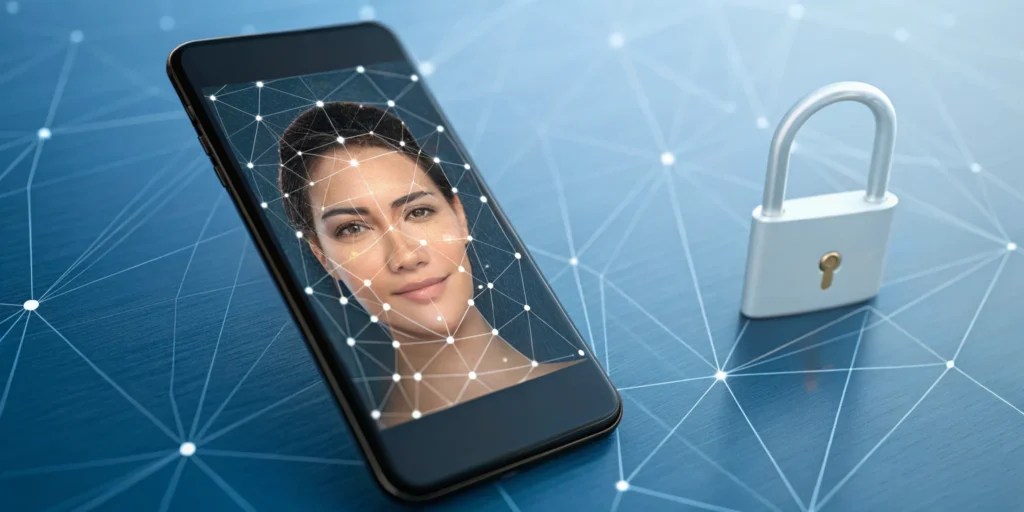
Let’s be honest: most online age verification is clunky and intrusive. It adds friction, frustrates users, and can lead to high drop-off rates. But what if you could verify age securely without disrupting the user journey? Liveness detection makes this possible, confirming a user’s presence quietly in the background. This powerful technology, however, comes with serious responsibilities. The big question is, are there identity verification solutions that comply with GDPR requirements? The answer is a resounding yes. We’ll show you how to design a user-friendly system that is both seamless for your users and solid in its compliance.
Key Takeaways
- Focus on Presence, Not Just Proof: Liveness detection strengthens age verification by confirming a user is a real, live person in the moment. This approach helps you meet GDPR’s data minimization rule by avoiding the need to collect sensitive personal identifiers like government IDs.
- Make Privacy a Foundational Practice: True GDPR compliance is about building trust, not just checking boxes. This means conducting a Data Protection Impact Assessment (DPIA) before you start, establishing a clear legal basis for processing data, and being transparent with users through an easy-to-understand privacy policy.
- Choose Technology That Minimizes Data: To protect your users and your business, adopt privacy-preserving tools like anonymous face verification. This technology can confirm age and liveness without creating a permanent biometric record, which is the smartest way to reduce your data handling risks.
Understanding the GDPR Framework
The General Data Protection Regulation, or GDPR, isn’t just another piece of legal jargon—it’s a foundational framework for data privacy that has set a global standard since its launch in 2018. For any business operating online, especially those using technologies like liveness detection for age verification, understanding GDPR is non-negotiable. It’s designed to give individuals control over their personal data, and it outlines strict rules for how organizations collect, process, and store that information. Getting this right is about more than just avoiding fines; it’s about building a foundation of trust with your users, showing them you take their privacy as seriously as they do. This framework redefines the relationship between businesses and customers, making transparency and accountability the cornerstones of digital interaction.
Who GDPR Applies To and When It Started
One of the most common misconceptions about GDPR is that it only applies to European companies. In reality, its reach is global. The regulation applies to any organization, anywhere in the world, that processes the personal data of individuals located in the European Economic Area (EEA). So, if you have customers or users in any of the EU member states (plus Iceland, Liechtenstein, and Norway), you are required to comply with GDPR. This has been the law of the land since May 25, 2018. The regulation doesn’t care where your servers are or where your headquarters is located; if you’re handling the data of people in the EEA, you’re on the hook. This broad scope is exactly why GDPR has had such a massive impact on how companies approach data privacy worldwide.
Key Roles and Responsibilities Under GDPR
GDPR is very specific about accountability, which means it clearly defines the roles and responsibilities for handling personal data. It’s not enough to just have a privacy policy; you need to know exactly who is responsible for what within your data processing activities. This structure ensures that there are no gaps in data protection and that someone is always answerable for how information is managed. Understanding these roles is the first step toward building a compliant operation because your specific obligations depend entirely on which hat you wear. For businesses implementing age verification, this often involves distinguishing between your own responsibilities and those of your technology partners, making these definitions incredibly important.
Data Controller vs. Data Processor: Know Your Role
The two most critical roles under GDPR are the data controller and the data processor. The data controller is the organization that determines the “why” and “how” of data processing. If you are the platform deciding to implement age verification for your users, you are the data controller. You own the relationship with the user and are ultimately responsible for protecting their data. The data processor, on the other hand, is the organization that processes data on behalf of the controller. This is often a third-party vendor, like a company providing the liveness detection software. While the controller bears the primary responsibility, processors also have direct legal obligations under GDPR, such as implementing strong security measures and notifying the controller of any data breaches.
The Role of a Data Protection Officer (DPO)
For some organizations, GDPR requires the appointment of a Data Protection Officer (DPO). A DPO is an independent expert on data privacy who is responsible for overseeing your company’s GDPR compliance strategy. Their job includes training staff, conducting internal audits, and serving as the main point of contact for supervisory authorities. You are required to appoint a DPO if you are a public authority or if your core activities involve large-scale, systematic monitoring of individuals or processing of sensitive data. Even if you aren’t legally required to have one, appointing a DPO can be a smart move to demonstrate your commitment to data protection and ensure you have expert guidance on hand.
When You Need an EEA Representative
If your company is based outside of the European Economic Area but you process the data of people inside the EEA, you may need to appoint an EEA Representative. This person or entity acts as your local point of contact for both individuals and data protection authorities within the EU. Think of them as your official liaison for all things GDPR. The representative is responsible for maintaining records of your processing activities and cooperating with authorities if an inquiry arises. Having a designated representative ensures that European regulators have a direct and accessible channel to your organization, which is a key requirement for non-EU businesses subject to the regulation.
The High Stakes of Non-Compliance
While building a GDPR-compliant system takes effort, the consequences of getting it wrong are far more demanding. The regulation gives authorities significant power to enforce the rules, and the penalties for non-compliance are designed to be a serious deterrent. These aren’t just small slaps on the wrist; they are substantial financial penalties that can impact a business of any size. But the risk goes beyond just the financial hit. A public violation can cause immense reputational damage, eroding the user trust you’ve worked so hard to build. In a world where consumers are increasingly conscious of their digital privacy, a data protection failure can lead to customer churn and long-term harm to your brand.
Navigating GDPR Fines and Penalties
GDPR is famous for its steep fines. For the most serious infringements, regulators can issue penalties of up to €20 million or 4% of the company’s total worldwide annual turnover from the preceding financial year, whichever is higher. This two-tiered system ensures that the penalty is both significant and proportional to the size of the organization. The specific amount depends on the nature of the violation, such as failing to get proper consent, not having a legal basis for processing, or ignoring individuals’ data rights. The European Data Protection Board works to ensure these fines are applied consistently across the EU, making it clear that non-compliance is a costly mistake.
The 72-Hour Breach Notification Rule
One of the most challenging operational requirements of GDPR is the strict timeline for reporting data breaches. If a breach of personal data occurs, you must notify the relevant supervisory authority without undue delay, and where feasible, within 72 hours of becoming aware of it. This is an incredibly tight window that leaves no room for hesitation. It requires companies to have a robust and well-rehearsed incident response plan ready to go at a moment’s notice. This rule underscores the importance of data minimization; the less personal data you collect and store, the lower your risk profile becomes in the event of a breach. Using privacy-first technologies that verify users without retaining sensitive biometric templates can be a critical part of a smart risk-reduction strategy.
How Liveness Detection Secures Age Verification
When you’re verifying someone’s age online, you’re not just checking if an ID is valid; you’re confirming that the person presenting it is a real, live human being. That’s where liveness detection comes in. It’s a crucial piece of technology that distinguishes a living person from a spoof attempt, like someone holding up a photograph, a mask, or a video recording. Think of it as the digital bouncer that ensures the person at the virtual door is who they claim to be in that exact moment.
Without this step, even the most sophisticated age verification systems can be tricked. Liveness detection adds a layer of dynamic, real-time security to confirm genuine human presence. It’s the key to preventing fraud and building a foundation of trust before any other checks begin. As platforms face increasing pressure to protect users and systems, proving liveness has become an essential part of responsible age verification.
How Does Liveness Detection Actually Work?
Liveness detection works by analyzing a user’s biometric data to find signs of life. Early methods were often active, requiring users to perform specific actions like blinking, smiling, or turning their head. While effective, these steps can add friction to the user experience. Today, more advanced systems use passive liveness detection, which analyzes subtle, natural cues like facial movements, texture, and reflections in a person’s eyes without asking them to do anything special.
The use of Face Recognition Technology in this process raises important questions about privacy and data protection. The goal is to confirm a person is live and present with minimal intrusion, collecting only the data necessary for that single check. This ensures the process is both secure and respectful of user privacy.
Why Verifying a Live Person Is Non-Negotiable
Verifying a live human presence is fundamental to preventing identity fraud. In the context of age verification, it stops bad actors from using a stolen photo or a deepfake video to impersonate someone else and gain access to age-restricted content or services. These spoofing attempts are one of the biggest facial recognition challenges, and liveness detection is the primary defense against them. It protects not only your platform but also the individuals whose identities could be misused.
Beyond security, this verification is also a matter of regulatory compliance. Data protection laws like the GDPR in Europe emphasize the importance of ensuring that biometric data is collected accurately from a person who is genuinely present. By confirming liveness, you uphold the integrity of your age verification system and demonstrate a commitment to handling sensitive user data responsibly, which is a cornerstone of building and maintaining user trust.
How Liveness Detection Helps You Comply With GDPR
Navigating the world of age verification can feel like walking a tightrope. On one side, you have a clear responsibility to protect minors. On the other, you have the General Data Protection Regulation (GDPR), which sets a high bar for protecting user privacy. Many traditional verification methods, like asking for a government ID or a detailed face scan, create a direct conflict with GDPR’s core principles. They often collect far more personal data than necessary, putting both users and your business at risk.
This is where liveness detection becomes so important. It offers a way to confirm that a user is a real, live person present at the moment of verification without necessarily needing to identify who they are. By focusing on presence instead of identity, liveness detection helps you meet your obligations while respecting user privacy. It’s a modern solution to a modern problem, allowing you to build trust with your users and demonstrate a commitment to data protection that regulators value. Choosing the right system is a critical decision, with lasting implications for your regulatory compliance, user experience, and overall business operations.
Protecting User Privacy and Data Rights
At the heart of the GDPR is the principle of data minimization. The goal is to collect the least amount of personal data required to accomplish a specific task. France’s data protection authority, the CNIL, has been clear that age verification systems should not collect official ID documents or biometric data like face scans. The problem is that many third-party verification services do exactly that, collecting highly sensitive information and linking it to other data points.
A well-designed liveness detection system helps you adhere to the data minimization rule. Instead of demanding a passport or driver’s license, it can confirm a user’s presence with a simple, real-time interaction. This approach verifies that you’re dealing with a living person, not a bot or a static image, fulfilling the verification need without overstepping on privacy.
Distinguishing Between Identity Verification (IDV) and KYC
It’s easy to get Identity Verification (IDV) and Know Your Customer (KYC) mixed up, but they solve very different problems. Think of IDV as the specific action of confirming an identity claim is legitimate—it answers the question, “Are you who you say you are right now?” This is often a one-time check. KYC, on the other hand, is a much broader and continuous regulatory process, primarily used in finance to prevent fraud and money laundering. It starts with IDV but extends to ongoing risk assessment and customer monitoring. For age verification under GDPR, this distinction is critical. A full KYC process often involves collecting extensive personal data that goes against data minimization principles. In contrast, a focused IDV process, especially one that uses liveness detection to simply confirm a real person is present, can meet verification needs without the heavy data burden, keeping the process both compliant and user-friendly.
How to Reduce Risks When Processing Biometric Data
Under GDPR, biometric data used for identification is considered a “special category” of personal data. This means it’s inherently sensitive and requires extra protection. If your system uses face scans to uniquely identify individuals, you’re processing high-risk data. The UK’s Information Commissioner’s Office (ICO) states that this requires a specific legal basis and a Data Protection Impact Assessment (DPIA) to justify its use.
Most age verification methods are at odds with this principle, creating significant risks for user data. Liveness detection, particularly privacy-preserving approaches, helps you reduce these risks. By focusing the check on confirming a live human presence rather than creating a permanent, identifiable biometric template, you can avoid many of the compliance headaches. This demonstrates that you understand the sensitive nature of this data and are taking proactive steps to protect it.
GDPR Rules for Liveness Detection You Need to Know
Using liveness detection for age verification is a smart move for protecting your users and your platform. But this technology deals with personal data, which means you need to follow the rules set by the General Data Protection Regulation (GDPR). Getting this right isn’t just about avoiding fines; it’s about building trust with your users. Let’s walk through the key GDPR principles you need to know to implement liveness detection responsibly.
How to Establish a Legal Basis for Consent
Many businesses believe that getting user consent is the only way to legally process data under GDPR, but that’s not the full picture. While consent is one option, it’s not the only one. The GDPR requires you to have a valid legal basis for processing personal data. For age verification, common legal bases include “legal obligation” (if you’re required by law to verify age) or “legitimate interests” (if you need to protect your platform and users from harm, like underage access). Whichever basis you choose, you must clearly define it, document your reasoning, and be transparent with your users about why you are collecting their data.
Limiting Data Collection to What’s Necessary
The GDPR operates on a principle of “data minimization,” which is exactly what it sounds like: collect only what you absolutely need. When using liveness detection for age verification, you should only gather the minimum amount of information required to confirm a user’s age and liveness. For example, you don’t need to store a user’s photo permanently if a simple yes or no result is enough. You must also be crystal clear about your purpose. If you collect data to verify a user’s age, you cannot repurpose that data for marketing or anything else without a separate legal basis. This focused approach respects user privacy and reduces your own data-related risks.
How to Secure Data and Limit Storage Time
Once you collect personal data, you are responsible for keeping it safe. This is especially true for biometric information used in liveness checks, which is considered sensitive data under GDPR. You must implement strong security measures to protect it from unauthorized access or breaches. If you partner with a third-party vendor for your age verification technology, you are still responsible for ensuring they have equally strong security. Furthermore, you shouldn’t hold onto this data forever. Once the age verification is complete, the data should be securely deleted unless you have a specific legal requirement to retain it. Minimizing storage time is a key way to reduce the risks to user data.
A Breakdown of Liveness Detection Methods
Liveness detection is the technology that answers a critical question: is the person in front of the camera a real, live human? It’s the step that separates a legitimate user from a fraudster trying to use a photo, a video, or a sophisticated deepfake. This verification of a live human presence is essential for building trust online, especially when handling sensitive processes like age verification.
Different platforms use different methods to confirm liveness, and each one creates a unique user experience. The core challenge is to find the right balance between robust security and a smooth, frictionless process for the user. Some techniques require active participation, while others are completely invisible. Choosing the right approach is more than a technical decision; it has direct implications for your GDPR compliance strategy. A method that is overly intrusive or collects unnecessary data can create significant privacy risks. Let’s explore the three most common types of liveness detection to see how they work and what they mean for your platform.
Active Liveness Detection: The User-Interaction Method
Active liveness detection requires the user to perform a specific action to prove they are physically present. You’ve likely encountered this before when a system asks you to blink, smile, or turn your head from side to side. These challenges are designed to be easy for a human but difficult for a static image or a simple video replay to replicate. By requesting a direct response, this method confirms that the person being verified is not only real but also engaging with the system in real time. While it can be a highly effective way to prevent spoofing attacks, the main drawback is the added friction it introduces into the user experience.
Passive Liveness Detection: The Frictionless Approach
Passive liveness detection is a more subtle and user-friendly approach. Instead of asking the user to do anything, it analyzes the image or video feed for natural signs of life. The technology looks for subtle cues that are almost impossible to fake, such as the texture of the skin, the natural movement of the eyes, or the way light reflects off a person’s face. This entire process happens in the background within seconds, creating a seamless verification experience. Because it doesn’t require any specific user interaction, passive detection significantly reduces friction and abandonment rates. This is the kind of quiet, privacy-first technology that can authenticate users without disrupting their journey.
Behavioral Biometrics: Analyzing User Patterns
Behavioral biometric analysis takes a different route by focusing on how a person interacts with a device, not just what they look like. This method involves monitoring unique patterns in user behavior, such as typing rhythm, mouse movements, or even the way someone holds their phone. Over time, the system builds a unique profile for each user based on these distinct mannerisms. While not typically used for a one-time age check, it’s a powerful tool for continuous authentication and fraud detection. It helps verify identity by establishing a behavioral signature that is incredibly difficult for a bot or an imposter to replicate, adding another layer of security to user accounts.
Common GDPR Compliance Challenges (and How to Solve Them)
Navigating GDPR for liveness detection isn’t always straightforward. While protecting user data is the clear goal, the practical application can be complex. You’re not just implementing new technology; you’re handling some of the most sensitive personal data that exists. The biggest hurdles often appear in the details of how you define the data you’re collecting, how much you actually need, and who you trust to help process it. Let’s break down the three most common challenges you’ll likely face.
What Is ‘Personal Data’ in a Biometric Context?
First, you need to be clear on whether data from a liveness check is ‘personal data’ under GDPR. The answer is almost always yes. Facial data used for verification is a biometric identifier, which GDPR classifies as a special category of personal data. This classification raises the stakes, as research on Face Recognition Technology (FRT) highlights significant privacy concerns. You can’t process this data based on a legitimate interest; you need a more robust legal basis, like explicit user consent. This means being transparent with users about what you’re collecting and why before they begin.
Finding the Balance Between Data Minimization and Accuracy
The principle of data minimization is simple: don’t collect more data than you need. But liveness detection systems need enough data to be accurate. As UK Finance notes, one of the top challenges for firms is balancing this need for accuracy with data minimization. The key is to question every piece of data you process. Do you need to store a user’s image after the check is complete? Or can your system simply return a ‘pass’ or ‘fail’ result and then immediately delete the underlying biometric data? The less data you hold, the lower your risk.
How to Ensure Your Third-Party Vendors Are Compliant
You can’t outsource your GDPR responsibility. If you partner with a third-party vendor for liveness detection, their compliance is your compliance. As experts point out, managing third-party risk is a major challenge because your entire supply chain must meet GDPR standards. Before signing a contract, perform thorough due diligence. Scrutinize their data processing agreements, ask where data is stored, and verify their security certifications. A vendor’s failure to protect user data can become your legal and reputational nightmare. Choosing a privacy-first partner is a fundamental part of your compliance strategy.
Your Guide to Handling Data Processing and User Rights
Beyond the technical setup, GDPR compliance hinges on how you manage user data and respect their rights. It’s about creating a transparent and fair process that puts people first. Building a solid framework for data processing isn’t just about checking a legal box; it’s fundamental to earning and keeping the trust of your users. Here’s how you can get it right.
How to Implement a ‘Privacy by Design’ Framework
Privacy shouldn’t be an afterthought. The most effective and compliant systems build data protection into their products and services from the very beginning. This approach, known as Privacy by Design, means you’re thinking about user data safety at every stage of development, not just patching it in later. A core part of this is the “data minimization” rule. Your age verification system should only collect the absolute least amount of personal data required to do its job. By limiting the data you handle, you automatically reduce your risk and show users you value their privacy.
Write Clear Privacy Policies for Users
Transparency is non-negotiable. You need to be completely clear and honest about how you use people’s information for age checks. A vague or confusing privacy policy can erode trust just as quickly as a data breach. Your policy should be easy to find and even easier to understand. Use plain language to tell users exactly what data you are collecting, why you need it, and how long you plan to keep it. When people understand the process and see that you’re being upfront, they are more likely to trust your platform and feel comfortable engaging with your age verification system.
Streamlining How You Manage Data Subject Requests
Under GDPR, users have the right to access, correct, and request the deletion of their personal data. Your organization must have a clear and simple process for people to exercise these rights. For example, you must provide a way for users to correct wrong information held in your system. This requires not only a user-facing portal but also robust internal procedures to handle requests promptly. Part of this responsibility includes regularly checking that your age verification system is working correctly and accurately. An efficient system for managing these requests demonstrates respect for user rights and reinforces your commitment to compliance.
Responding to User Requests Within 30 Days
Your responsibility doesn’t end after the verification check is complete. Under GDPR, users maintain control over their personal data, and they have the right to ask you to correct it, delete it, or even transfer it to another service. When you receive one of these requests, the clock starts ticking. You generally have 30 days to respond and take action. This means you need a clear, efficient internal process ready to go. Imagine a user’s age is incorrectly verified; they need a straightforward way to ask for a correction. Having a system in place to handle these requests promptly is a non-negotiable part of GDPR compliance and shows your users that you respect their rights.
The Right to Human Review for Automated Decisions
Automated systems are powerful, but they aren’t perfect. What happens if your liveness detection system makes a mistake and denies access to a legitimate user? The GDPR anticipates this and provides a critical safeguard: the right to human review. You cannot rely on a fully automated decision-making process that significantly impacts a user without offering them a way to challenge the decision and have a real person look at their case. This is a fundamental protection against algorithmic errors. Providing an accessible appeals process is not just a legal requirement; it’s a commitment to fairness and a core part of maintaining trust with your community.
Privacy-First Approaches for Identity Verification
Navigating GDPR requirements for liveness detection can feel like a tightrope walk, but you don’t have to sacrifice user privacy for security. The key is to adopt methods that are specifically designed to protect personal data from the start. Instead of collecting and storing sensitive biometric information, these privacy-preserving approaches focus on verifying a user’s presence and age in a way that minimizes data exposure. This isn’t just about checking a compliance box; it’s about building trust with your users by showing them you take their privacy seriously. By integrating these strategies, you can create a verification process that is both effective and respectful of individual data rights. Let’s look at a few ways you can put this into practice.
Verifying Users Anonymously
One of the most effective methods is anonymous face verification. This technology confirms that a real person is present and estimates their age without ever identifying or storing data linked to that specific individual. Think of it as a bouncer checking an ID for a birthdate but never writing down the name or address. The system uses AI to detect liveness and analyze facial characteristics for an age assessment, then immediately discards the data. This privacy-first approach aligns perfectly with GDPR’s data minimization principle. Realeyes’ VerifEye technology is a great example of this, as it provides a GDPR-compliant framework that protects user data while maintaining high verification standards.
Working With a Trusted Third-Party Verifier
Another strong approach involves using a trusted third-party service to act as an intermediary. In this model, the user verifies their age with a specialized, secure provider. That provider then simply sends a “yes” or “no” confirmation to your platform without sharing any of the user’s personal data. This creates what some experts call “double anonymity,” where your website doesn’t receive the user’s sensitive information. This method effectively outsources the most sensitive part of the process, reducing your own data processing risks and simplifying your compliance burden. It’s a smart way to handle age verification without becoming a repository for sensitive user data.
Solutions for Cross-Border Data Transfers
If your platform serves an international audience, you have to think about how data moves across borders. GDPR has strict rules for transferring data outside the European Union, so you need a solid plan in place. This means using established international data transfer mechanisms to ensure that user data remains protected, no matter where your servers or vendors are located. Frameworks like Standard Contractual Clauses (SCCs) or Adequacy Decisions are essential tools for maintaining a continuous chain of data protection. Implementing these solutions is a critical operational step for any global organization that needs to perform age verification, ensuring your processes are compliant on a worldwide scale.
Using Data Localization to Protect User Information
One of the most direct ways to handle the complexities of cross-border data rules is to avoid them altogether. That’s the core idea behind data localization: keeping user data within the specific geographic region where it was collected. For instance, if you’re verifying a user in Germany, their data stays on a server within the European Union. This strategy simplifies GDPR compliance significantly because you don’t have to rely on complex legal frameworks like Standard Contractual Clauses to justify moving data internationally. More importantly, it builds trust. Users are more comfortable knowing their sensitive information is protected by local laws they understand, rather than being sent to a server halfway across the world.
Best Practices for GDPR-Compliant Age Verification
Staying compliant with GDPR is more than just checking boxes; it’s about building a system that respects user privacy and earns their trust. When you integrate liveness detection into your age verification process, you’re handling sensitive biometric data, which raises the stakes. Adopting a few core practices will help you create a process that is not only effective and compliant but also fair to your users. Think of these as the pillars of a responsible age verification strategy. They help you anticipate risks, maintain system accuracy, and communicate openly with the people interacting with your platform.
When and How to Conduct a DPIA
Before you roll out any new age verification technology, it’s crucial to understand its potential impact on user privacy. A Data Protection Impact Assessment (DPIA) is a formal process for doing just that. It helps you identify and minimize data protection risks. The UK’s Information Commissioner’s Office (ICO) makes it clear that a DPIA is essential if your age checks are “likely to pose a high risk to individuals’ rights.” By mapping out potential issues from the start, you can build safeguards into your system, rather than trying to fix problems after they’ve already affected your users.
The Importance of Regular Audits and System Updates
GDPR compliance isn’t a one-time setup. It requires ongoing attention to ensure your systems are working as intended. Regular audits are your best tool for this. You should consistently monitor key metrics, like how many underage users might be bypassing the system or how many adults are incorrectly blocked. This continuous evaluation helps you spot weaknesses and refine your technology. Keeping your systems updated is just as important, as it ensures you have the latest security patches and performance improvements to protect user data and maintain accuracy over time.
Implementing Key Technical Security Measures
Beyond policies and procedures, your technical infrastructure must be solid. GDPR requires you to implement appropriate technical measures to ensure a high level of security for the personal data you process. This isn’t just about preventing breaches; it’s about demonstrating that you are a responsible steward of user information, which is fundamental to building trust online. When you handle sensitive biometric data for liveness detection, the technical safeguards you have in place are your first line of defense. Let’s cover three essential measures that form the foundation of a secure, compliant age verification system.
Using Strong Encryption like TLS and AES-256
Think of encryption as the digital equivalent of a lock and key for your user data. It scrambles information so that only authorized parties can read it, making it useless to anyone who might intercept it. Under GDPR, using strong encryption is a baseline requirement. You need to protect data in two states: when it’s moving between a user’s device and your servers (in transit) and when it’s being stored on your systems (at rest). For data in transit, Transport Layer Security (TLS) is the standard protocol. For data at rest, military-grade encryption like AES-256 is the benchmark for protecting sensitive information. Implementing both ensures that biometric data is shielded at every stage of the verification process.
Leveraging Identity and Access Management (IAM)
You wouldn’t give every employee a key to the CEO’s office, and the same principle applies to data. Identity and Access Management (IAM) is the framework of policies and technologies that ensures only the right people can access specific data. It’s about enforcing the principle of least privilege—giving individuals access only to the information that is absolutely necessary for their job. This is especially critical when dealing with sensitive biometric data. As security experts at WALLIX explain, IAM is a necessary strategy for GDPR compliance, not just an optional security feature. A robust IAM system helps you control who can view or handle user data, creating a clear audit trail and minimizing the risk of internal misuse or accidental exposure.
Demonstrating Compliance With Certifications like ISO 27001
How do you prove to users, partners, and regulators that you’re taking security seriously? This is where internationally recognized certifications come in. Standards like ISO 27001 provide a framework for information security management and offer a way to have your security practices independently audited and verified. Achieving a certification like this signals that you have a systematic and rigorous approach to protecting data. As identity verification provider Jumio notes, being certified with ISO 27001 shows a commitment to keeping personal data encrypted and safe. It’s a powerful way to build trust and demonstrate that your security measures aren’t just claims—they’re validated best practices that stand up to scrutiny.
How Transparency Can Build Lasting User Trust
People are more willing to engage with age verification when they understand why it’s necessary and how their data is being handled. Transparency is fundamental to building that trust. Be upfront with your users about every aspect of the process. You should clearly explain the purpose of the age check, what data you need, if any third parties are involved, and how long you’ll keep the information. The ICO advises that you must also explain how users can exercise their rights, such as contesting an incorrect age determination. Clear, honest communication shows respect for your users and reinforces your commitment to protecting their privacy.
Related Articles
- What Is Liveness Detection? The Ultimate Guide
- What Is Liveness Detection? A Complete Guide
- Continuous Liveness: Beyond One-Time Checks
- How Does Age Verification Work Online? A Simple Guide
- 5 Methods for Age Verification Without an ID
Frequently Asked Questions
Why can’t I just ask for a photo of a government ID for age verification? Asking for a government ID is a common but risky approach because it collects far more personal information than you actually need. Under GDPR, this violates the principle of data minimization. You end up with sensitive data like a person’s name, address, and ID number when all you needed to know was whether they are old enough. This creates a high-value target for data breaches and puts a significant compliance burden on your business.
What’s the main difference between active and passive liveness detection? The difference comes down to the user’s experience. Active liveness detection requires the user to perform a specific action, like smiling or turning their head, to prove they are a real person. Passive liveness detection, on the other hand, works quietly in the background. It analyzes natural, subtle cues like skin texture or the way light reflects in a person’s eyes to confirm liveness without asking the user to do anything, creating a much smoother and faster process.
Does using liveness detection automatically make my age verification process GDPR compliant? No, it does not. Liveness detection is a powerful tool, but compliance depends entirely on how you implement it. You still need to establish a clear legal basis for processing the data, collect only the minimum information necessary, be transparent with your users in a clear privacy policy, and ensure all data is stored securely and deleted when no longer needed. The technology itself is not a shortcut to compliance.
What is a Data Protection Impact Assessment (DPIA) and do I really need one? A DPIA is essentially a risk assessment that you conduct before launching any new system that handles high-risk personal data. Since facial data used for liveness checks is considered a special category of data under GDPR, performing a DPIA is not just a good idea; it’s often a legal requirement. It helps you identify potential privacy issues and build in protections from the start, rather than trying to fix problems later.
How can I verify someone’s age without storing their sensitive biometric data? The best way is to use a privacy-preserving approach like anonymous face verification. This type of technology can confirm a user is a live person and estimate their age in real time without ever creating an identifiable biometric profile. The system performs the check, provides a simple “pass” or “fail” result, and then immediately discards the underlying facial data. This allows you to meet your verification goals while fully respecting user privacy and GDPR.